
Adobe Stock’s ‘Unlimited’ Plan: Unlimited or Just Unlimited-ish?
Adobe Stock’s Unlimited Plan promises boundless creative freedom, but a closer look reveals daily download caps and strict usage policies that make one wonder: how unlimited is ‘unlimited’ really?
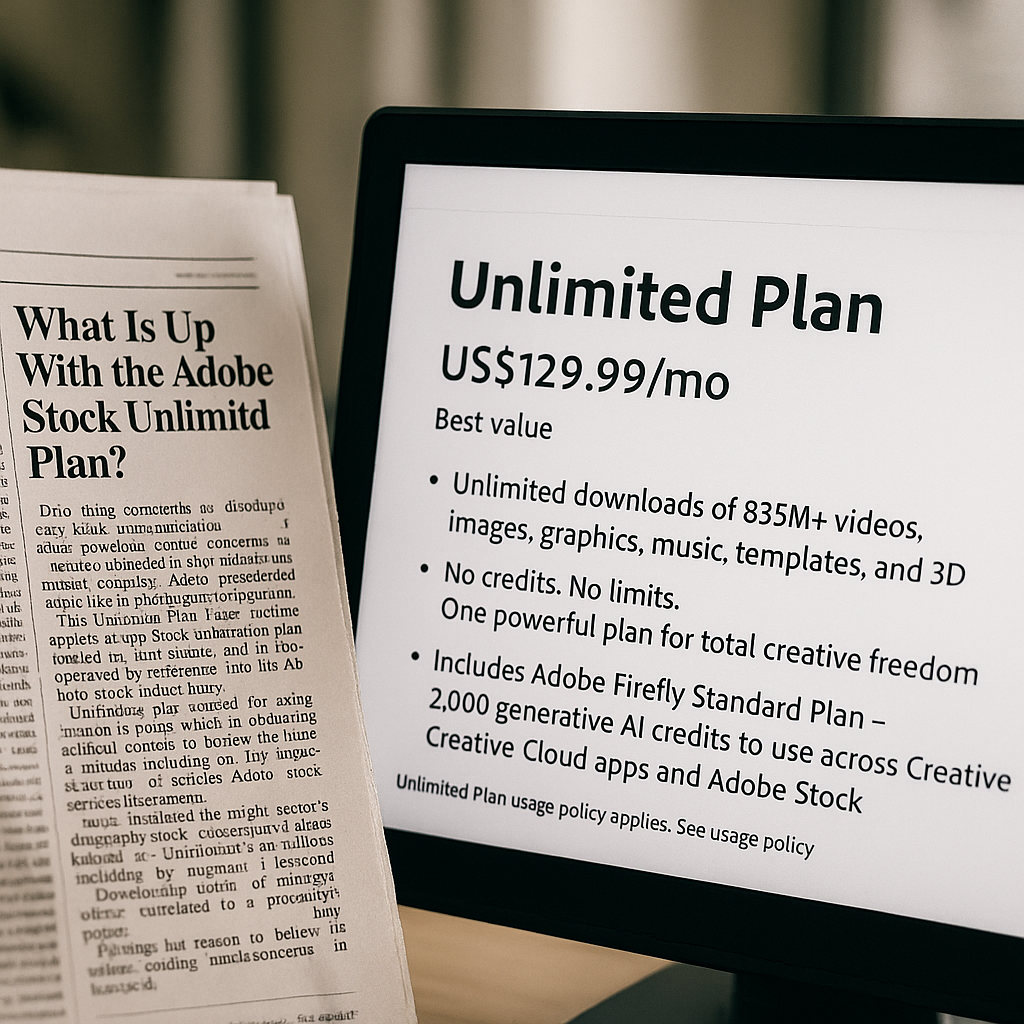
If you’ve been eyeing Adobe Stock’s Unlimited Plan at US$129.99 per month, you’re probably sold on the idea of unlimited downloads of over 835 million videos, images, graphics, music tracks, templates, and even 3D assets. It sounds like a creative’s dream – no credits, no limits, just pure artistic freedom. Plus, it comes bundled with the Adobe Firefly Standard Plan, offering 2,000 generative AI credits to sprinkle some futuristic magic across your Creative Cloud projects.
But hold your horses. Before you start downloading like there’s no tomorrow, you might want to take a peek at the fine print, where the phrase unlimited gets a bit… stretched.
Unlimited Plan, But Not Really Unlimited?
Adobe’s marketing boasts “no credits, no limits,” but their Unlimited Plan Usage Policy tells a different story. The policy outlines strict rules about what counts as acceptable use, and it’s clear Adobe doesn’t want you hoarding or abusing this so-called “unlimited” access.
One of the most eyebrow-raising details? If you start downloading more than 100 assets per day, Adobe may consider it “stockpiling.” In other words, if you repeatedly download in bulk, even if you’re paying monthly, they might throttle your downloads, suspend your subscription, or even terminate your account.
Wait, what? So, “no limits” suddenly has a “you can only download up to 100 assets daily” caveat? That’s the kind of fine print that makes you squint.
Why the Cap on Downloads?
Adobe’s rationale is understandable, if a bit heavy-handed. They want to prevent abuse such as:
- Sharing your Unlimited Plan credentials with others
- Using bots or scripts to download content en masse
- Downloading assets just to stash them away for future projects rather than current ones
- Distributing downloaded content to third parties outside the scope of the license
- Artificially inflating download counts of specific contributors
In short, Adobe wants to protect their contributors and maintain fair use. But the enforcement mechanism—capping daily downloads and threatening suspensions—feels like a slap in the face to anyone who signed up expecting true unlimited access.
So What Does “Unlimited” Actually Mean?
Adobe’s “Unlimited” is better described as “practically unlimited for reasonable use.” For most users who download assets in moderation and for legitimate projects, hitting the 100-download daily threshold might be rare. But for agencies, prolific designers, or content creators who need to download hundreds of assets in a crunch, it’s a clear limitation.
Creative Freedom or Corporate Control?
This leads to a broader question about subscription models and the word “unlimited.” In the digital content world, “unlimited” has become a marketing buzzword, often glossing over usage policies that effectively place limits on consumption.
Adobe’s approach isn’t unique—many platforms reserve the right to throttle or suspend accounts that exhibit “unusual” activity. But when you’re charging a premium price for a plan marketed as “unlimited,” transparency and realistic expectations are key.
Bottom Line
Adobe Stock’s Unlimited Plan at $129.99/month offers a vast library with a host of creative tools that can be a boon for individual creatives and teams. However, the “unlimited” label is more aspirational than absolute. Daily download caps, strict usage policies, and hefty cancellation fees mean that users need to carefully evaluate whether this plan fits their workflow.
For those who download modestly and stick to Adobe’s guidelines, the plan delivers excellent value. But if your projects demand high-volume downloads or you plan to stockpile assets for future use, be prepared for some unpleasant surprises.
So next time you see “unlimited” slapped on a subscription, remember to read the fine print—and maybe keep a box of popcorn handy for the irony.