
HHS Freezes Federal Child Care Payments to Minnesota Amid Fraud Allegations
The U.S. Department of Health and Human Services has suspended all federal child care funding to Minnesota following viral claims of widespread fraud in state-subsidized day care centers. State officials dispute the allegations, emphasizing ongoing efforts to combat fraud.
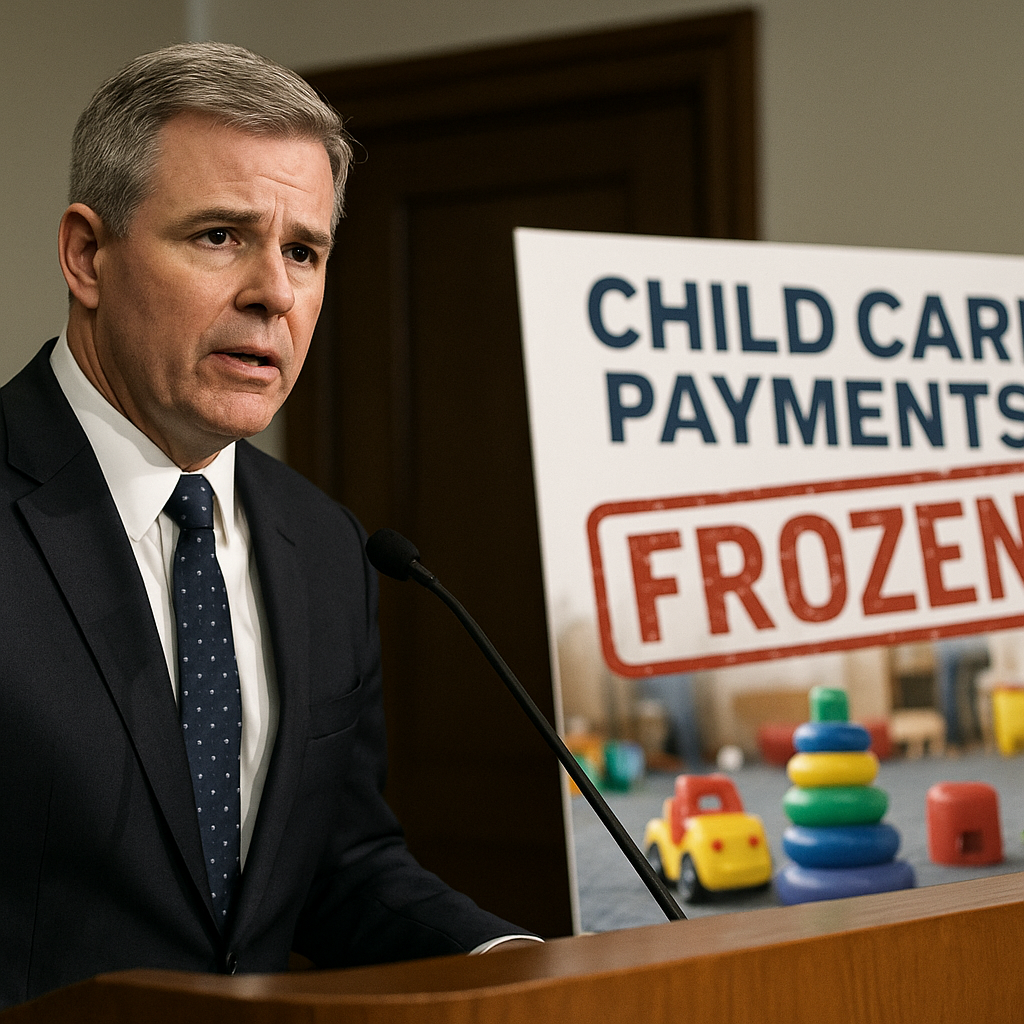
The U.S. Department of Health and Human Services (HHS) announced on Tuesday that it has frozen all federal child care funding to the state of Minnesota amid viral allegations of fraud within state-subsidized day care centers. The move was declared by Deputy HHS Secretary Jim O'Neill in a post on X (formerly Twitter), where he described the situation as "blatant fraud ... rampant in Minnesota and across the country."
O'Neill stated, "We have turned off the money spigot and we are finding the fraud," signaling a significant shift in the federal oversight of child care funding nationwide. The freeze specifically targets payments from HHS's Administration for Children and Families (ACF), which annually allocates approximately $185 million in child care funds to Minnesota.
Background of the Fraud Allegations
The freeze followed the circulation of a video by conservative YouTuber Nick Shirley, who claimed that nearly a dozen Minnesota day care centers receiving state funds were not actually providing services. Shirley's video suggested that these centers were fraudulently obtaining state subsidies without properly caring for children.
In response, Deputy Secretary O'Neill confirmed that HHS has identified the day care centers mentioned in the video and has instructed the state to conduct a "comprehensive audit" of these providers. The audit directives include reviews of attendance records, licensing status, complaints, investigations, and inspections.
State Response and Independent Analysis
CBS News independently analyzed the day care centers named in Shirley's video. Their investigation revealed that all but two centers maintained active licenses according to Minnesota state records. Additionally, state regulators had conducted visits to all active locations within the last six months.
The CBS analysis did uncover multiple citations related to safety, cleanliness, and other compliance issues. However, it found no documented evidence supporting claims of fraud at the facilities in question.
A spokesperson for Minnesota Governor Tim Walz released a statement addressing the situation, saying, "The governor has been combatting fraud for years while the President has been letting fraudsters out of jail. Fraud is a serious issue. But this is a transparent attempt to politicize the issue to hurt Minnesotans and defund government programs that help people."
Impact on Minnesota’s Child Care Assistance Program
Minnesota’s Child Care Assistance Program (CCAP) provides subsidies for day care services supporting approximately 23,000 children from low-income families. The program is largely funded through a combination of federal and state dollars.
According to projections for the current fiscal year ending in September 2026, the federal government was expected to contribute $218 million, while the state would provide $155 million to the program. The ACF’s $185 million annual funding to Minnesota represents a significant portion of this federal investment.
With the freeze now in place, the flow of federal funds to Minnesota day care centers has been halted until further notice. Deputy Secretary O'Neill emphasized that, moving forward, all payments made by the Administration for Children and Families nationwide will require additional oversight. Specifically, payments "will require a justification and a receipt or photo evidence before we send money to a state."
Looking Ahead
The HHS freeze on child care payments to Minnesota marks a notable escalation in federal scrutiny of state child care programs. The agency’s insistence on documentation and audit compliance may signal broader efforts to tighten controls over federal funds distributed for child care services across the country.
Meanwhile, Minnesota officials continue to reject the fraud allegations as politically motivated, stressing their commitment to maintaining program integrity and supporting vulnerable families who rely on child care assistance.
As audits and investigations proceed, both federal and state agencies will likely face increased pressure to ensure transparency and accountability within child care subsidy programs.