
Fact Check: Numerous False Claims in President Trump’s Prime-Time White House Address
President Donald Trump made several false and misleading statements in his recent prime-time address, ranging from inflation rates and grocery prices to immigration and foreign policy. This article provides a detailed fact check of his major claims.
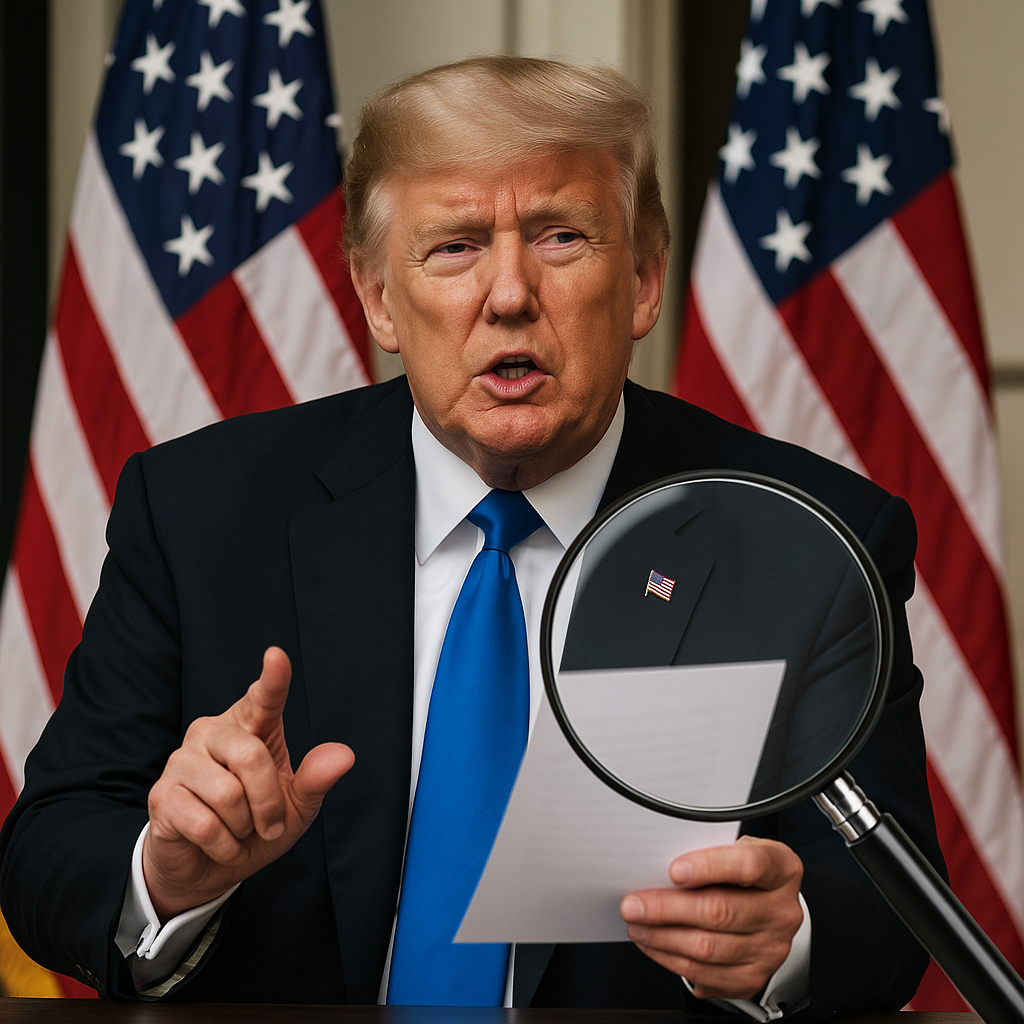
During his prime-time address from the White House on Wednesday night, President Donald Trump made a series of false assertions on topics including inflation, the economy, immigration, and foreign policy. Many of these claims have been previously debunked. This fact check examines some of his most prominent statements.
Inflation and the Economy
Claim: “Inflation is stopped.”
President Trump falsely claimed toward the end of his speech that “inflation is stopped.” However, inflation has not ceased. The most recent year-over-year inflation rate available at the time of his speech was 3.0% in September 2025, which was roughly the same as when Trump returned to office in January 2025. In fact, the September rate was slightly higher when measured to multiple decimal places, marking the fifth consecutive month of year-over-year inflation increase.
The November 2025 inflation rate, released the morning after Trump’s speech, was 2.7%, indicating a slower rise in prices but not a halt to inflation. The October data was unavailable due to government shutdown-related delays.
Claim: Inflation was “the worst in 48 years” under Biden.
Trump repeated the false claim that inflation reached its worst level in 48 years or possibly in U.S. history during the Biden administration. This is inaccurate. The year-over-year inflation rate in December 2024, the last full month of Biden’s term, was 2.9%, and it was 3.0% in January 2025 when Trump’s second term began. Both figures are far from record highs.
While inflation did hit a 40-year high of 9.1% in June 2022 during Biden’s presidency, this was not a 48-year record nor close to the all-time record of 23.7% set in 1920. Inflation rates had significantly decreased before Trump’s inauguration in January 2025.
The cumulative inflation increase during Biden’s tenure was also not the highest in U.S. history, with official figures showing it was less than half of the inflation experienced during President Jimmy Carter’s term.
Claim: “The price of eggs is down 82% since March” and “everything else is falling rapidly.”
Trump’s claim that egg prices have dropped 82% since March was based on wholesale egg prices rather than the consumer prices paid by the average American, as clarified by the White House. Consumer Price Index (CPI) data shows that consumer egg prices declined by 54% from March to November 2025, a significant drop but notably less than the 82% figure cited.
Additionally, the claim that “everything else is falling rapidly” is false even within the grocery category, where prices have generally risen. CPI data for September 2025 indicated grocery prices were up about 2.7% compared to September 2024 and increased 0.3% from August to September. November 2025 figures also showed grocery prices rose 1.9% year-over-year.
Claim: Executive order will cut prescription drug prices by “400, 500, and even 600%.”
Trump claimed that his executive order on prescription drug prices will reduce costs by as much as 400%, 500%, or even 600%. These percentages are mathematically impossible because a 100% reduction would mean prices drop to zero. This claim is demonstrably false.
Claim: Gasoline prices are under $2.50 per gallon in much of the country, with some states hitting $1.99.
According to AAA data as of Wednesday, only four states had average gasoline prices below $2.50 per gallon: Oklahoma, Arkansas, Iowa, and Colorado. Nine additional states had averages between $2.50 and $2.60. The national average was $2.905 per gallon.
While some individual gas stations offered prices at or below $1.99 per gallon, these were extremely rare, estimated between 75 and 125 stations out of approximately 150,000 tracked nationwide. This context shows that Trump’s claim exaggerates the prevalence of such low prices.
Claim: $18 trillion investment secured in the U.S. during Trump’s second presidency.
President Trump claimed he had secured a record-breaking $18 trillion in investment into the United States. This figure is false. The White House’s own website listed $9.6 trillion in investment pledges at the time of his speech, a number that itself has been criticized as inflated.
Many of these pledges represent vague economic exchange agreements or bilateral trade commitments rather than concrete investments in the U.S. economy. Independent reviews have questioned the legitimacy of counting all such pledges as confirmed investment.
Immigration and Foreign Policy
Claim: Trump has ended eight wars in 10 months.
Trump stated he has “settled eight wars in 10 months.” This is a clear exaggeration. While Trump has played roles in mediating or temporarily resolving some conflicts, the number “eight” is misleading.
His list includes disputes that are not formally wars, such as the diplomatic disagreement between Egypt and Ethiopia over a dam project, and conflicts that have continued despite peace efforts, like the war involving the Democratic Republic of Congo and Rwanda.
Further, some conflicts on his list, including renewed fighting between Thailand and Cambodia, have persisted after peace agreements brokered this year. Additionally, Trump has included a supposed war between Serbia and Kosovo that did not occur during his presidency.
While the significance of Trump’s involvement in some peace efforts may be debatable, the claim that he ended eight wars is not substantiated by facts.
Claim: “25 million” migrants entered the U.S. under Biden.
Trump repeated his false claim that 25 million migrants entered the country during the Biden administration. This figure is inaccurate and an exaggeration.
Official federal data through December 2024 recorded under 11 million nationwide migrant encounters during Biden’s term, including many individuals who were rapidly expelled. Even when estimates of migrants who evaded detection—approximately 2.2 million according to House Republicans—are added, the total falls far short of Trump’s claim.
Conclusion
President Trump’s prime-time address contained multiple inaccurate and misleading statements on key issues such as inflation, the economy, immigration, and foreign policy. Fact-based data and expert analyses contradict many of his assertions, highlighting the importance of verifying claims made by public officials.