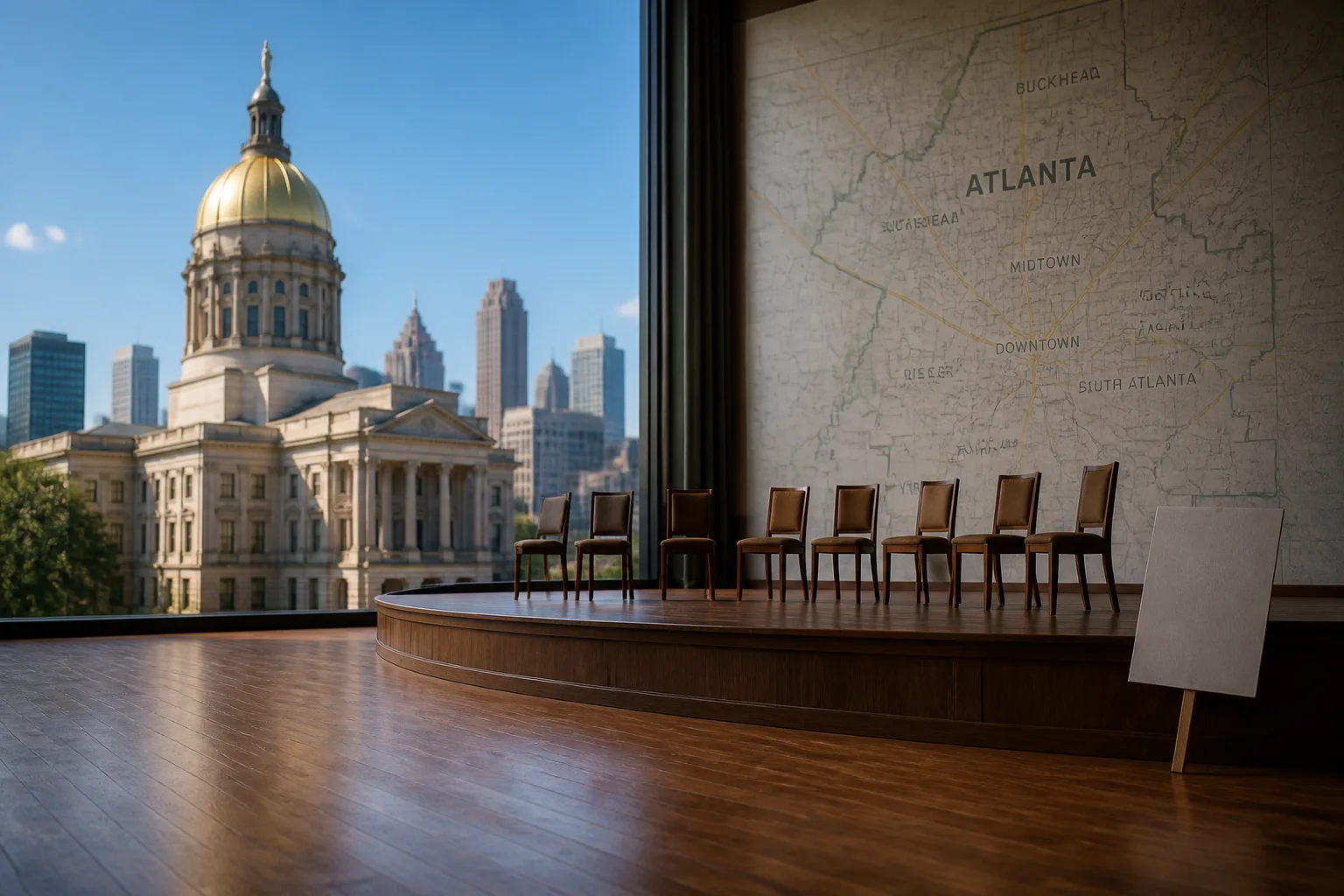
Atlanta Mayor Blasts DNC Over 2028 Convention Snub
The Democratic National Committee (DNC) just dropped Atlanta from its shortlist of 2028 convention hosts, and the city’s mayor is not holding back.
On Thursday, the DNC revealed that only Boston, Denver and Philadelphia will be considered for the party’s August 7‑10, 2028 convention. Atlanta, which last hosted a DNC gathering in 1988, was omitted. Mayor Andre Dickens, who has led the city since 2022, fired back with a letter that slammed the DNC for "abandoning Atlanta, abandoning the South, and once again abandoning Black voters."
The letter, which POLITICO obtained, was written after the mayor’s office learned of the decision through an Associated Press article. According to Michael Smith, the city’s deputy chief communications officer, Atlanta was not given a heads‑up from the DNC. Dickens framed the exclusion as proof that the party no longer views the South as a critical part of its future.
The DNC has yet to respond to the mayor’s critique. In a statement, it pointed to its recent investment in the region, citing South Carolina’s selection to lead the 2028 primary calendar and meetings in New Orleans and Austin. The statement also noted that the Republican National Committee has already chosen Houston for its own 2028 convention.
Georgia’s political weight has surged in recent years. Once a solid Republican stronghold, the state is now a battleground. Both of its U.S. senators, Jon Ossoff and Raphael Warnock, are Democrats. In 2020, Georgia gave its electoral votes to President Joe Biden; in 2024, it swung back to President Donald Trump. The 2028 Senate race will hinge on Ossoff’s re‑election; a loss would leave Democrats without a path to flip the Senate.
The DNC’s decision comes as the party refines its strategy for the 2028 cycle. The convention is slated for early August, but the final host city will be chosen later in 2026. Boston, Denver and Philadelphia represent a mix of coastal, mid‑western and northeastern markets, each bringing distinct infrastructure and political climates.
Mayor Dickens has called the DNC’s move "unwilling to do the bare minimum to support the base of the party." He also challenged the logic of the DNC’s claim that the path to the White House runs through the South, given Atlanta’s exclusion. His comments echo a broader frustration among Southern Democrats who feel the party has turned its back on the region.
The shortlisting process has involved site visits and evaluations of a city’s infrastructure, transportation, accommodation capacity and political climate. While the DNC has not released detailed criteria, it has historically favored cities with large convention centers and strong transportation links.
Atlanta is not the first city to be left out of the DNC’s consideration. In 2024, the party’s convention was held in Chicago, a city that had previously been a finalist for the 2028 event but was eliminated along with Chicago and Atlanta.
The reaction from Atlanta’s political community has been swift. Local officials expressed disappointment and called for a reassessment of the DNC’s outreach to Southern cities. The mayor’s letter sparked discussion on social media, with many residents sharing the message and questioning the party’s commitment to the South.
At this stage, the DNC has not announced a final decision on the host city. The party will likely weigh the finalists’ proposals and logistical strengths before making a choice later in the year.
The situation underscores the evolving dynamics of national party politics, where regional representation and voter engagement are increasingly scrutinized. For Georgia, the outcome of the 2028 convention selection may signal how the Democratic Party plans to engage Southern voters in the coming election cycle.
The final decision on the 2028 Democratic National Convention host city will be announced by the DNC in the coming months. Until then, the debate over Atlanta’s exclusion continues to highlight the broader conversation about the South’s role in national politics.