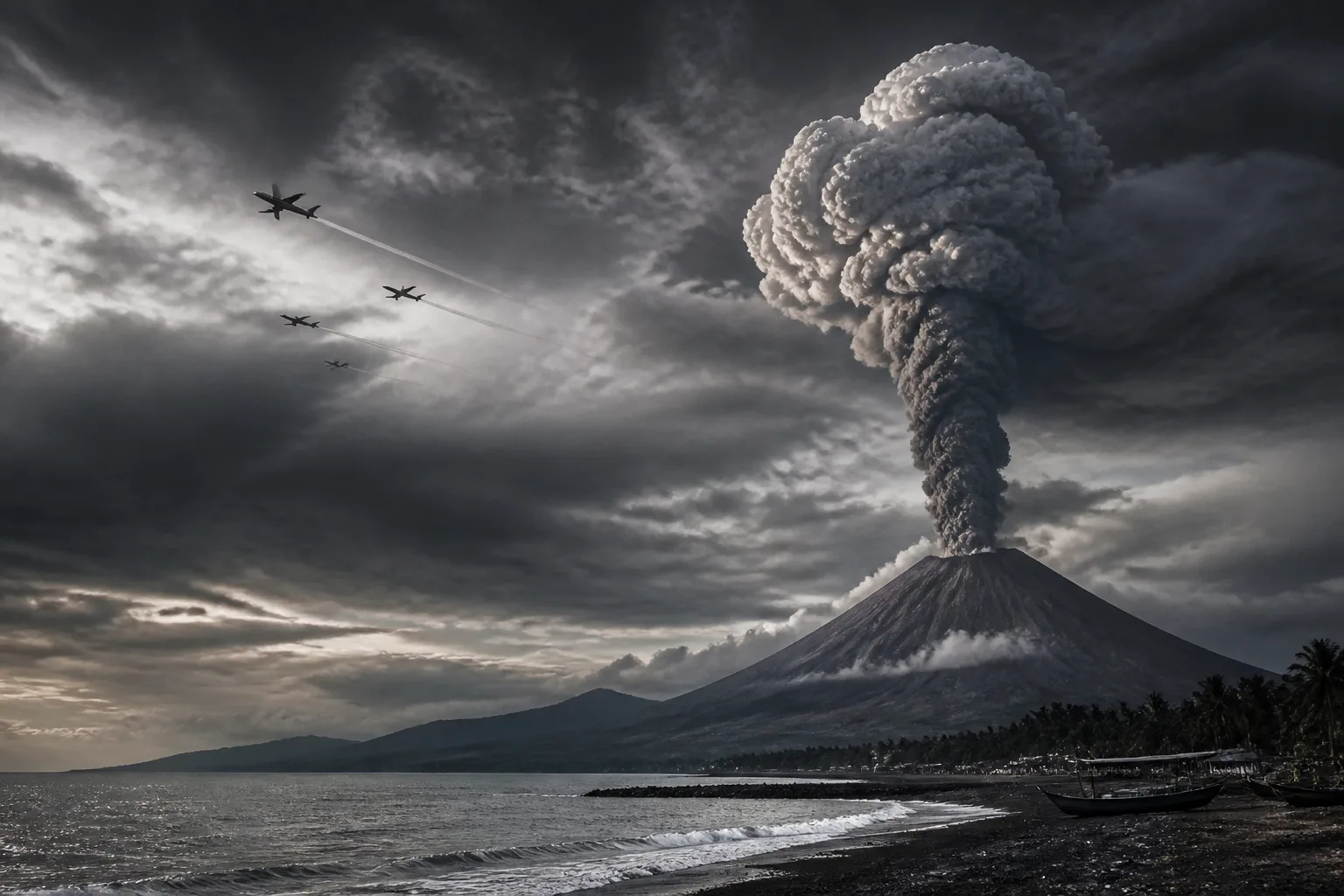
Anak Krakatau Erupts Again, Sending Ash Clouds Across Indonesia and Halting Hundreds of Flights
When the sky over Jakarta turned a smoky gray, millions of travelers found themselves stranded on the tarmac. The volcanic island of Anak Krakatau, perched in the Sunda Strait, erupted once more on Friday, September 5, 2026, spewing ash high into the atmosphere and forcing the cancellation of more than 300,000 flights across Indonesia.
By early Sunday, the ash plume had reached Jakarta’s Soekarno‑Hatta International Airport, prompting airlines to ground every flight to and from the hub. Other regional airports followed suit, and the Indonesian disaster‑management agency, BNPB, warned that the fine, abrasive particles could damage aircraft engines, windshields, and avionics. Travelers were urged to stay calm, heed official guidance, and check with airlines for route changes.
Anak Krakatau has a storied past. The island first broke the surface of the 1883 Krakatoa caldera on December 29, 1927, and has erupted sporadically ever since. The most violent outburst came in 2018, when a sector collapse triggered a deadly tsunami that killed more than 400 people. Since that tragedy, the volcano has remained relatively small, and BNPB has stated that the current structure poses no risk of a large collapse that could spawn a tsunami.
The original 1883 eruption of Krakatoa was one of the most powerful volcanic events recorded. It obliterated over 70 % of the island, generated tsunamis that killed more than 36,000 people, and injected massive amounts of sulfur dioxide and fine ash into the upper atmosphere. The resulting “blue‑moon” effect and a global temperature drop of about 0.3 °C lingered for several years.
Volcanic ash is a nightmare for aviation. Tiny, abrasive fragments can melt in jet engines, forming a glass‑like coating that saps thrust and may trigger engine failure. Ash can also corrode windshields and other critical components. Because ash clouds can travel far from the source and remain aloft at cruising altitudes, they pose a serious threat to air traffic.
In response, BNPB launched weather‑modification operations to clear the skies. Aircraft equipped with water‑mist sprayers flew over the ash cloud, attempting to encourage precipitation and settle the particles. While the effectiveness of this technique is still under evaluation, the effort underscores the agency’s willingness to deploy every tool at its disposal to safeguard the public and the aviation industry.
Scientists keep a close eye on Anak Krakatau because it sits above a subduction zone where the Indo‑Australian plate plunges beneath the Eurasian plate. This tectonic setting produces magma rich in dissolved gases, setting the stage for explosive eruptions. The volcano’s activity, therefore, serves as a key indicator of regional volcanic hazard.
The current eruption is expected to continue for several days, with ash plumes likely to drift over the Indonesian archipelago and beyond. Airlines are monitoring satellite data closely and will adjust flight routes as necessary. Passengers are advised to check with airlines and local authorities for updates.
In short, Anak Krakatau’s latest eruption has already disrupted air travel on a massive scale and highlighted the ongoing risk posed by this active volcano. While no large collapse or tsunami has occurred, the ash cloud remains a serious hazard for aviation and the local population. Authorities are actively working to mitigate the impact and will keep monitoring the volcano’s activity.