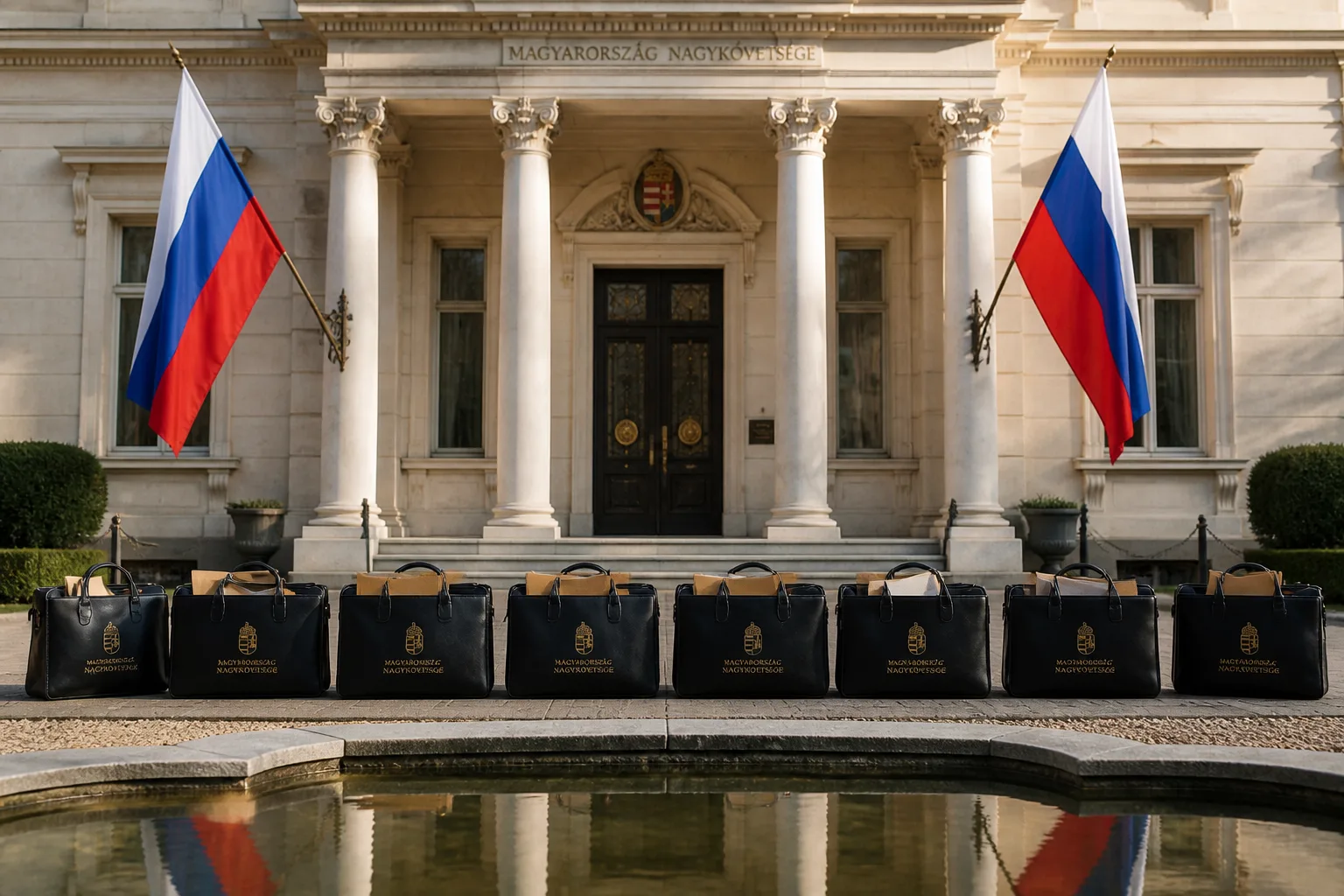
Hungary Orders 10 Russian Diplomats to Leave Amid Accusations of Unacceptable Activities
On Tuesday, Hungary’s foreign ministry announced that ten members of the Russian diplomatic mission in Budapest must depart the country. The decision follows an assessment by Hungarian authorities that the diplomats had engaged in activities that, according to the Vienna Convention, are incompatible with diplomatic status.
Foreign Minister Anita Orbán informed the Russian ambassador that the expulsion was based on the mission’s conduct. She added that the move "protects Hungary’s security and sovereignty," but clarified that it does not mean the country is severing diplomatic ties with Moscow. The Russian Foreign Ministry, in a statement to RIA Novosti, said it would provide an "appropriate response".
The expulsions come shortly after Prime Minister Péter Magyar was sworn in. Magyar’s campaign promised to tackle corruption and dismantle the power structures that had been built during Viktor Orbán’s 16‑year rule. Orbán, who had been a close ally of Russian President Vladimir Putin, repeatedly delayed or blocked EU sanctions on Russia and pursued energy deals with the country.
European Commission spokesperson Christian Wigand said the EU "takes note of Hungary’s legitimate decision" and described the expulsion as an expected reaction to Russia’s persistent hybrid attacks on EU member states.
Hybrid warfare – a term used by European leaders to describe covert operations that include sabotage, election interference, and intelligence gathering – has been a key concern for Hungary. In recent weeks, Romanian authorities detained a 40‑year‑old Russian citizen suspected of spying for Moscow. The suspect allegedly photographed Romanian and NATO equipment and the movements of military personnel, actions that Romanian intelligence said endangered national security.
Moldovan police also detained a 49‑year‑old Azerbaijani national who was accused of collecting information for Russian intelligence services. The suspect reportedly targeted military sites in Moldova and some U.S. facilities, and was said to have been trained for diversionary activities in Ukraine and Moldova.
These incidents underscore the broader context of Russia’s alleged intelligence activities across Europe. While Russia denies any destabilising intent, the expulsions and detentions highlight the heightened scrutiny of Russian diplomatic and intelligence operations in the region.
Hungary’s decision signals a shift in its foreign policy. Under Orbán, Hungary maintained close ties with Russia, buying Russian oil and gas and resisting EU sanctions. The new government has moved to realign with the European Union and pursue a more pro‑Ukraine stance.
The expulsion of the diplomats is the first concrete step in that realignment. The Hungarian government has stated that it will continue necessary dialogue with Moscow, but only within the bounds of mutual respect and adherence to international rules.
The situation remains fluid. Russia’s promised response has not yet been detailed, and it is unclear whether Hungary will pursue further diplomatic measures. The European Commission’s acknowledgment of the decision suggests that the EU views Hungary’s action as a legitimate response to perceived security threats.
In summary, Hungary has ordered ten Russian diplomats to leave the country over alleged unacceptable activities. The move reflects a broader shift away from the pro‑Russian stance of the previous administration and aligns with the new government’s commitment to European security and rule of law.