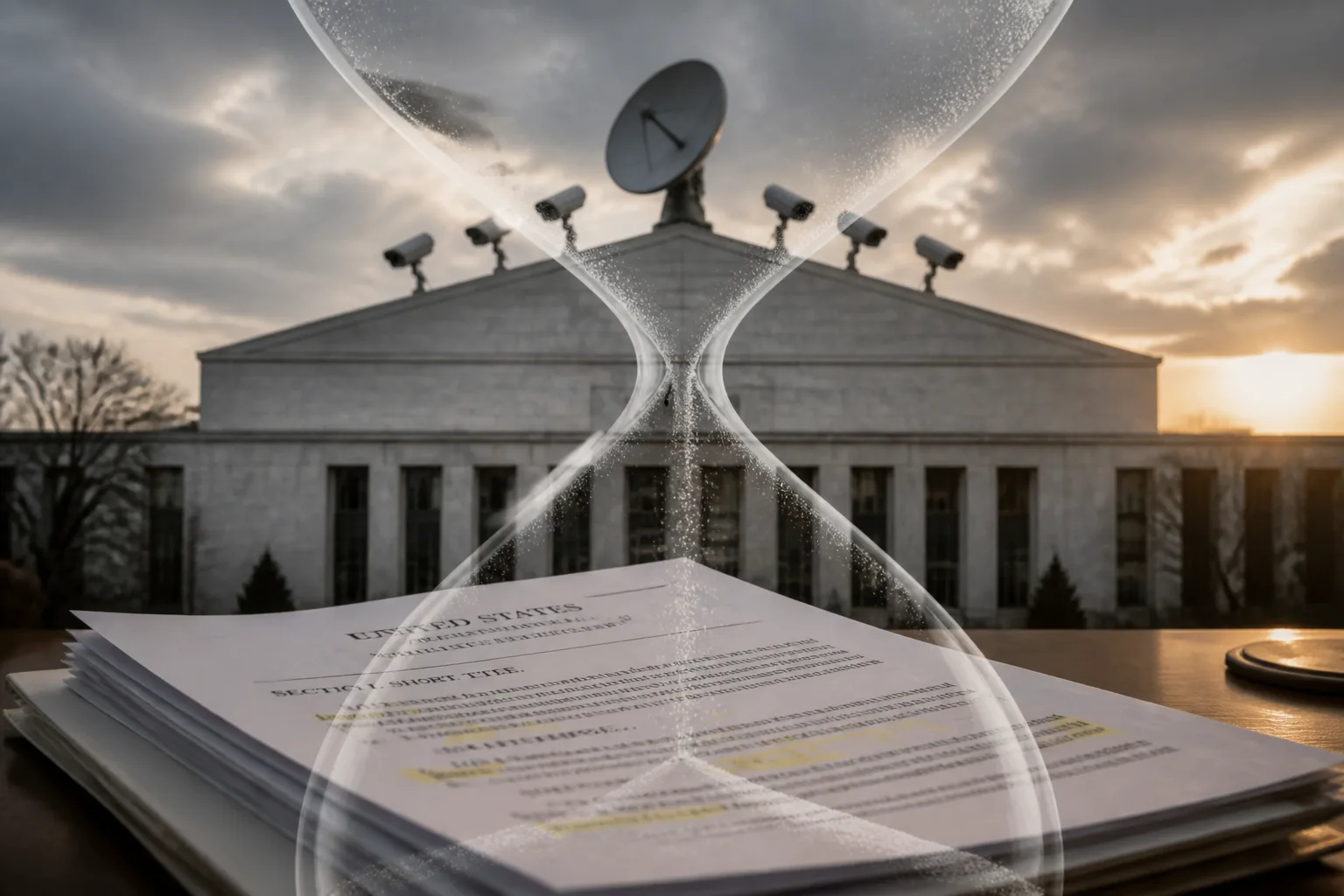
Section 702 Surveillance Authority Set to Expire on June 12, 2026 Amid Congressional Stalemate
Section 702 of the Foreign Intelligence Surveillance Act (FISA) has been the legal basis for U.S. intelligence agencies to collect communications from foreign nationals abroad without a warrant. The program also routinely sweeps in the emails, messages and calls of Americans who are not the target. The authority granted under Section 702 is scheduled to expire at midnight on Friday, June 12, 2026.
Congress has repeatedly postponed the expiration of Section 702 in an attempt to reach a consensus on a longer reauthorization. The House of Representatives rejected a short‑term renewal on Thursday, 11 June 2026, and Senate Democrats have declined to advance their own reauthorization bill. With no bipartisan support, the program is likely to lapse when the current authority expires.
The Electronic Frontier Foundation (EFF) has long argued that Section 702 should require a warrant before the FBI can review digital communications collected from Americans. The organization states that if a warrant is not required, the program should be allowed to expire. This stance has been consistent for every renewal cycle.
The recent political developments that have contributed to the stalled reauthorization include President Donald Trump’s appointment of Bill Pulte as acting Director of National Intelligence (DNI) on 11 June 2026. Pulte, who is the director of the Federal Housing Finance Agency (FHFA) and chairman of Fannie Mae and Freddie Mac, has no prior intelligence, military or congressional experience. Senate Democrats have expressed concern over his appointment, and the House has refused to move forward with any short‑term extension of Section 702.
The potential for abuse of Section 702 is not limited to a single individual or administration. The program’s broad sweep of American communications has raised civil‑liberties concerns for years. In 2025, a federal court ruled that querying data acquired under Section 702 using a U.S. person term or identifier constitutes a search under the Fourth Amendment and therefore presumptively requires a warrant.
Section 702 is part of the FISA Amendments Act of 2008, which expanded the original 1978 law to allow foreign‑intelligence surveillance outside the United States without an individualized application for each target. The program is overseen by the Foreign Intelligence Surveillance Court (FISC), which reviews requests for surveillance and certifies the legality of the program.
The program has been used by the FBI and the National Security Agency (NSA) to gather intelligence on foreign nationals and, by extension, on Americans who communicate with them. Critics argue that the lack of a warrant requirement undermines privacy protections and allows for mass surveillance of U.S. citizens.
The 2026 reauthorization process is currently stalled. Without bipartisan support, the authority granted under Section 702 will expire at midnight on June 12, 2026. If the program lapses, it would remove the legal framework that allows U.S. agencies to conduct warrantless surveillance of foreign communications and the incidental collection of American communications.
The expiration of Section 702 would have significant implications for U.S. intelligence operations. While the program has been a central tool for gathering foreign intelligence, its continuation without a warrant requirement remains a contentious issue among lawmakers, privacy advocates, and the public.
In the absence of a new legislative framework, the program’s authority will end on the scheduled date, marking a rare moment when a major surveillance tool is allowed to lapse. The outcome will depend on whether Congress can reach a new agreement that addresses the warrant requirement and other civil‑liberties concerns.
The debate over Section 702 reflects broader tensions between national security interests and individual privacy rights. As the expiration date approaches, lawmakers, advocacy groups and the public will continue to scrutinize the balance between effective intelligence gathering and the protection of constitutional freedoms.