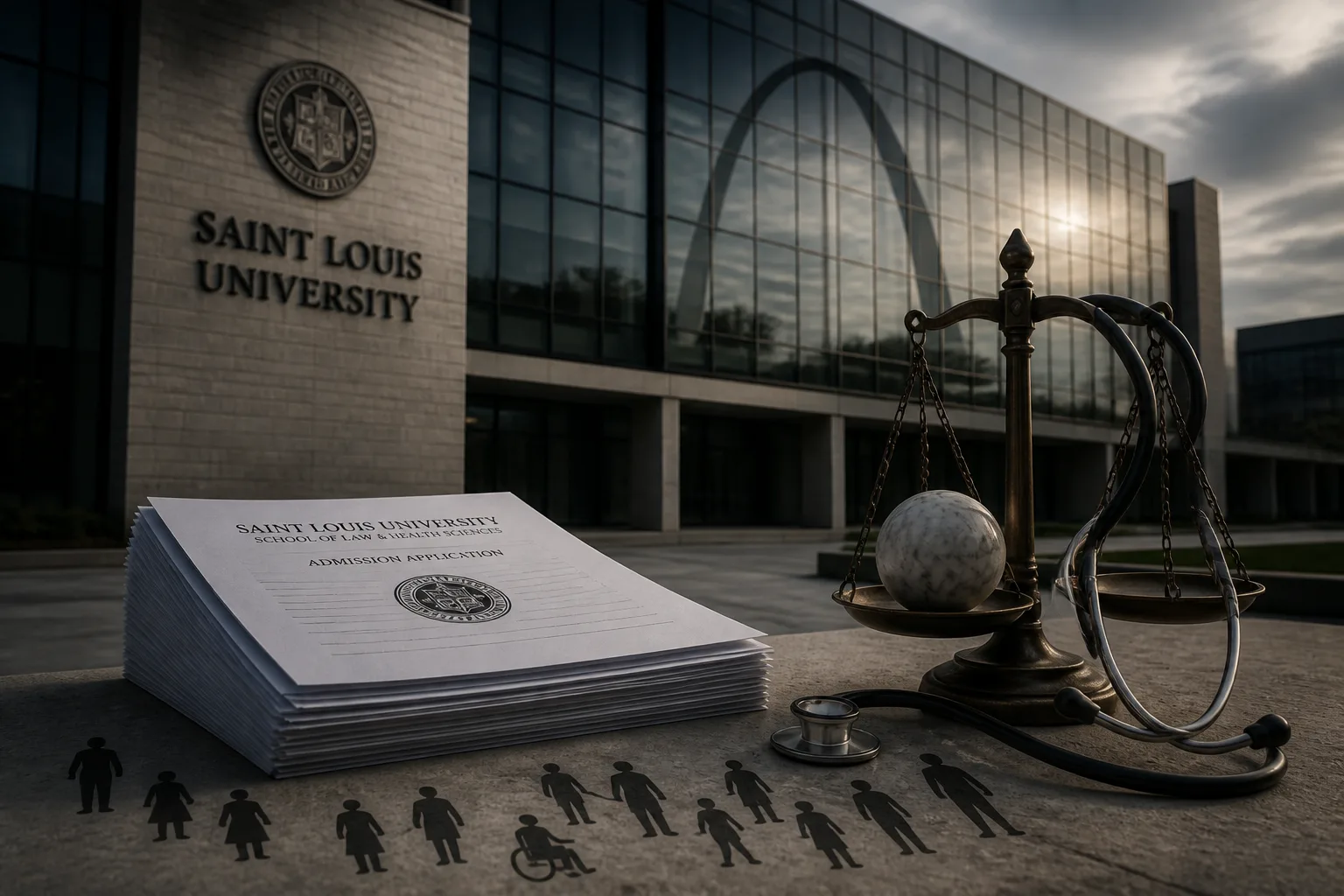
U.S. Education Department Investigates St. Louis University School of Medicine for Possible Racial Discrimination in Admissions
The U.S. Department of Education’s Office of Civil Rights (OCR) has opened a probe into the St. Louis University (SLU) School of Medicine, following accusations that the school’s admissions process may have favored certain racial or ethnic groups over others. The investigation, which began on July 21, 2026, is part of a broader effort by the Trump administration to scrutinize medical schools for practices that could violate the Civil Rights Act of 1964.
According to the complaint that prompted the inquiry, SLU’s admissions team allegedly gave preferential treatment to applicants from specific racial or ethnic backgrounds, thereby disadvantaging other qualified candidates. The OCR will examine whether the school’s practices breach the Act’s ban on discrimination in federally assisted programs. SLU has yet to comment on the investigation.
OCR officials emphasized that SLU is not the sole focus of the department’s scrutiny. The Office is also reviewing admissions at Dartmouth College’s Geisel School of Medicine, East Carolina University’s Brody School of Medicine, Western University of Health Sciences, and William Carey University’s College of Osteopathic Medicine. These five schools are among a handful the Trump administration has targeted in its push to dismantle diversity, equity, and inclusion initiatives in higher education.
Kimberly Richey, the department’s assistant secretary for civil rights, made a stark statement: “Many schools seem to be more focused on meeting racial quotas instead of selecting students based on merit.” She added, “Schools that engage in such admissions policies are not only violating the law, but they are also undermining the fundamental principles of fairness and meritocracy that define our nation.” Richey further stressed that the administration is holding schools accountable for reported discriminatory behavior and will work to ensure that students are rewarded for hard work and achievement, not judged by the color of their skin.
The OCR investigation follows a recent announcement by the U.S. Justice Department. Earlier this week, the Justice Department revealed that the University of California, San Diego’s School of Medicine had used race in its admissions process in a way that discriminated against white and Asian applicants in favor of lower‑credentialed Black and Hispanic applicants. The report highlighted that the school’s practices violated Title VI of the Civil Rights Act, which prohibits racial discrimination in programs receiving federal funds.
Both the OCR and the Justice Department are charged with enforcing federal civil‑rights laws. While the OCR focuses on schools and universities, the Justice Department’s Civil Rights Division handles broader enforcement actions, including investigations of universities that receive federal funding.
At this early stage, the OCR has not released a formal complaint or detailed allegations against SLU or the other schools. The Justice Department’s findings at UC San Diego are the first public evidence of a medical school’s alleged racial bias in admissions.
The outcomes of these investigations could reshape medical school admissions nationwide. If the OCR determines that a school violated the Civil Rights Act, the institution could be required to overhaul its admissions policies, face penalties, or be subject to additional oversight.
No definitive conclusions have yet been reached regarding SLU or the other institutions under review. The OCR will continue to gather evidence and may hold hearings or request further information from the schools. The Justice Department’s findings at UC San Diego suggest that the Trump administration’s focus on diversity and inclusion initiatives is likely to intensify.
These investigations underscore the ongoing debate over affirmative action and diversity policies in higher education. While proponents argue that such policies help correct historic inequities, critics contend that they create unfair advantages for certain groups.
The Department of Education and the Justice Department have signaled that they will pursue any violations of federal civil‑rights laws. As the investigations progress, the medical schools involved may be required to provide detailed admissions data, revise their selection criteria, or implement new oversight mechanisms.
Until the OCR releases a formal decision, the status of the investigations remains pending. Stakeholders—including prospective students, faculty, and advocacy groups—are watching closely for any developments that could reshape medical school admissions practices across the country.