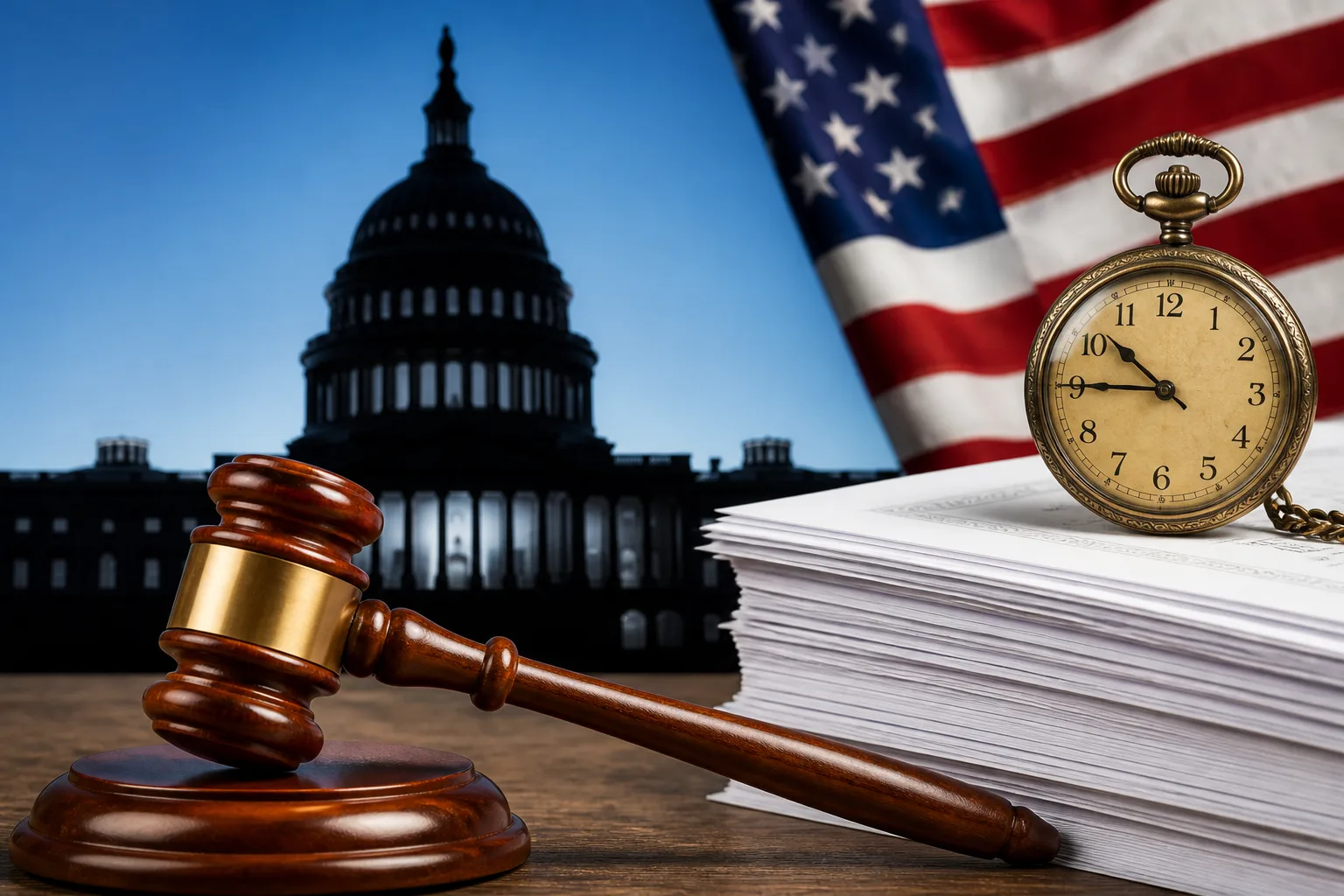
House Passes Short-Term Funding Bill to Keep Federal Government Open Through Dec. 4, 2026
On Tuesday, the U.S. House of Representatives just pushed through a continuing resolution that keeps the federal government funded until December 4, 2026—well beyond the midterm election deadline. The measure, which passed 220‑205, fell along a predictable party line: Republicans carried the vote while Democrats rejected it, labeling it a premature attempt to sidestep responsibility.
The resolution was drafted by the House Appropriations Committee to plug the funding gap that would otherwise leave the government shut on September 30, the end of the 2025 fiscal year. Under its terms, federal agencies will operate at the same funding levels as the previous fiscal year until the new deadline.
House Speaker Mike Johnson said the move was intended to prevent a shutdown that could disrupt the conduct of the midterm elections. "If the Democrats can’t support this basic principle, then they alone are going to own the chaos that ensues if the government shuts down after September 30," Johnson told reporters.
Democratic leaders in the House branded the bill a "premature and desperate attempt by Republicans to abdicate their responsibility to govern while there are still several months left to negotiate a bipartisan agreement." They warned that a continuing resolution is a stop‑gap that does not address the underlying budget disagreements.
Senate leaders are also working to keep the government open. Senate Majority Leader John Thune said that Senate Appropriations Committee Chairwoman Susan Collins is collaborating with Democrats on the committee to ensure funding extends past the November elections. Thune emphasized that a shutdown would create "disruption, chaos" that both sides should try to avoid and that a bipartisan agreement is essential.
The House Appropriations Committee is revisiting legislation that would permanently eliminate the threat of future shutdowns. The Prevent Government Shutdowns Act, led by Sen. James Lankford, would trigger an automatic two‑week continuing resolution whenever Congress fails to pass appropriations legislation. Lankford introduced the bill in 2019 with Sen. Maggie Hassan. The act would keep the Office of Management and Budget and congressional staff in Washington, D.C., until a spending deal is reached, and would extend the resolution if lawmakers do not finalize a budget within the initial two weeks.
Proponents say the legislation would shift the burden onto Congress to reach a spending agreement and would prevent federal employees from being used as bargaining chips in budget negotiations.
The timing of the House vote comes after a turbulent fiscal year. The federal government experienced its longest shutdown in 2025, lasting 43 days, followed by a 76‑day partial shutdown of the Department of Homeland Security in early 2026. Both events left federal workers unpaid and underscored the fragility of the appropriations process.
The new continuing resolution does not resolve the broader budget impasse. Congress still must pass the remaining twelve annual appropriations bills before the fiscal year ends on September 30. The House has already passed six of the twelve bills, but the Senate has not yet completed its portion.
If the Senate does not act on the resolution, the government would again face a shutdown. The resolution’s passage is therefore a short‑term measure that buys lawmakers time to negotiate a comprehensive budget. Whether the Senate will agree to the House’s proposal remains to be seen.
The resolution’s approval signals that both chambers are aware of the potential political fallout from a shutdown during a midterm election cycle. The House’s action is a step toward preventing the disruption of federal services and the financial impact on federal employees.
The next phase will involve the Senate’s consideration of the continuing resolution and the ongoing negotiations on the remaining appropriations bills. The outcome will determine whether the federal government remains open through the end of the fiscal year and whether a permanent solution to prevent future shutdowns will be adopted.