Stanford Launches Public Dashboard to Track AIs Impact on Jobs, Productivity and the Economy
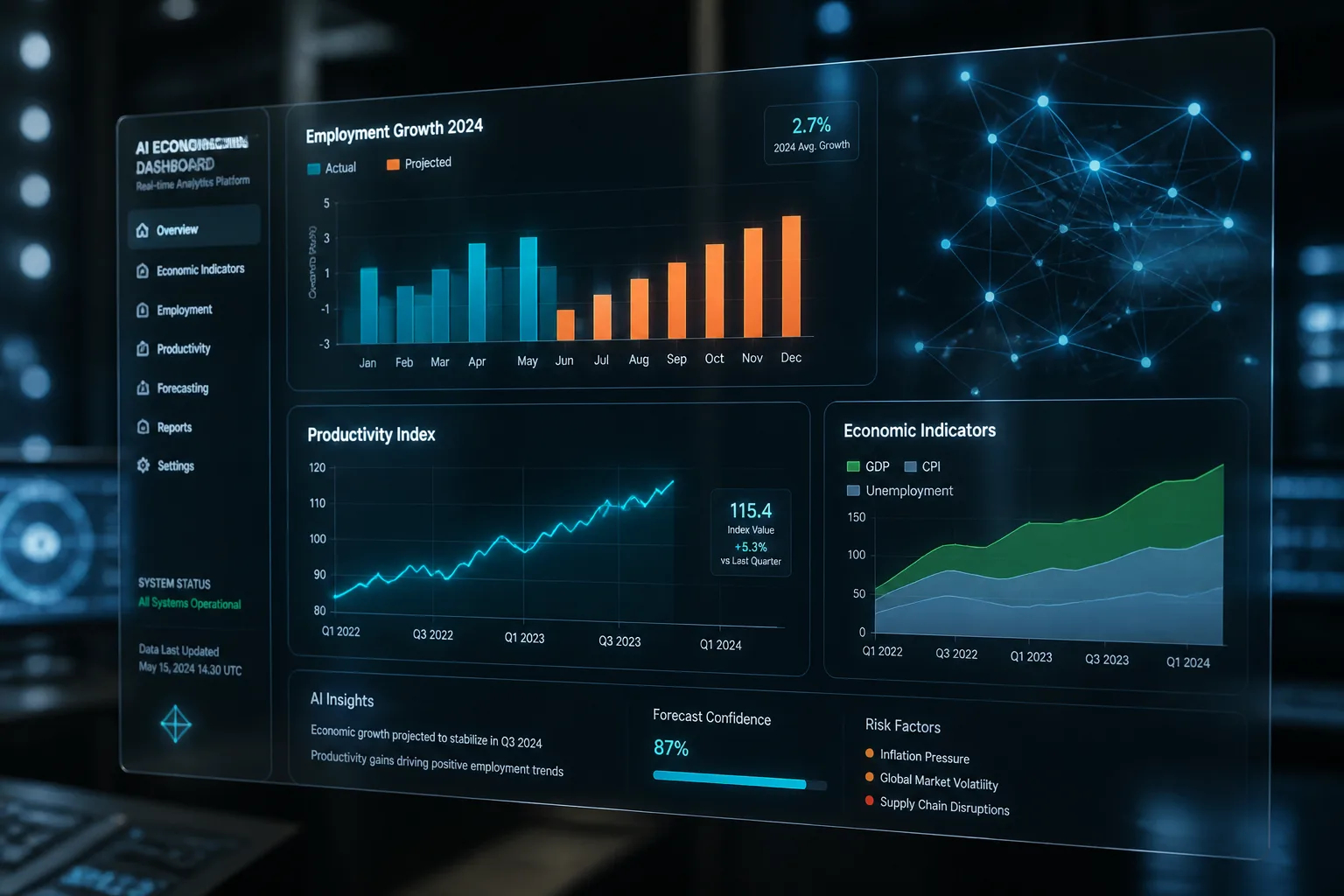
Imagine a dashboard that lets you see AI’s fingerprints on the economy in real time. On 14 June 2026, Stanford’s Digital Economy Lab rolled out exactly that: the AI Economic Indicators, a free‑to‑use platform that pulls together government data, academic studies and private‑sector insights to keep policymakers, business leaders, researchers and workers in the loop.
Accessible at indicators.stanford.edu, the site offers three distinct dashboards that refresh on a regular cadence. The goal, as Susan Young, Director of Strategic Initiatives, explained in a LinkedIn post, is to shrink the lag that has traditionally kept economic statistics behind the rapid pace of AI adoption.
The first tool, the Canaries Dashboard, was born from a partnership with ADP Research. It assigns every occupation an AI exposure score and then groups workers into five exposure brackets. Early results are telling: the cohort with the highest exposure has seen the slowest employment growth. A dedicated view zooms in on early‑career workers aged 22‑25—who make up 7.0 % of the Canaries sample at baseline. In that slice, the two most exposed occupations have experienced noticeable declines since ChatGPT hit the market in November 2022, while the other three groups have grown.
Next up is the Takeoff Tracker, which keeps an eye on 12 macro‑economic indicators that might signal a broader AI takeoff. These include productivity, GDP growth and labor‑market dynamics. The current data set shows no decisive evidence of a takeoff, but the tracker will evolve as new metrics emerge.
The third dashboard, the Adoption Monitor, tracks generative‑AI use by individuals and firms. Survey data from Hartley et al. suggest a decline in adoption, whereas Gallup and a study by Bick, Blandin and Deming report continued increases toward roughly 50 %. The platform also maps current and expected firm‑level AI adoption. U.S. firms lead in current use and show little gap between today’s and tomorrow’s levels, while firms in the United Kingdom, Germany and Australia expect to ramp up.
All three dashboards are organized around five core questions: how AI affects employment and wages; whether broader measures such as productivity and GDP show AI effects; whether traditional metrics capture consumer benefits; how worker skill requirements are changing; and how AI is being used to complement or replace human labor.
The AI Economic Indicators project is backed by Schmidt Sciences, the Siegel Family Endowment and other individual donors. Young described the platform as a “living project” that will add new data sources, dashboards and measurement efforts over time.
In a world where generative AI is moving faster than the policy cycle, these dashboards offer a timely, data‑driven window into how AI is reshaping the labor market and the economy. For policymakers, the tools can flag sectors where AI exposure correlates with job losses and help design targeted training or support programs. Business leaders can benchmark their own AI use against peers and anticipate future shifts in labor demand. Researchers can study the causal relationship between AI exposure and productivity, refining models of economic growth.
In short, Stanford’s AI Economic Indicators give stakeholders a clear, evidence‑based view of AI’s economic impact. By making these metrics publicly available, the lab hopes to inform policy, guide business strategy and help the public navigate the evolving AI landscape.