US Data Center Boom Spurs AI Equipment Imports, but Logistics Hubs Still Strain
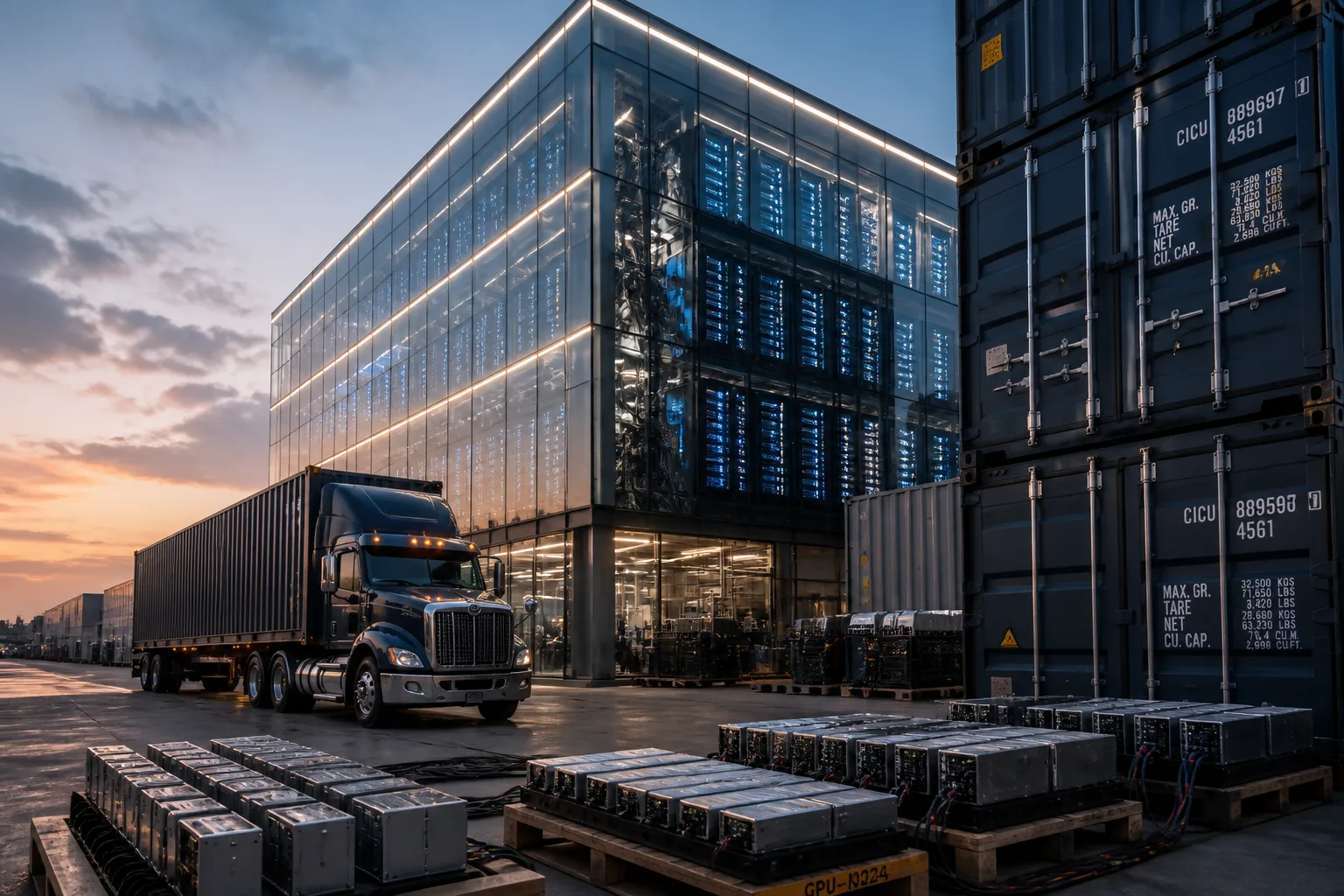
More than 300 data‑center construction projects are currently underway across the United States, sending a flood of AI support gear—servers, cooling systems, power equipment—into the country at record levels.
The surge is driven by the rapid expansion of hyperscale and edge facilities that are needed to host the growing number of AI workloads.
But the real‑estate benefits are uneven. In many key logistics hubs, the influx of cargo has not yet tightened the availability of space or increased the speed of delivery. A recent CoStar Analytics report shows that the added freight volume has not materially changed the capacity of major freight corridors, leaving shippers and local infrastructure providers with limited room for growth.
The data‑center boom is part of a broader trend in which AI demand is reshaping the industry. In 2025, Microsoft announced an $80 billion commitment to new data‑center capacity, while Meta’s capital expenditure for the same period exceeded $60 billion. These investments are largely focused on building facilities that can house high‑density server racks and the specialized cooling and power systems required for AI training.
Modular construction is becoming a key strategy to reduce build times. Companies that use pre‑fabricated modules can bring a new data‑center online in a fraction of the time it takes to build a traditional facility. The approach also offers a more predictable cost structure and can be deployed in locations that may not yet have the full infrastructure to support a large, custom‑built campus.
The rapid pace of construction has exposed supply‑chain bottlenecks. Satellite imagery released in April 2026 shows that nearly 40 percent of U.S. data‑center projects slated for completion this year may miss their deadlines. Delays are largely attributed to shortages of high‑performance servers, liquid‑cooling equipment and power‑distribution units, and the limited capacity of freight hubs to handle the increased volume of specialized cargo.
Cooling technology is a critical component of modern AI data centers. By 2026, liquid‑cooling adoption in newly built facilities has climbed to about 22 percent, driven by the need to manage the heat generated by racks that can reach 100 kW of power density. Companies such as Modine have introduced deployable chiller systems that can be installed on site to provide the necessary cooling capacity without relying on the local grid.
Power supply is another area of strain. AI workloads create sudden, megawatt‑scale power swings that can damage equipment and destabilize local grids. Hybrid solutions that combine generators with battery storage are being deployed to smooth these fluctuations. The growing demand for power has also turned power‑equipment vendors into geopolitical actors, as their ability to supply the necessary infrastructure becomes a strategic asset.
The uneven distribution of real‑estate benefits is partly a result of regional differences in infrastructure readiness. While the Midwest, South and Mountain West have seen a surge in hyperscale expansions, many East Coast hubs still face constraints in terms of available land and the capacity of existing freight corridors. The CoStar report notes that the lack of material tightening in key logistics hubs means that shippers continue to face congestion and longer lead times.
In summary, the U.S. data‑center industry is experiencing a significant build‑out driven by AI demand. Imports of servers, cooling systems and power equipment are rising, and modular construction is helping to accelerate deployment. Yet supply‑chain bottlenecks—especially in freight hubs—and the need for advanced cooling and power solutions are creating challenges that have not yet been fully resolved. The next few months will likely see continued investment in infrastructure, but the pace of progress will depend on how quickly the industry can address these logistical constraints.