U.S. Navy Faces Production Bottlenecks, Looks to Japan for Coproduction of Unmanned Systems
In a world where war moves faster than ships can be built, the U.S. Navy is scrambling to keep up. A fresh analysis from War on the Rocks paints a stark picture: decades of consolidation, a tightening labor market, fragile supply chains and a roller‑coaster of procurement signals have all conspired to slow the construction of new vessels and the production of the munitions that keep them afloat.
The 2026 National Defense Strategy and the Navy’s own war‑fighting instructions both point to a simple truth—mobilizing allies is no longer optional; it’s essential. The latest U.S. Navy Shipbuilding Plan echoes that sentiment, urging allied investment and production to hit fleet‑readiness goals. While the Trump administration quietly kicked off coproduction on icebreakers and submarines, the focus is now shifting toward the next frontier: robotic and uncrewed systems.
Enter AUKUS Pillar II. The trilateral partnership between the United States, the United Kingdom and Australia has just unveiled its first signature project: advanced payloads for unmanned underwater vehicles. The U.S. sees coproduction of these systems with other allies—Japan, in particular—as the logical next step.
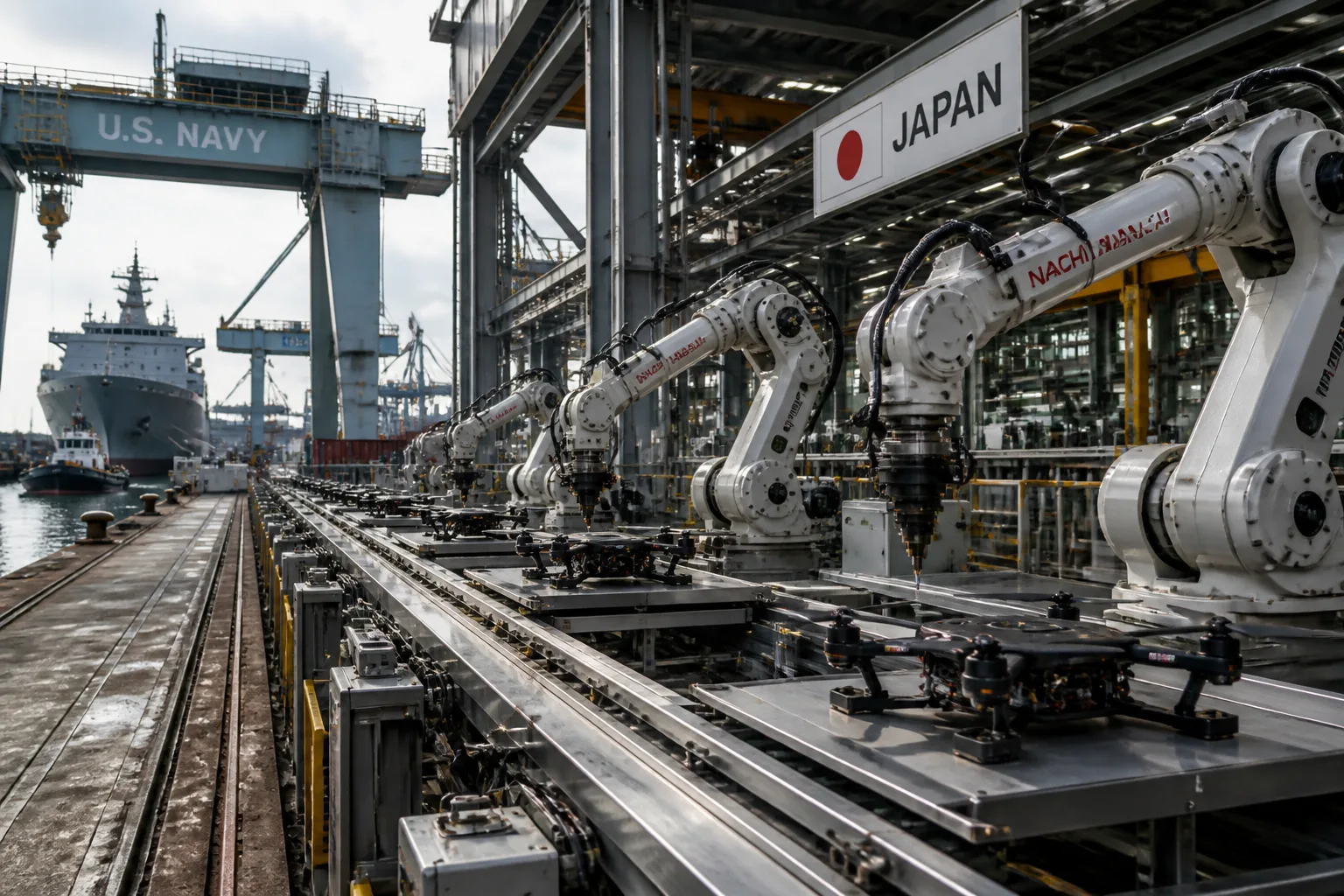
Why Japan? The country already hosts U.S. Navy Regional Maintenance Centers in Sasebo and Yokosuka and boasts a mature ship‑building industry. Mitsubishi Heavy Industries, a global shipbuilder, is already certified under the Master Ship Repair Agreement. Japanese firms bring the automation and precision robotics needed to assemble drones and other autonomous platforms.
The U.S. and Japan already share a solid defense partnership. Licensed production of Patriot Advanced Capability‑3 missiles and Mk‑41 Vertical Launch Systems is underway, and the joint research and development of the SM‑3 Block IIA interceptor demonstrates Japan’s capacity to shoulder complex technology. These existing ties provide a sturdy foundation for expanding coproduction into the uncrewed realm.
But the road ahead is not a straight line. Japan’s domestic defense industry still leans heavily on imported electronic components—many of which come from China. The nation also faces shortages of critical minerals such as graphite and gallium, essential for advanced batteries and semiconductors. While Japan is investing in domestic semiconductor production through the Rapidus program, the supply chain remains vulnerable.
Political and security hurdles add another layer of complexity. Japan’s 2025 export‑control revision, which broadened the range of items that can be exported, sparked controversy and still faces internal opposition. The Japanese public and political establishment are wary of remilitarization, and any coproduction that includes offensive capabilities could trigger regional backlash from China, North Korea and Russia.
From the U.S. side, Congress is deeply invested in keeping high‑value production jobs on American soil. Legislators from ship‑building districts and defense‑industrial unions often view overseas production as a threat to domestic employment and industrial resilience. The 2026 National Defense Authorization Act includes provisions for drone coproduction with Taiwan, signaling that the U.S. is willing to share designs with trusted partners.
The Navy’s strategy is clear: use coproduction as a supplement, not a replacement, for domestic manufacturing. Licensing existing designs can bring new assets to the First Island Chain more quickly than building them in the United States, where transportation costs and time to theater are significant constraints. If Japan can produce low‑cost, attritable systems, the Navy could field more forces while spreading production risk across multiple sites.
In short, the U.S. Navy’s production bottlenecks are prompting a pivot toward allied coproduction, with Japan emerging as a key partner for uncrewed systems. The initiative will require careful navigation of supply‑chain dependencies, export‑control rules and domestic political concerns. If those hurdles can be overcome, coproduction could help the Navy meet its readiness goals while strengthening regional security.