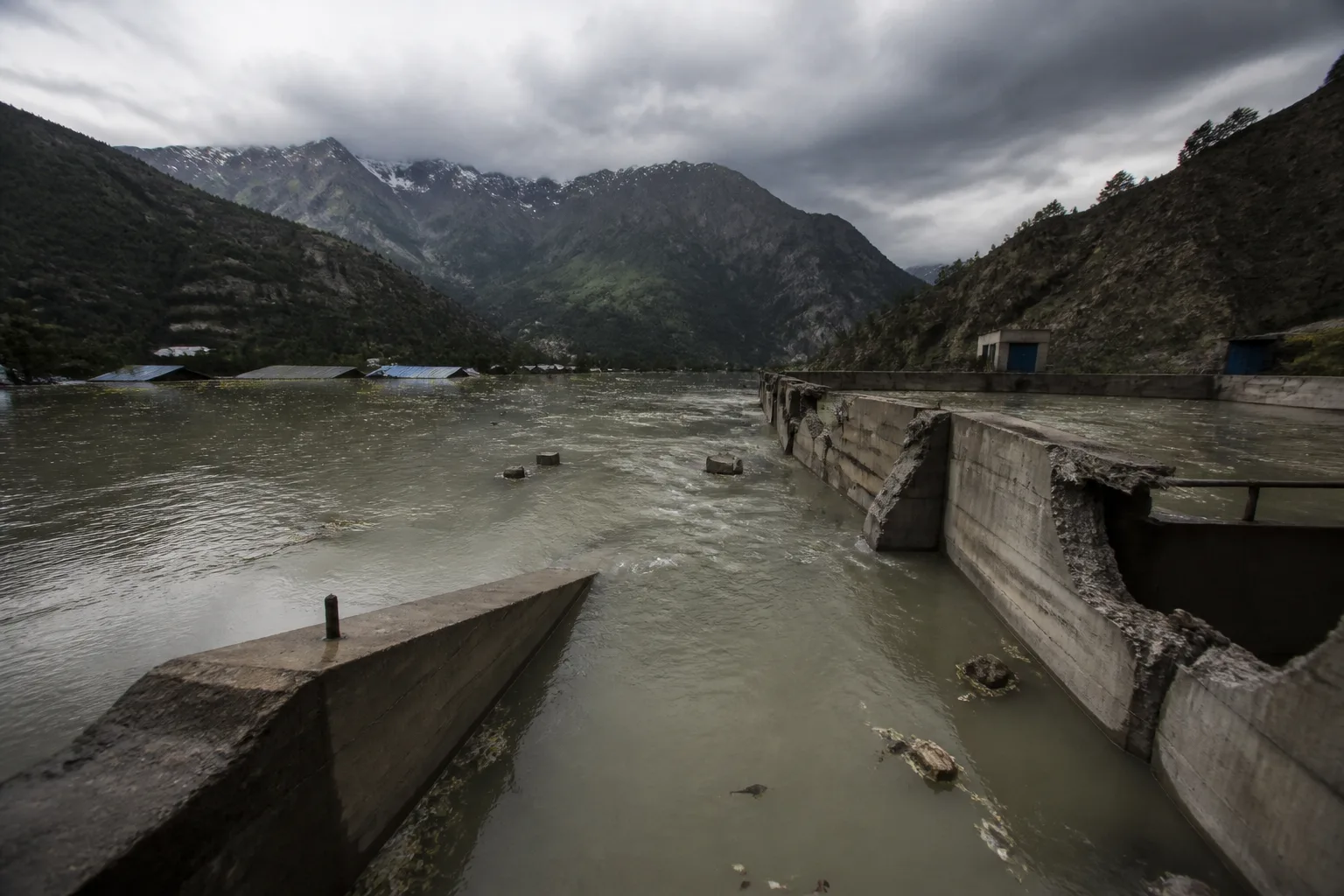
Hundreds of Hydropower Workers Still Missing as Nepal and China Battle After Himalayan Floods
On Aug 26, 2026, a sudden glacier collapse in the Himalayas turned the Trishuli River valley into a torrent of water, mud, and rocks that slammed into communities across Nepal and the Tibet Autonomous Region of China. By Tuesday, Nepal’s disaster agency had confirmed 987 deaths and 3,916 people missing—583 of them foreigners—while Chinese authorities reported 16 deaths and 546 missing, including 261 foreign nationals.
Rescue teams, many armed with search dogs, are combing mud‑filled valleys, broken roads, and debris‑blocked tunnels. In Nepal, the focus has been on hydropower projects that suffered severe damage. About 900 workers are missing from 12 projects, with roughly 500 believed trapped inside tunnels. Brig. Gen. Raja Ram Basnet, the army spokesperson, said that teams assisted by foreign experts are working at several sites. Army footage shows rescuers entering dark, debris‑filled tunnels, wading through mud and water, and climbing over rocks in search of signs of life.
In China, crews are clearing the area around the destroyed Gyirong Port border crossing. The port, which once linked the Chinese highway network with Nepal’s National Highway 42, was swept away by a mudslide. Heavy machinery is being used to clear a major highway leading to the port, with the goal of allowing equipment, personnel and supplies to reach the disaster zone. The Global Times reported that search dogs are also being deployed to locate survivors among the rubble.
At least 11,814 people have been rescued so far, according to Nepalese authorities. Helicopters and other aircraft are being used to reach isolated communities where roads and bridges have been destroyed. The government has stepped up efforts to provide assistance to survivors in areas where transportation routes have been cut off.
China’s Foreign Ministry spokesperson Guo Jiakun said that the country’s second batch of relief supplies for Nepal would ship on Tuesday. The shipment includes drones, DNA testing kits and water‑purification equipment. Chinese DNA testing experts will also help Nepal’s identity bodies, according to Guo.
Bimal Sharma, a helicopter pilot who has flown rescue and relief missions since the disaster began, said he was shocked to see the devastation in Timure, a border town close to Tibet that he has known for years. "It felt like I was flying over an entirely different landscape," he said. He added that he has had little opportunity to speak with the people he rescued, but their expressions told him how deeply the disaster had affected them.
The flood began with a glacial collapse high in the Himalayas. Satellite imagery shows that the collapse involved the failure of bedrock beneath a glacier in the Langtang Lirung region. The rockfall was powerful enough to register as a magnitude 5.2 seismic event worldwide. The surge of water and debris entered rivers that flow through valleys in Tibet and Nepal, causing them to rise rapidly. Floodwaters swept away homes, buildings, roads and bridges and carried mud and rocks downstream.
Prime Minister Balendra Shah said the disaster highlighted the need for action to combat climate change. "This incident has indicated that the risks we face in the Himalayan region are increasing with climate change," he said in a social media post on Monday night. "Therefore, this region must be alert, and at the same time, it is time for us to strongly raise the issue of disasters caused by climate change before the international community."
The scale of the disaster has hampered rescue efforts in both regions. Landslides, destroyed roads and widespread damage have cut off remote areas, making it difficult for teams to reach isolated communities. The risk of additional flooding remains, as authorities continue to monitor the barrier lake upstream at the Gyirong Port.
In summary, the Aug 26 floods have left nearly a thousand dead and over 4,400 missing in Nepal, with an additional 16 dead and 546 missing in China. Rescue operations are ongoing, with a particular focus on hydropower workers trapped in tunnels and on clearing the destroyed Gyirong Port. International aid, including drones and DNA testing equipment from China, is being deployed to support identification and relief efforts. The disaster underscores the growing vulnerability of Himalayan communities to climate‑related hazards.