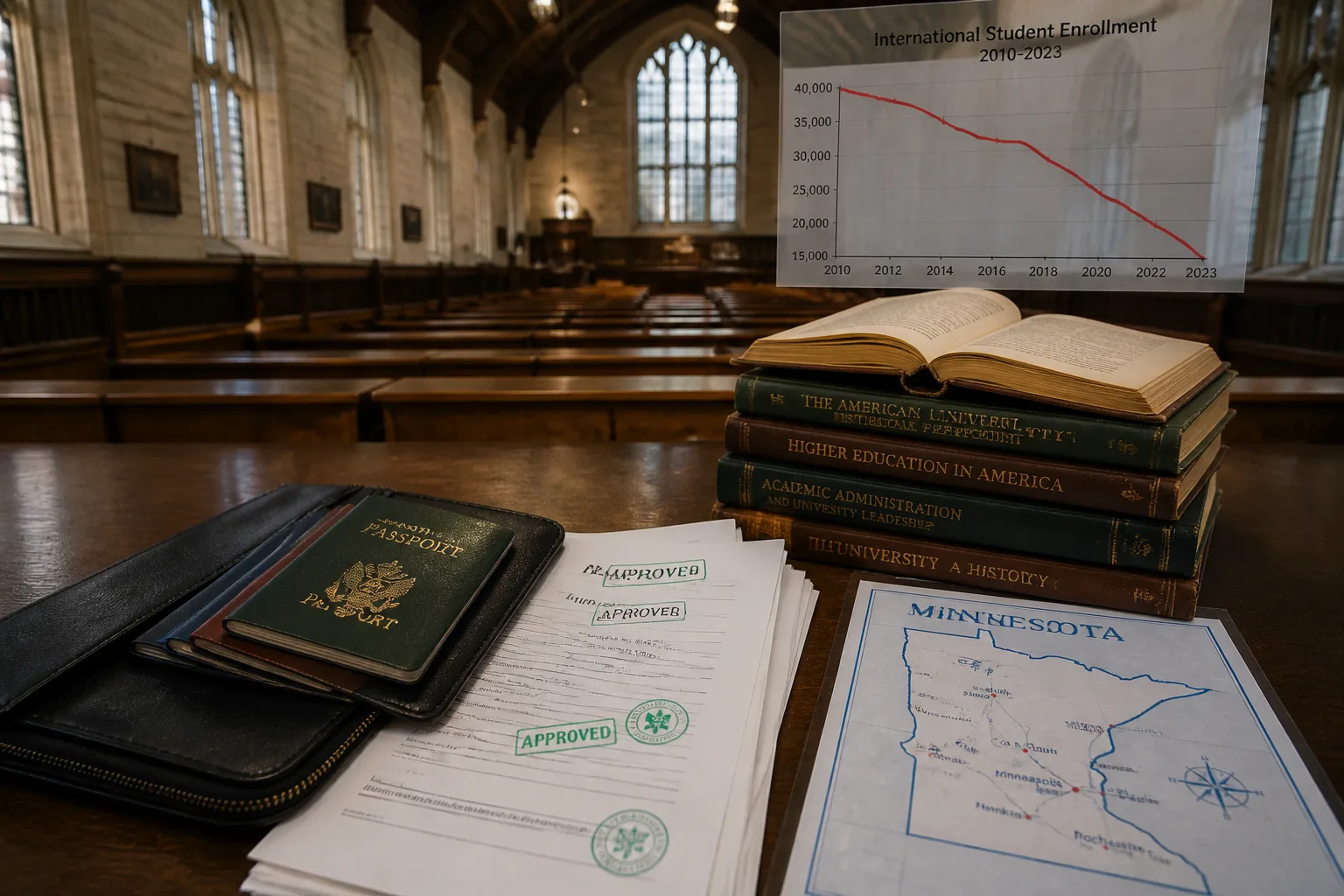
Minnesota Colleges See Sharp Drop in International Students as Trump Administration Tightens Visa Rules
Minnesota’s campuses are feeling the sting of a new visa crackdown that has already turned the state’s international‑student count into a shrinking number. The change—born out of a broader Trump‑era effort to tighten immigration controls—tightens how long F‑1 and J‑1 students can stay in the United States and raises the bar for getting a visa in the first place.
The federal policy, finalized on July 16, 2026, ends a 1978 rule that let students remain for the full duration of their program. From now on, they can stay for no more than four years unless they secure extra approval. And, starting September 15, the government has begun to deny more student visas. At Bethany Lutheran College in Mankato, admissions vice‑president Jeff Lemke reports that international students now make up about 20 % of the campus—a share that peaked last year—but the denial rate has jumped 30 % over the past 12 months, directly slashing the number of newcomers who can enroll.
The ripple effect is felt across the state. Minnesota State University, Mankato (MSU Mankato) is bracing for a 10 % fall in international enrollment for the upcoming semester. Dean of Global Education Will Coghill‑Behrends describes the loss as “visceral,” noting that each missing student translates into millions of dollars in lost tuition and ancillary revenue that have already hurt the university’s budget. He also warns that fewer international peers mean domestic students miss out on the cultural and intellectual diversity that enriches campus life.
For those already on campus, uncertainty looms. Kelma Ngwa Amambua, a 21‑year‑old Gambian sophomore studying bioinformatics at Bethany Lutheran, says she’s “trying to keep the doubts about my higher education experience from affecting my studies.” She acknowledges that the new visa limits make graduate study in America harder to pursue and that she may have to leave the country once her degree is finished.
The trend isn’t confined to Minnesota. NAFSA: Association of International Educators predicts an 18 % drop in U.S. international student enrollment for the 2026‑2027 academic year—an erosion that could shave $3.4 billion off the economic activity generated by college towns nationwide. In Minnesota alone, the decline is projected to cost the state more than $40 million in lost economic activity this year.
NAFSA’s CEO Fanta Aw expressed concern over the “massive trust deficit” that U.S. policy has created among foreign students. Aw added that the country must work hard to reassure allies and colleagues worldwide that it still values international education.
The policy shift is just one part of a broader Trump administration drive to tighten immigration controls. By limiting the length of stay and increasing visa denials, the federal government has already begun reshaping Minnesota’s higher‑education landscape. Colleges are losing revenue, students are confronting uncertainty, and the cultural and intellectual diversity that international students bring is quietly fading.
At present, the situation remains fluid. Institutions are monitoring visa trends closely and advising prospective students to apply early. The federal government has not yet announced whether further adjustments will be made to the visa process.
In short, Minnesota’s universities are grappling with a sharp decline in international enrollment driven by tightened U.S. visa policies, with significant financial and cultural implications for campuses and the state economy.