Missouri Supreme Court Set to Decide Whether Voters Can Challenge New Congressional Map
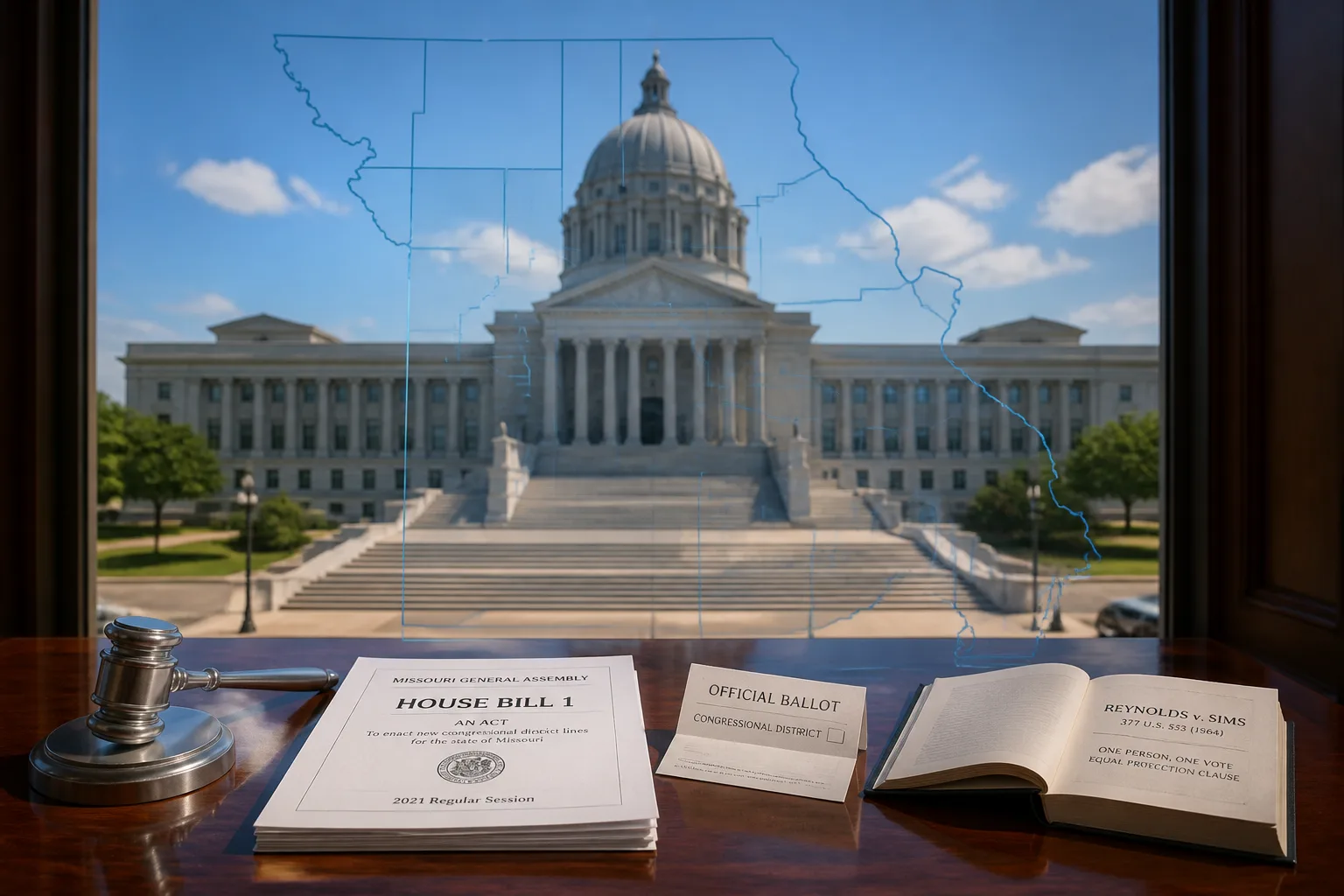
Missouri voters are on the brink of deciding whether they can put a congressional map on the ballot—an unprecedented showdown that could redraw the state’s political landscape. The Missouri Supreme Court will hear arguments Wednesday, Sept. 10, 2024, on whether the electorate can force a referendum on the legislature’s newly drawn congressional map.
The map in question was crafted by a Republican‑controlled General Assembly in a special session called by Gov. Mike Kehoe in August 2025. It re‑draws the 5th congressional district, stripping it of its long‑standing Democratic seat and shifting the balance in favor of the GOP. Democrats and a citizen‑led group, People Not Politicians, allege the change is a partisan gerrymander.
To challenge the map, the group collected more than 300,000 signatures—far exceeding the 20,000 required—to qualify a referendum for the November 2026 ballot. The effort was stymied when Republican Secretary of State Denny Hoskins refused to place the petition on the ballot, citing the timing of the primary election. Hoskins’ decision was sued, and the Missouri Supreme Court has already ruled on several related matters: it upheld the governor’s power to call a special session, allowed the redistricting law to take effect while signatures were verified, and rejected Hoskins’ earlier refusal to certify the referendum.
Now the court must decide whether the Missouri Constitution’s referendum provision—"any act" of the General Assembly may be subject to a petition‑initiated vote—covers congressional redistricting. Attorney Chuck Hatfield, representing People Not Politicians, argues that the text of the constitution does not exclude redistricting. He points to a 1922 referendum on a congressional map, the only earlier instance in which a Missouri voter‑initiated referendum addressed congressional districts.
Opposing the referendum, state Solicitor General Lou Capozzi contends that allowing a vote would invalidate the results of the Aug. 4 primary, in which candidates were elected under the new map. Capozzi says that the federal Constitution’s requirement that state legislatures set congressional district boundaries places the map beyond the reach of a referendum.
Legal scholars note that the Missouri Supreme Court’s past decisions show a mix of approaches. A recent analysis of 37 state Supreme Court cases since 2000 found that the court relied on precedent in 15 cases, on the text of the constitution in 10, and used a combination of methods in 12. In the 2025 redistricting case, the court relied primarily on the text of the constitution. Associate professor Michael Smith, who has written on Missouri constitutional interpretation, says the court’s record suggests it will likely find that the referendum provision applies to congressional redistricting. Smith points to the 1922 referendum and the absence of any later constitutional amendment limiting the referendum’s scope as evidence of a broad interpretation.
Associate dean of law Allen Rostron notes that the question also touches on federal constitutional issues. If the court were to discuss the U.S. Constitution’s elections clause, the case could be appealed to the U.S. Supreme Court. However, both Smith and Rostron say that the likelihood of a U.S. Supreme Court appeal is low, because the Missouri Supreme Court would probably focus on state constitutional law.
The court must decide by next Tuesday, the last day in state law that it can add items to the November ballot. The outcome will determine whether the 2026 congressional elections in Missouri will be conducted under the new map or whether voters will have a chance to overturn it. The case is part of a broader national debate over mid‑decade redistricting. Several states, including Texas, North Carolina, and Missouri, have drawn new congressional maps ahead of the 2026 elections, a move that has drawn criticism from Democrats who argue it gives Republicans an unfair advantage.
If the referendum is allowed, the map would not take effect until voters approve it; if it is denied, the map will remain in place for the 2026 elections. The court’s decision will also signal how Missouri interprets the balance of power between the legislature, the electorate, and the judiciary in matters of electoral law. For now, voters and political parties are watching closely as the court prepares to weigh the constitutional arguments that could shape Missouri’s congressional representation for the next decade.