FAA Nears Decision on AI-Powered Air Traffic System Contract, Favoring Boston-Based Air Space Intelligence
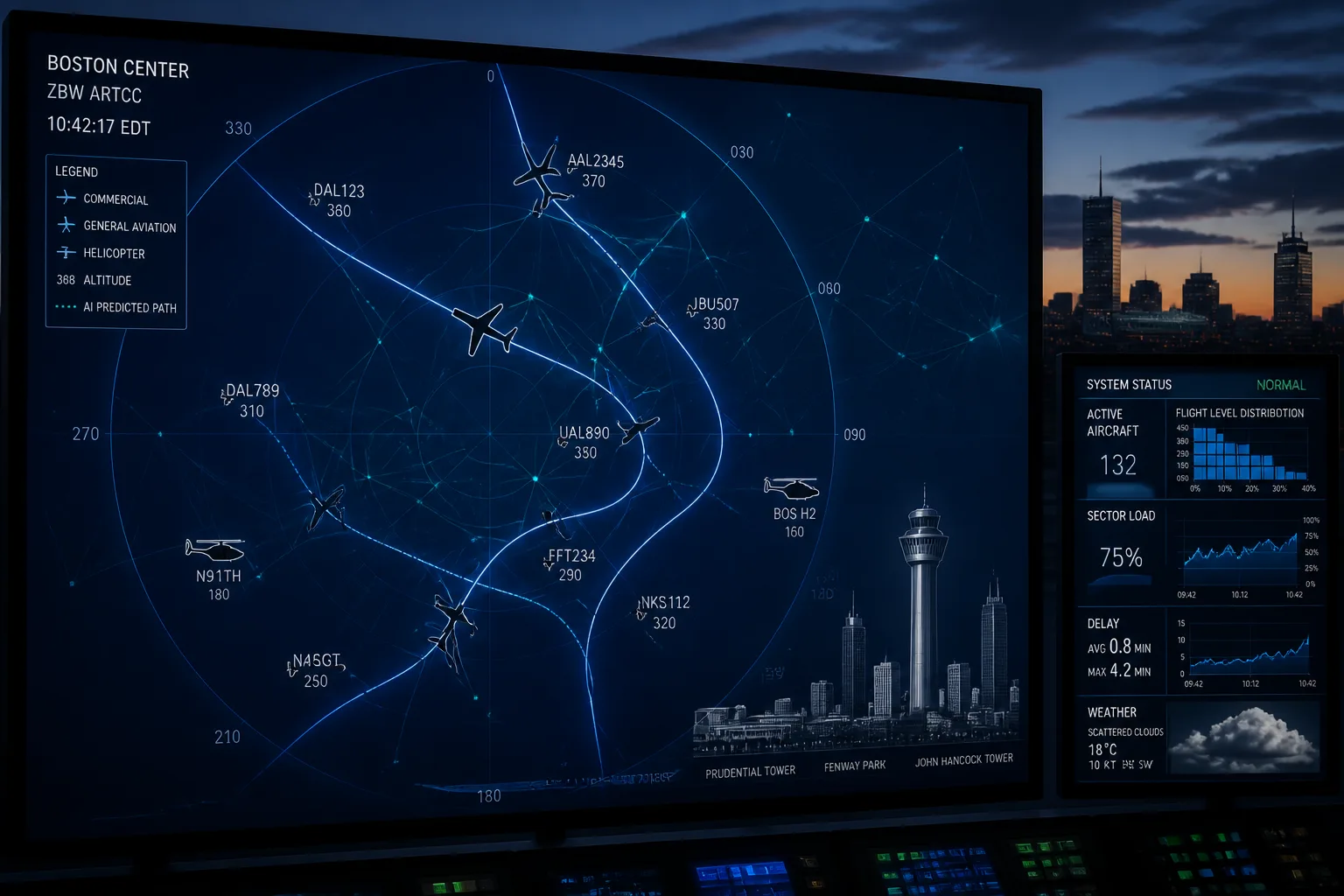
Imagine the sky above every American airport shifting from a reactive to a predictive rhythm—that’s the promise of the FAA’s upcoming AI‑powered air traffic management tool, the Strategic Management of Airspace Routing Trajectories, or SMART. With the agency poised to hand the contract to Boston‑based Air Space Intelligence (ASI), the United States could soon see a single, state‑of‑the‑art platform replacing decades‑old en‑route and terminal systems.
SMART sits at the heart of the FAA’s $32.5 billion modernization program, a sweeping overhaul that aims to streamline flight routing, cut delays, and ease the workload of air traffic controllers. The agency describes the system as a “central pillar” of its National Airspace System (NAS) modernization plan, and its core feature is an artificial‑intelligence engine that predicts flight trajectories before they happen.
ASI, a software‑first aerospace and defense outfit with just over 150 employees as of April 2026, is one of three companies vying for the single‑prime contract. Palantir Technologies, already embedded in FAA workflows through its Foundry platform, and Thales Group, a long‑standing defense and aerospace vendor, are the other contenders.
When asked about the award, an FAA spokesperson told The Air Current that the agency had not yet made a final decision but expected to do so soon. The spokesperson clarified that the award would be a single‑prime contract rather than a split award, and that the winner would be announced by the end of the third quarter of 2026.
ASI’s CEO has not yet commented on the potential award, but the company’s website describes it as a “software‑first aerospace and defense company” that partners with airlines and government agencies to provide advanced, mission‑critical software.
The competition is fierce. Palantir’s data‑integration capabilities and existing FAA presence give it a strong case, while Thales’ established reputation in defense and aerospace could appeal to the FAA’s desire for proven reliability. ASI’s advantage lies in its laser focus on AI‑driven air traffic solutions and its smaller, more agile organization.
If ASI wins, the company will be responsible for delivering a system that could transform how flights are routed and managed across the country. The FAA’s modernization plan aims to reduce flight delays, lower fuel consumption, and improve overall safety by shifting ATC from a reactive to a predictive model.
The award remains tentative. Multiple sources familiar with the selection process have indicated that the decision could still change. The FAA’s final choice will likely hinge on technical evaluations, cost proposals, and each vendor’s ability to meet the agency’s strict performance and security requirements.
At this stage, the FAA is still evaluating the bids. No official announcement has been made, and ASI has not confirmed any engagement. The agency’s next steps will involve detailed assessments of each proposal, followed by a formal award announcement expected before the end of 2026.
The outcome of this procurement will have significant implications for airlines, airports, and the broader aviation industry, as the chosen vendor’s system will become the backbone of the nation’s air traffic management for decades to come.