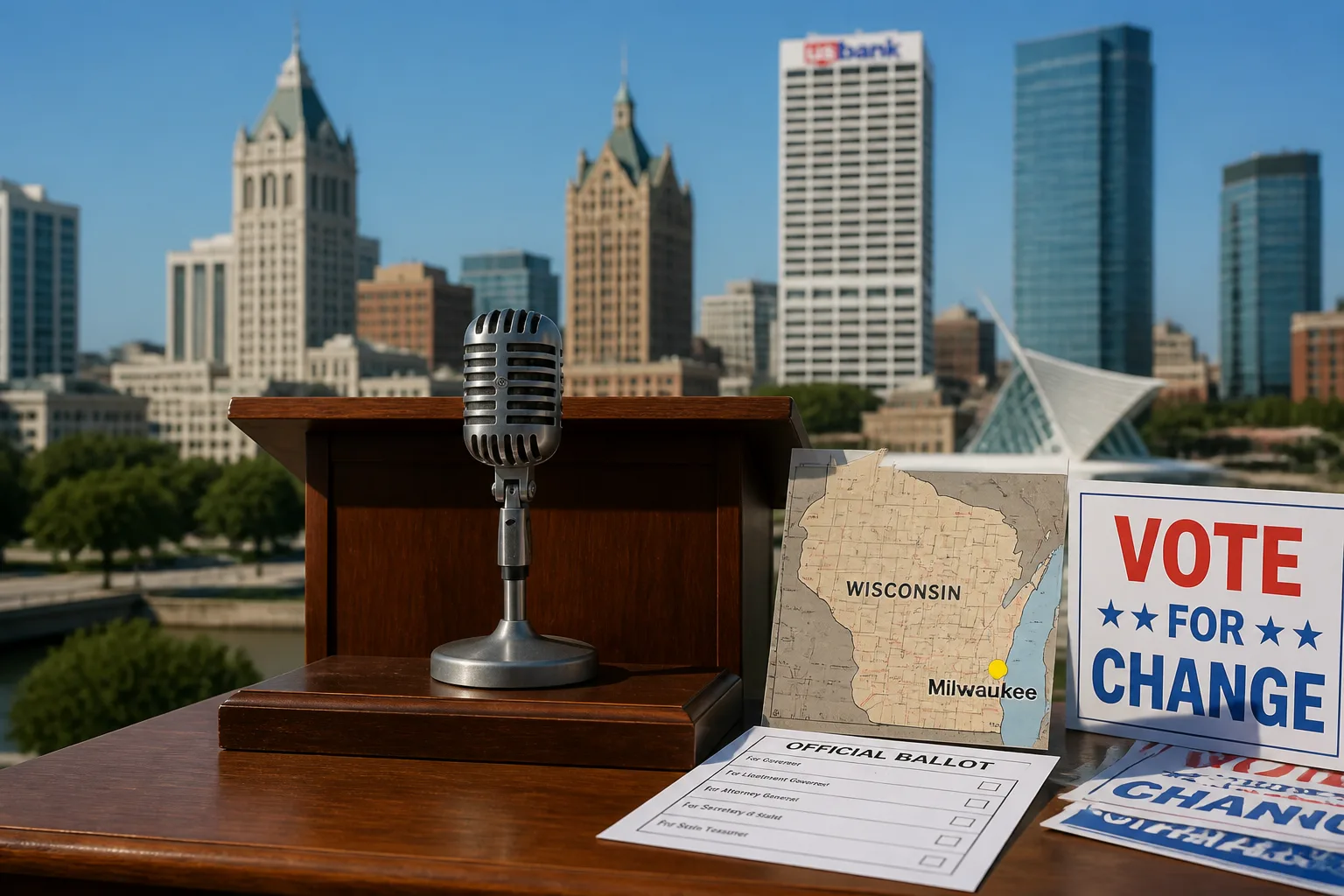
Milwaukee County Executive David Crowley Re-enters Wisconsin Governor Race After Brief Withdrawal
In a headline‑making twist that has Wisconsin politics buzzing, Milwaukee County Executive David Crowley has decided to re‑enter the Democratic primary for governor, just days after pulling out and endorsing Lieutenant Governor Sara Rodriguez. The announcement, made on July 17, 2026, follows Rodriguez’s sudden exit from the race the same day after a campaign‑finance probe uncovered serious discrepancies.
Crowley, who took office as Milwaukee County’s chief executive in 2020, is the first African‑American and the youngest person ever to hold that post. He had previously represented Wisconsin’s 17th Assembly district from 2017 to 2020. In early July, he stunned the party by ending his own gubernatorial bid and urging Democrats to rally behind a single challenger to Republican U.S. Representative Tom Tiffany, who is the current GOP nominee. Crowley’s withdrawal was followed by a public endorsement of Rodriguez, who had been campaigning on a platform that highlighted health care and economic recovery.
Just a week later, Rodriguez’s campaign was forced to suspend operations after investigators revealed that her finances were far below what she had reported. The scandal left her campaign with a shortfall that made continuing untenable, and she dropped out on Friday, July 17. In the wake of that collapse, Crowley’s spokesperson Brandon Weathersby confirmed that the former county executive would announce his comeback on Saturday. The move has sent ripples through the Democratic field.
“Whether there are two people or twenty in the primary, we’re going to focus on beating Tom Tiffany in the general election,” said former lieutenant governor Mandela Barnes, who is also a candidate for governor. Barnes stressed that the size of the primary should not distract from the larger goal of defeating the Republican nominee. State Senator Kelda Roys added a note of caution: “We have a very important task in November, and that is beating Tom Tiffany. Now is not the time to move backwards and be in more disarray.” Joel Brennan, a former state secretary of administration and current candidate, remarked that “candidates decide when it’s time to go, when it’s time to pull the plug. They do it with themselves, with their family.”
State Representative Francesca Hong acknowledged that Crowley’s return would give voters another choice but said it would not alter her campaign’s trajectory. “I think the county executive ran a strong race, and should he come back into the race, that gives voters another option, perhaps. However, I think the voters right now, many of them are with us, and we will continue to grow our momentum,” Hong said. University of Wisconsin‑Milwaukee political science professor Mordecai Lee warned that jumping back in would bring its own challenges. “It’s easy enough to drop out and drop in, but you have to think about the realities of money, the realities of politics, and the dynamic of where the race is going,” Lee said.
The Democratic primary is slated for August 11, 2026. The winner will face Republican Congressman Tom Tiffany on November 3. Crowley’s re‑entry adds another layer of complexity to an already crowded field, potentially reshaping fundraising dynamics, media coverage, and voter perception. The Democratic Party is still trying to coalesce around a single candidate who can mount an effective challenge to Tiffany, and Crowley’s comeback may either strengthen that effort or further fragment the base.
What comes next for Crowley is clear: he must file the paperwork to re‑qualify for the primary ballot and launch a strategy that addresses the concerns raised by his peers and the broader political context. As the campaign finance scandal surrounding Rodriguez continues to unfold and the primary field readjusts, voters can expect further developments in the coming weeks. The race remains fluid, but the stakes—both for Wisconsin’s future and for the national conversation about candidate vetting—have never been higher.