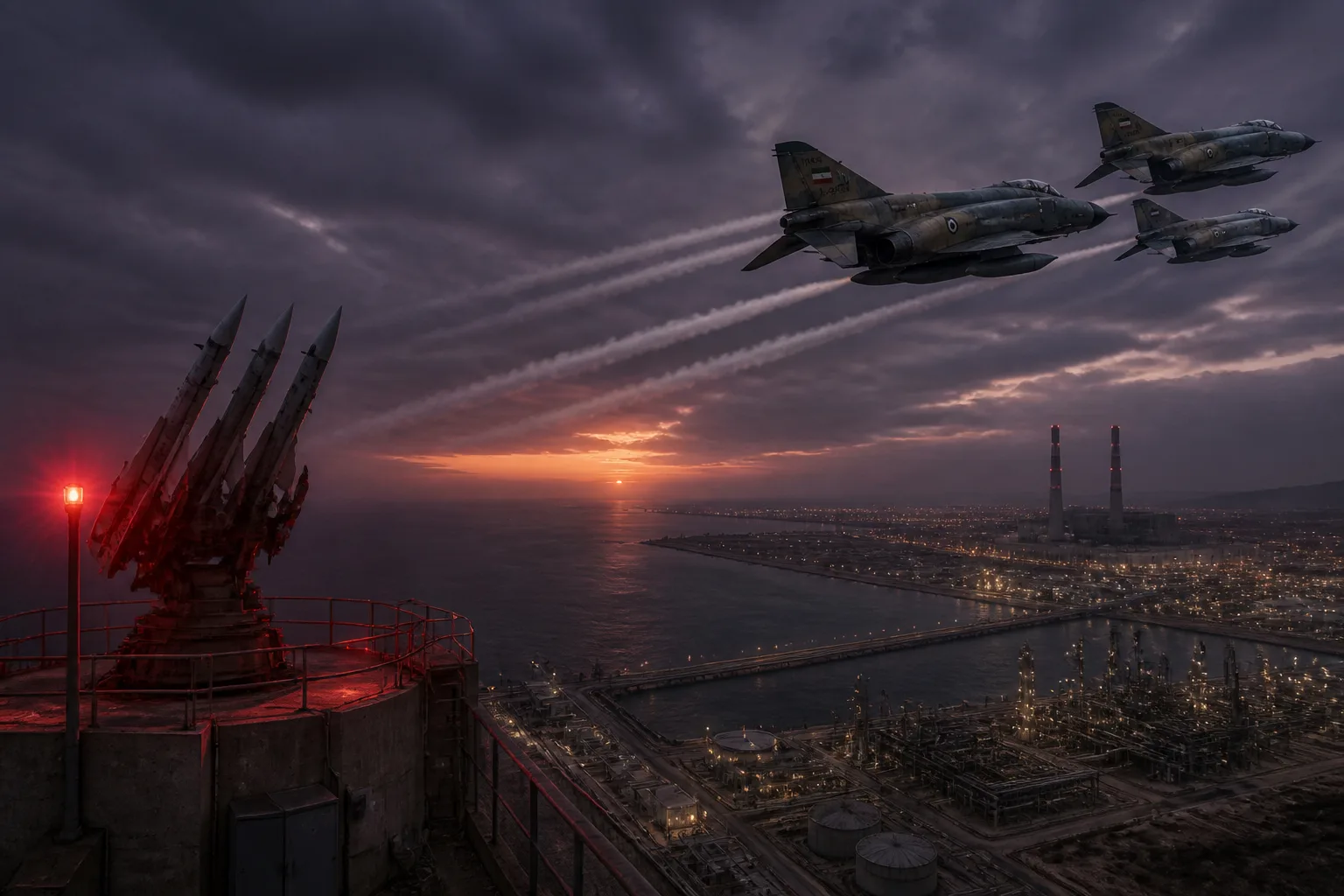
U.S. Strikes on Iranian Infrastructure Prompt Retaliation Across Gulf, Heightening Tensions
In the past 24 hours, U.S. forces launched a coordinated assault on Iranian military and logistics sites in southern Iran, striking bridges, a railway junction, and a radio‑communications office in Bandar Abbas. The goal? To choke the flow of troops and supplies that the Islamic Revolutionary Guard Corps (IRGC) Navy’s First Naval District and a major container terminal rely on.
A senior U.S. official told the Wall Street Journal that the attacks were designed to disrupt the IRGC’s ability to move personnel and equipment between Bandar Abbas and the interior. Iranian state media reported explosions in the city and its surroundings, and CENTCOM confirmed that the strikes hit “military logistics infrastructure.”
The same day, U.S. jets struck the Radio and Communications Regulatory Authority’s office in Bandar Abbas, a hub that manages Iran’s telecommunications spectrum. The next day, Iranian media said U.S. forces damaged the city’s railway junction station, about 10 kilometres west of Bandar Abbas. That rail link feeds the Shahid Rajaei terminal, which handles roughly 85 % of Iran’s container traffic and connects the country’s rail and highway networks.
Iran’s response was swift and wide‑ranging. On July 17, the IRGC announced it had struck a power‑and‑water desalination plant in Kuwait, calling the attack “Iranian aggression.” The Kuwaiti Ministry of Electricity, Water and Renewable Energy said the strike damaged several power generation units at an unspecified plant. Kuwait had intercepted 32 Iranian drones on July 16, and a previous drone strike in April had damaged a desalination facility.
In the same period, Iran attacked U.S. assets in Bahrain, Jordan, Qatar, and Oman on July 16 and 17. The IRGC claimed it destroyed a naval surveillance radar on the Salamah Archipelago and a U.S. air surveillance radar near Ghanem Island—targets that support U.S. operations in the Strait of Hormuz.
The IRGC also struck a former U.S. base in Syria on July 17, hitting a U.S. special‑operations command centre at the al‑Tanf garrison in the Badia. The strike was presented as retaliation for the killing of Iranian soldiers in Iranshahr, Sistan and Baluchistan Province, where U.S. forces had reportedly killed seven Artesh soldiers on July 15.
Adding to the chaos, the IRGC hit a Thai‑flagged vessel in the Strait of Hormuz on July 17. Tasnim News Agency, citing an informed source, said the vessel ignored warnings and attempted to transit the strait without Iranian permission. The United Kingdom Maritime Trade Operations (UKMTO) reported a projectile striking a vessel 19 nautical miles east of Khasab, Oman, the same day.
U.S. naval forces have been hard at work enforcing a blockade of Iranian ports. Since re‑imposing the blockade on July 14, CENTCOM has redirected three vessels and disabled one vessel in the Persian Gulf and Gulf of Oman. On July 16, the 11th Marine Expeditionary Unit boarded the Curacao‑flagged M/T Wen Yao, about 100 nautical miles east of Duqm, Oman, to verify compliance with the blockade.
The U.S. has also intensified strikes on Iranian missile and drone facilities. Satellite imagery between July 15 and 17 shows damage to buildings at the IRGC Aerospace Force Shahid Assi Zadeh Base in Ahvaz, Khuzestan Province, and to the Khorgu Missile Base in Hormozgan Province. Earlier in the month, the U.S. had struck the Khorgu base on multiple occasions.
While the U.S. and Iran have agreed to a 60‑day extension of a ceasefire, the rapid sequence of attacks and counter‑attacks demonstrates that the conflict remains highly volatile. The U.S. continues to target Iranian logistics and missile infrastructure, while Iran retaliates against U.S. assets and regional partners.
In other regional developments, Kuwait is reportedly negotiating an expanded defense pact with Pakistan that would include aircraft, drones, and an air‑defence system. The talks are in an early stage, but the agreement would further entangle Gulf security dynamics.
The situation in the Strait of Hormuz remains a focal point. Iranian attacks on shipping—including the Thai‑flagged vessel—and the U.S. enforcement of the blockade have reduced traffic through the southern transit route. Shipping companies have expressed reluctance to use the route despite U.S. escorts.
The next phase of the conflict will likely involve continued U.S. strikes on Iranian infrastructure and further Iranian retaliation against U.S. assets and regional partners. The international community watches closely as the situation could affect global energy supplies and maritime security.