Los Angeles Opens Dataland, the Worlds First Museum of AI Art, with Immersive Machine Dreams: Rainforest Exhibition
On June 20 2026, downtown Los Angeles welcomed the world’s first museum dedicated to artificial‑intelligence art. The new venue, called Dataland, sits inside The Grand LA—a Frank Gehry‑designed complex that spans 25,000 square feet. The museum opened to the public with a single, year‑long exhibition titled Machine Dreams: Rainforest, produced by Refik Anadol Studio. The show runs through January 31 2027 and is the first public presentation of the studio’s Large Nature Model, an open‑source generative AI trained on more than half a billion images of natural scenes.
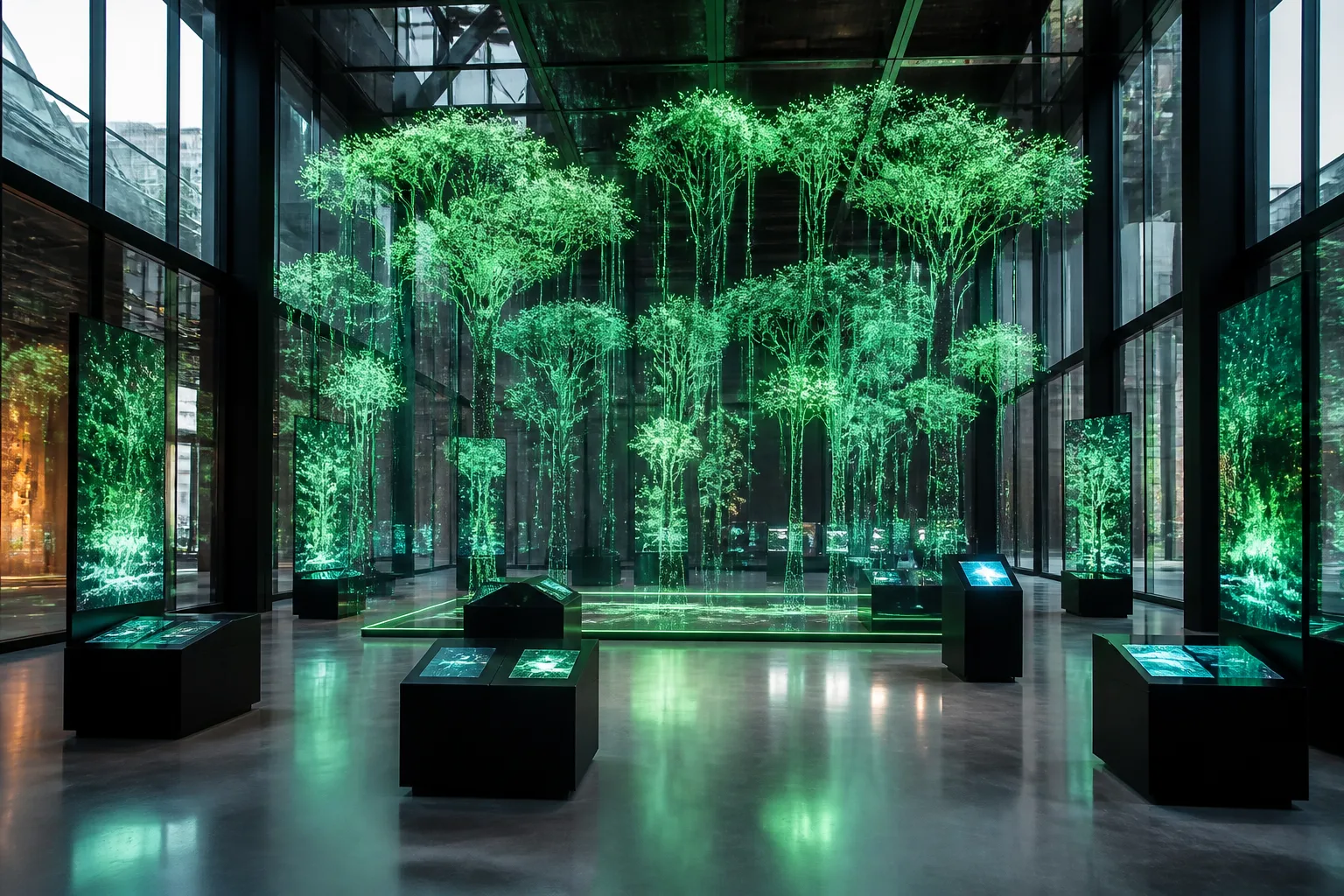
Dataland is not a traditional art museum. It is an experiential space that blends data, machine learning, and sensory design. Visitors move through five multi‑sensory galleries that combine projected light, sound, scent, and motion‑tracking. The layout and architecture echo other popular immersive attractions such as the Museum of Ice Cream and the Van Gogh immersive experience, but Dataland’s focus is on the creative potential of AI rather than nostalgia or pop‑culture references.
The centerpiece of the opening exhibition is the Large Nature Model (LNM). The LNM is the first open‑source AI model devoted exclusively to nature. It was trained on a curated dataset of millions of photographs and videos sourced from institutions such as the Smithsonian and National Geographic. The model can generate new images, audio, and even scent patterns that reflect the statistical properties of the training data. In Machine Dreams: Rainforest, the LNM produces a constantly shifting visual landscape that mimics the feel of a rainforest while simultaneously projecting abstract, machine‑generated patterns.
A key feature of the visitor experience is the use of biometric monitoring. Upon entry, guests are fitted with a neckbrace and a wristband that record heart rate, skin conductance, and other physiological signals. The system uses these signals as one of many inputs to the LNM, allowing the visuals to shift in real time in response to a visitor’s emotional state. The museum’s design team has stated that the biometric data is used only to personalize the experience; it is not stored beyond the duration of the visit. The experience is intended to make visitors feel as if they are part of the artwork, rather than merely observing it.
The opening has drawn attention from both the art world and the tech community. Refik Anadol, a Turkish‑American media artist known for his work at the intersection of data and architecture, has said that Dataland represents a new form of museum that “moves beyond object assets and understands that all art is content.” Critics who previously dismissed Anadol’s earlier work—such as the 2023 Unsupervised installation at MoMA—have noted that the scale and interactivity of Dataland offer a more immersive experience. The museum’s launch also follows a broader trend of experiential venues that use technology to create sensory environments.
Dataland is now open to the public. Admission is available online and at the venue, and the museum plans to host a series of talks, workshops, and artist residencies throughout 2026. The studio has announced that future exhibitions will explore other natural themes and that the Large Nature Model will be expanded to include additional modalities such as haptic feedback. As the first museum of its kind, Dataland is positioned to influence how museums, artists, and technologists collaborate on the next generation of immersive art.