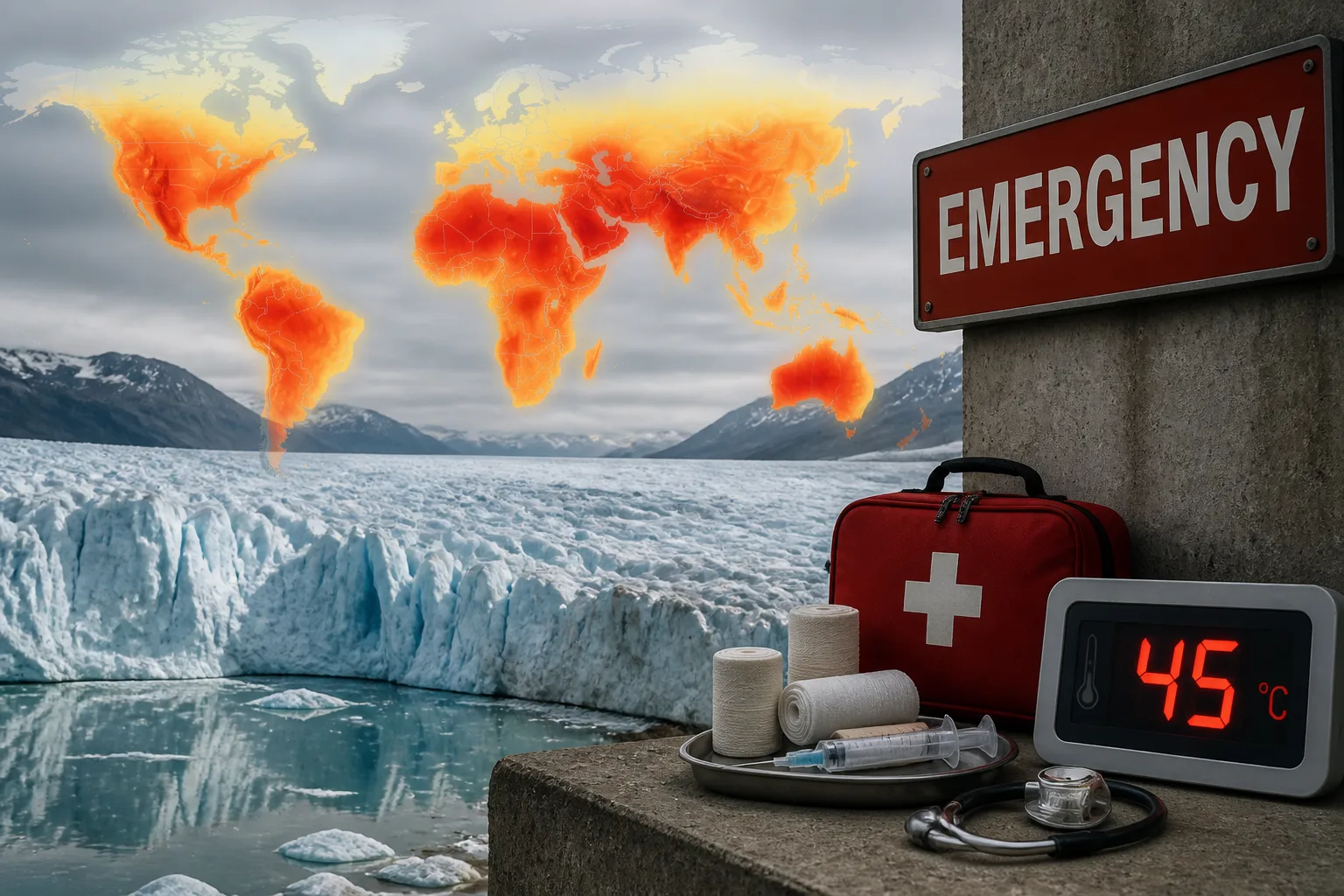
Amnesty International Declares Global Extreme Heat a Human Rights Emergency Amid Rising Death Toll
When the sun turns the world into a furnace, it doesn’t just scorch the earth—it threatens the very fabric of human life. In a hard‑hitting statement released on Wednesday, Amnesty International’s climate program director, Marta Schaaf, called the global surge in extreme heat a human‑rights emergency.
Schaaf warned that the blistering temperatures behind wildfires, droughts and floods are a political problem that endangers the rights to life, health, housing, water, sanitation, food, education and a healthy environment. She added that authoritarian regimes are aggravating the crisis by dismissing climate science, cracking down on protest, spreading disinformation and shielding powerful fossil‑fuel interests.
The call comes on the heels of mounting evidence of heat’s deadly toll. The World Health Organization’s heat‑and‑health fact sheet shows that the number of people exposed to extreme heat is rising sharply everywhere. Between 2000 and 2019, the WHO estimated that roughly 489,000 heat‑related deaths occurred each year, with mortality among those over 65 climbing about 85 percent over two decades.
In 2026, a record‑setting summer has already delivered staggering impacts. Successive heat domes put tens of millions of Americans under heat alerts, and federal data record the contiguous United States’ second‑hottest first half on record. In Europe, French authorities linked several thousand excess deaths to a June heatwave. Wildfires forced the evacuation of more than 325,000 people in France and Spain—blazes that rival the worst in France since World War II.
North Africa has also felt the burn. Tunisia’s meteorological service logged temperatures near 50 °C, with a 49.7‑degree reading in Kairouan that shattered a regional record. Researchers at Istanbul Technical University noted that Turkey is experiencing its most intense heatwaves in 75 years.
In South Asia, a single day of extreme heat in India is associated with roughly 3,400 excess deaths nationwide. A 2025 World Bank report estimated that heat cost Bangladesh’s economy 250 million lost workdays and US$1.78 billion in 2024. A survey of informal workers in Dhaka found that nearly three‑quarters said rising temperatures had eroded their health and incomes.
Canada’s fire agencies reported more active wildfires and a larger burned area than in either of the past two years.
Amnesty’s statement is paired with a two‑part demand. In the near term, the organization urges governments to protect people through adaptation and climate‑resilient public services—early warning systems, safe housing, access to water and heat protections. In the long term, it demands that polluters pay, that climate science and civic space be defended, and that a rapid, fully funded and equitable phase‑out of fossil fuels be delivered.
The call is aimed squarely at the United States under President Donald Trump. The Trump administration’s second withdrawal from the Paris Agreement in January 2025 set a disturbing precedent, and in March 2025 it pulled the United States from the board of the UN climate loss‑and‑damage fund. Trump declared a national energy emergency on his first day in office, directed the Justice Department to challenge state climate laws, and moved to repeal the 2009 “endangerment finding” that underpins most federal climate regulation.
Amnesty’s warning underscores that extreme heat is not merely an environmental issue—it is a crisis that erodes fundamental human rights. The organization’s appeal for immediate protection measures and long‑term accountability reflects the urgency of the situation.
The global community faces a growing number of heat‑related deaths, rising economic costs and widespread social disruption. How governments respond to the twin challenges of protecting citizens and curbing fossil‑fuel emissions will shape the trajectory of climate‑related human‑rights abuses for years to come.