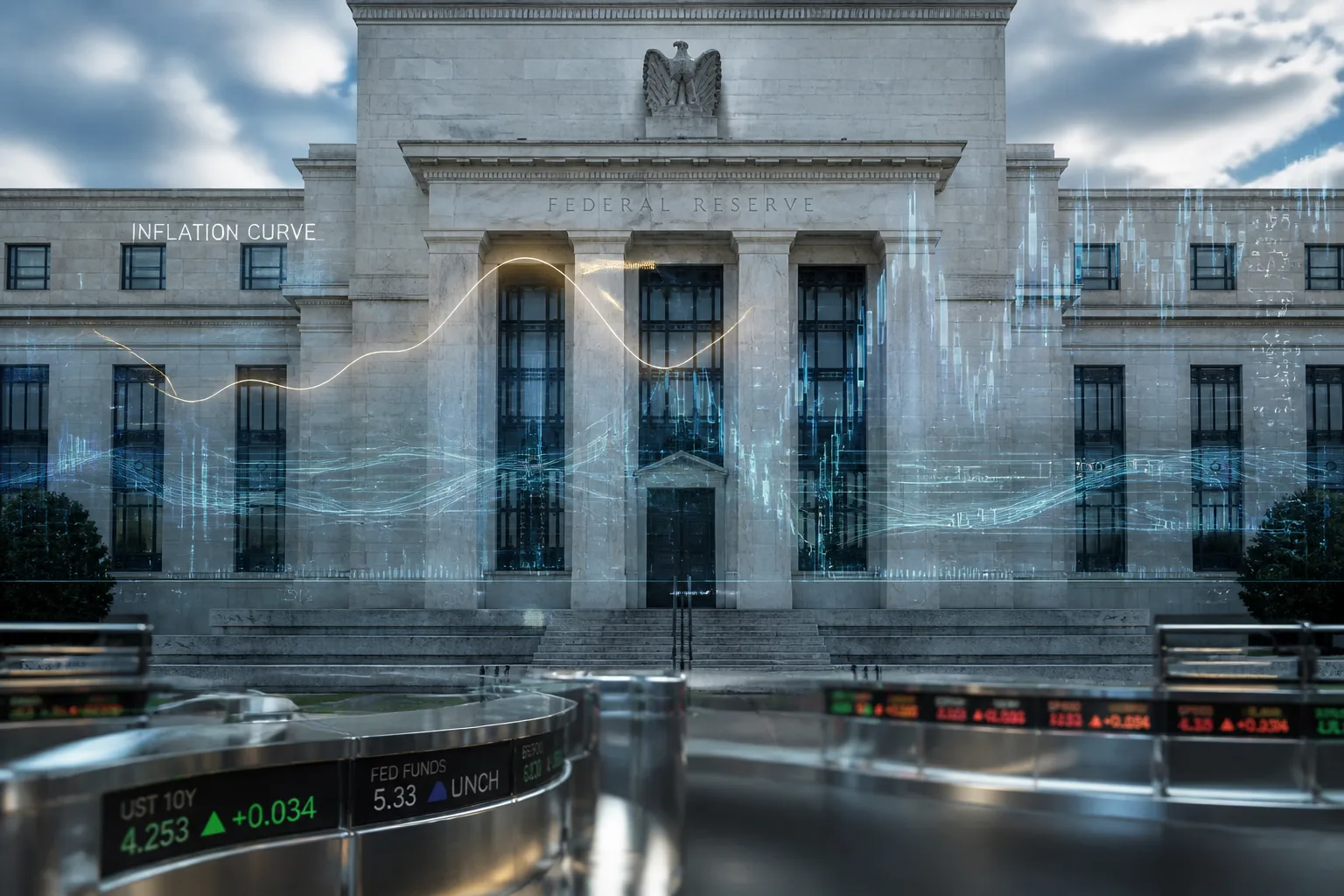
Fed Holds Rates Steady as Markets Step Up Inflation Fight
When the Fed decided to keep its benchmark rate steady, markets erupted like a fireworks display. On July 29 2026, the Federal Open Market Committee (FOMC) left the federal funds rate in the 3.5%–3.75% range, a move that surprised no one who follows the Fed’s long‑term battle against inflation.
Chair Kevin Warsh explained that the decision reflects a shift in the Fed’s thinking: the market is now doing much of the heavy lifting to tame prices. “After five years of inflation above our 2% goal, I don’t have a magic wand,” Warsh told reporters. He added that the central bank will continue to pursue price stability, but the benchmark rate will stay put for now. Warsh pointed to higher nominal and real yields on the Treasury curve since the last rate‑freeze in June as evidence that market participants are reacting to economic data rather than to Fed signals.
“Prices reacted in real time to incoming information,” Warsh said. “Market participants are learning to play the ball, not the referee, and market prices will continue to respond in the direction and magnitude they see fit.” He described this shift as a positive change, noting that the Fed does not always need to be the center of attention.
The market’s reaction was swift and dramatic. Long‑term U.S. Treasury yields spiked to levels not seen since 2007. The 30‑year Treasury yield, a key gauge of inflation expectations, leapt to 5.21%. Christian Hoffmann, head of fixed‑income at Thornburg Investment Management, said the steepening of the yield curve and the repricing of September hike odds indicate that investors are questioning the Fed’s message and credibility.
The decision was not unanimous. Three of the twelve regional bank presidents dissented, arguing for a quarter‑point increase in the target range. After the meeting, market expectations for a September rate hike rose. Most traders now anticipate a 25‑basis‑point increase, though some still see a possibility of no change, according to the CME FedWatch tool.
Experts warned that the Fed’s new approach carries risks. Isaac Wheeler, managing director of balance‑sheet strategy at Derivative Path, noted that the Fed’s willingness to let market tightening happen before policy action is a departure from former Chair Jerome Powell’s stance. Wheeler added that the Fed may be relying on market‑set conditions to control inflation.
“If the market’s tightened for me, maybe we have to do nothing,” Wheeler said. “But once the economy turns away from you, and there are existing price pressures—such as rising energy prices or factors emerging from the AI build‑up—it’s no longer enough for you to just convey this insistence that price stability is important.”
The impact on borrowing costs is already visible. The 30‑year fixed‑rate mortgage, which tracks the 10‑year Treasury note rather than the Fed’s benchmark rate, rose to about 6.66% after the July meeting, up from 6.47% in mid‑June. Jeff DerGurahian, loanDepot’s chief investment officer, said that mortgage rates will likely need energy prices to settle and inflation to remain under control before they can move lower.
Other rates, such as those on credit cards, also respond more directly to the federal funds rate. Hoffmann warned that increased uncertainty could push these rates higher, adding to borrowing costs for consumers.
While the Fed’s current strategy may not immediately affect gas or grocery prices, higher borrowing costs can slow spending and eventually help bring inflation down. Whether this path will be effective remains to be seen.
In short, the Fed has kept rates steady, leaning on market forces to help tame inflation. The decision sparked mixed reactions from officials and investors, and market expectations for future hikes have shifted. The next Fed meeting in September will be closely watched to see whether the central bank will adjust its stance as the economy and inflation data evolve.