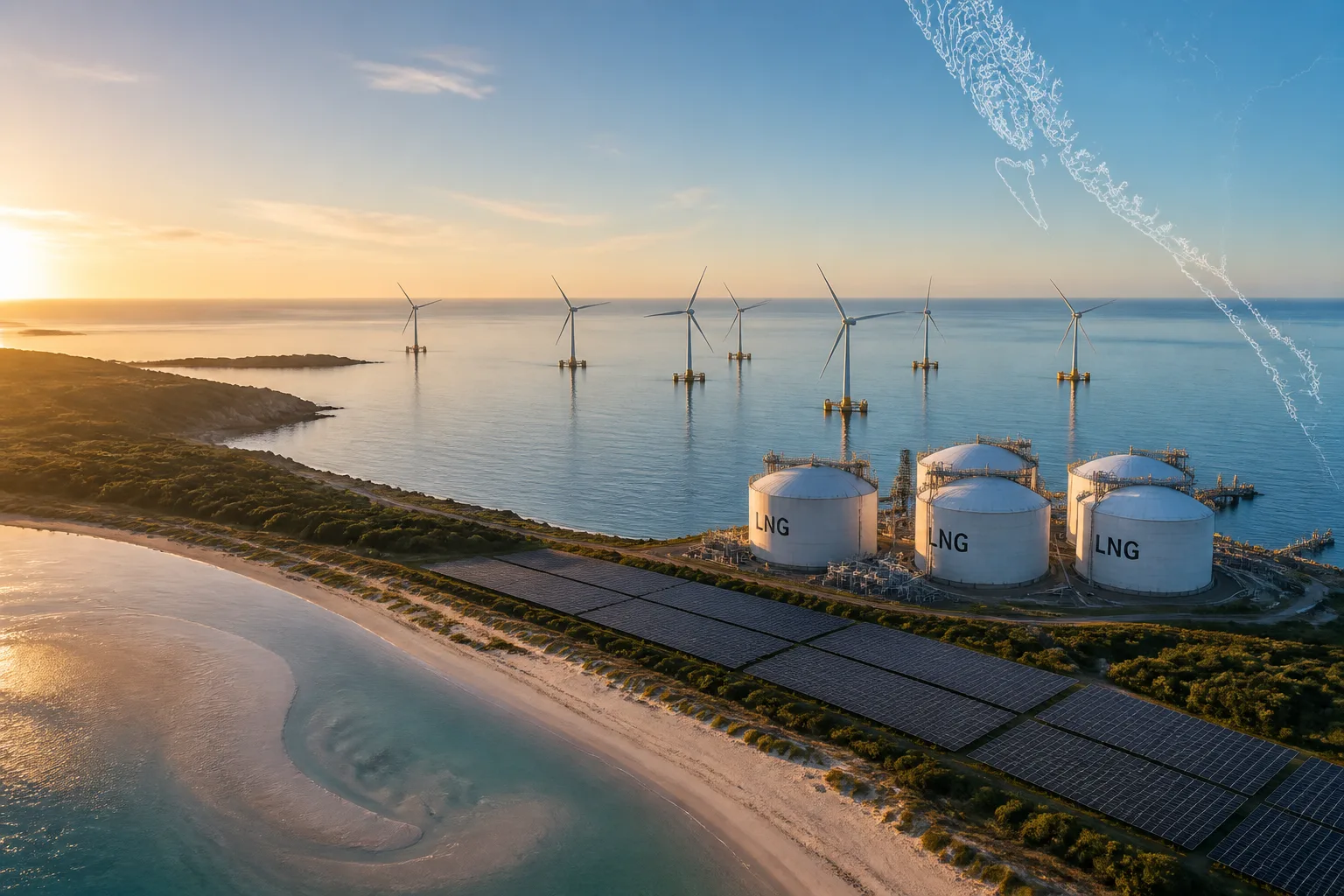
Australias LNG and Clean Energy Potential Could Anchor Indo-Pacific Energy Security
When the Strait of Hormuz shut down in 2026, Asia faced a shocking shockwave—roughly 80 % of its oil imports and 27 % of its natural‑gas imports vanished overnight. That single choke point, the only maritime link from the Persian Gulf to the open ocean, carries about 20 % of global LNG and 25 % of seaborne oil trade. The result? Pacific island nations, whose economies depend on diesel and food imports, were suddenly staring at severe supply shortages.
The disruption is hard to ignore. Governments across the Asia‑Pacific are scrambling for reliable partners to lock in energy supplies. The United States is pushing an “energy dominance” strategy that leans heavily on domestic oil and gas production to keep prices low and fuel the AI data‑centre boom. China, meanwhile, is amassing oil reserves while aggressively exporting electric vehicles, solar panels, batteries and other green technologies to stay ahead.
Australia sits at a unique crossroads. It’s the only country in the region that can ship large volumes of LNG on short routes to South and Southeast Asia. Russian gas is heavily sanctioned, Qatari LNG is vulnerable to Strait disruptions, and U.S. export terminals on the Gulf Coast add roughly ten extra days of transit compared with shipments from Darwin.
In 2024, Australia exported 21.2 million tonnes of LNG—a 1.9 % year‑on‑year increase. That volume supplies 43 % of Japan’s LNG imports, 37 % of Taiwan’s, 35 % of China’s, and 25 % of South Korea’s. Its LNG infrastructure—Pluto in Western Australia and Gladstone in Queensland—keeps the flow steady.
Beyond fossil fuels, Australia holds some of the world’s largest reserves of critical minerals used in batteries and renewable‑energy systems. Its clean‑energy resources—wind, solar and hydro—are among the highest in the world, and the country is already developing low‑carbon LNG pathways such as carbon‑capture‑and‑storage (CCS) and e‑methane.
A coordinated regional energy‑security alliance could give Australia a platform to guarantee LNG supplies in the short term while positioning it as a long‑term partner for green‑fuel exports. Such an alliance would need allies like the United States and Japan—who provide financing and shipping infrastructure—and would cover the full energy supply chain: critical minerals, natural gas, diesel, hydrogen, batteries, data‑centre power and emerging low‑carbon fertilisers.
Australia’s domestic challenges—slow approval processes, a looming gas shortfall in southern states and a sluggish renewable transition—must be addressed if the country is to meet regional demand. The 2026 crisis has shown that the world is not yet ready to abandon fossil fuels entirely. Many Asian economies are targeting net‑zero dates of 2060 or 2070, meaning they will still need gas and oil beyond 2050.
A clear, cohesive strategy would let Australia retain its role as a reliable LNG exporter while opening pathways for clean‑energy exports. It would also give Indo‑Pacific partners confidence that Australia will not abruptly cut fossil‑fuel supplies. The opportunity is time‑sensitive; the window for shaping the region’s energy landscape is narrowing as global supply chains adjust to the new geopolitical reality.
In short, Australia’s geographic advantage, abundant LNG capacity and rich critical‑mineral resources position it to become a regional energy superpower. By forging a partnership with like‑minded allies and resolving domestic bottlenecks, the country can secure its energy future and help anchor stability across the Indo‑Pacific.