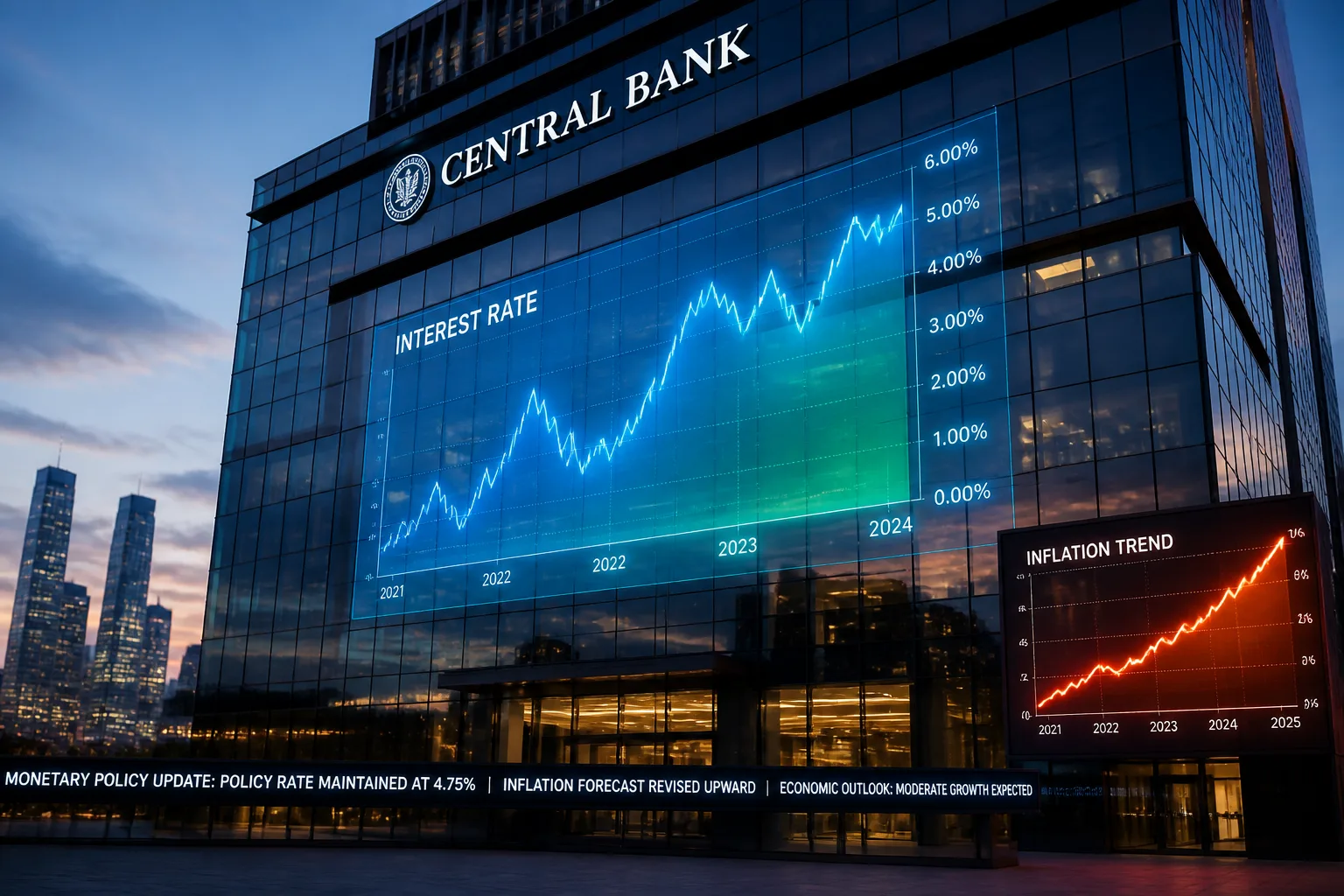
Federal Reserve Holds Rates Steady, Signals Future Hike Amid Inflation Concerns
On Wednesday, the Federal Reserve decided to keep the federal funds rate on the same page, a move that sends a clear message: the central bank isn’t ready to lower borrowing costs just yet.
The decision arrived on the heels of the Fed’s latest quarterly projections, which now show nine officials expecting a rate increase by the end of 2026. That shift reflects a growing unease that inflation is still skating above the 2 % target.
What made the FOMC’s policy statement stand out was its razor‑thin wording. Gone were the tentative phrases that had hinted at a possible rate cut this year. Instead, the Fed simply stated the decision and reaffirmed its pledge to keep ample reserves in the banking system—an echo of Alan Greenspan’s crisp style that the 12‑member committee approved unanimously.
Kevin Warsh, the Fed’s new chair appointed by President Donald Trump earlier this year, has been a driving force behind the pared‑down language. He emphasized that productivity growth and capital investment remain strong, while noting that inflation remains elevated relative to the committee’s 2 % goal. Warsh pointed to supply shocks—especially in the energy sector—as a key driver of the lingering price pressure.
The updated projections paint a hopeful picture for next year: inflation should slow sharply, allowing the federal funds rate to ease back to its current level by the end of 2027, with a modest dip in 2028. The statement ended with a firm commitment to delivering price stability.
Markets didn’t take long to react. Treasury yields ticked up, U.S. stocks dipped modestly, and the dollar climbed against a basket of currencies. Short‑term interest‑rate futures now price a higher probability of a rate hike by September than a hold, indicating that traders are already factoring in the new outlook.
A quirky footnote in the release was the missing dot on the Fed’s quarterly “dot‑plot.” Only 18 of the 19 policymakers submitted projections for the chart, and the absent dot is believed to have been withheld by Warsh, who has been critical of the quarterly Summary of Economic Projections.
This announcement marks a turning point in both leadership and monetary policy direction. Since the fall of 2024, the Fed’s stance had leaned toward cutting borrowing costs from the elevated rates that were deployed to tame inflation, which peaked at 40‑year highs during the COVID‑19 pandemic.
In short, the Fed’s decision to hold rates steady reflects a cautious approach while signaling that a hike is likely later this year. The new projections and the streamlined statement underscore the new chair’s focus on price stability and a return to a more traditional communication style.