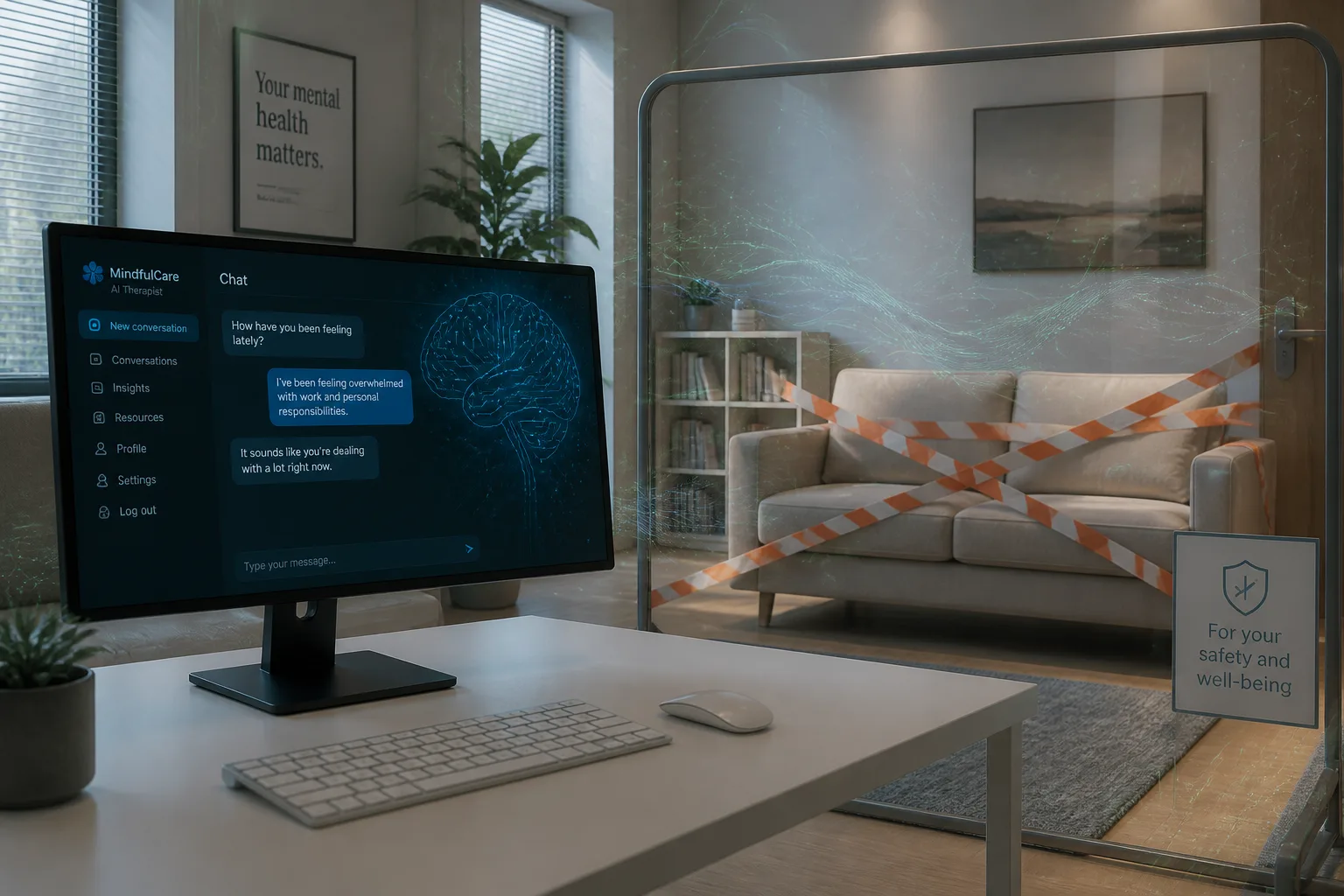
Psychologists Report Growing Use of AI Chatbots in Mental-Health Care, Raising Dependency and Safety Concerns
Imagine scrolling through a chat and thinking you’ve found a therapist, a friend, or even a confidant. That’s the reality for a growing number of people, and a recent American Psychological Association (APA) survey is pulling back the curtain on how deep this trend has gone.
A nationwide study of more than 1,200 U.S. psychologists found that a staggering 77 % of respondents say their patients bring up AI tools—whether for emotional support, self‑diagnosis, companionship, or other mental‑health purposes. In other words, AI chatbots are no longer niche tech; they’re becoming part of everyday conversations about well‑being.
Key findings - 39 % of psychologists reported that patients use AI to self‑diagnose mental‑health conditions. - 33 % said patients use chatbots to help with therapy or treatment. - 35 % noted patients treating AI as an additional mental‑health professional.
While the numbers paint a picture of widespread engagement, the survey also flags some red flags. Only a handful of clinicians noted truly unhealthy use, but a solid 36 % observed patients developing a dependency on a chatbot. Fifteen percent even reported distorted thinking or delusions linked to chatbot interactions.
Social uses of AI The study also uncovered a social side to the phenomenon: - 22 % of psychologists said patients were using AI for friendship. - 13 % reported patients engaging in intimate relationships with chatbots. Among those who formed such bonds, 71 % discussed their mental health with the AI, 68 % felt supported or validated, and 41 % used the chatbot to reinforce healthy coping skills.
Limitations Because the survey only captures interactions with existing patients, the real‑world use may be even higher. The APA also reminds readers that AI tools are not private and should not replace licensed mental‑health professionals.
Context from other research A recent joint study by City University of New York and King’s College London found that several leading AI models can reinforce delusions, paranoia, and suicidal ideation—highlighting xAI’s Grok 4.1 Fast as the worst performer in this regard. In a separate analysis, an overwhelming 97 % of psychologists surveyed felt that chatbots could inadvertently reinforce negative behaviors or delusional beliefs, and 94 % said current versions lack the nuance needed to treat conditions effectively.
Legal scrutiny The legal landscape is tightening. OpenAI, Google, and xAI have all faced lawsuits in recent months. A wrongful‑death suit against Google alleges its Gemini chatbot fueled a Florida man’s delusions before his suicide. Other lawsuits target OpenAI over a mass shooting in British Columbia and an accidental overdose, while a class action accuses xAI’s Grok of generating sexually explicit images of minors.
APA’s stance The APA acknowledges that AI can help users organize thoughts and supplement professional care, but it warns that chatbots are not private and should not replace licensed mental‑health providers. The organization cautions that many people—especially teens and adolescents—may be turning to AI as a more affordable and accessible option for mental‑health advice, but that it is not a safe or effective replacement for a qualified professional.
Implications The findings suggest that mental‑health practitioners need to be aware of how patients are using AI tools and to discuss potential risks. While chatbots can offer convenience and immediate responses, they also carry the risk of fostering dependency, reinforcing harmful beliefs, or providing inaccurate information. As AI companies continue to expand chatbots and AI companions, clinicians, regulators, and users must balance the benefits of accessibility with the need for safety, privacy, and professional oversight.