Self-Driving Cars Prompt Shifts in Insurance Liability Laws
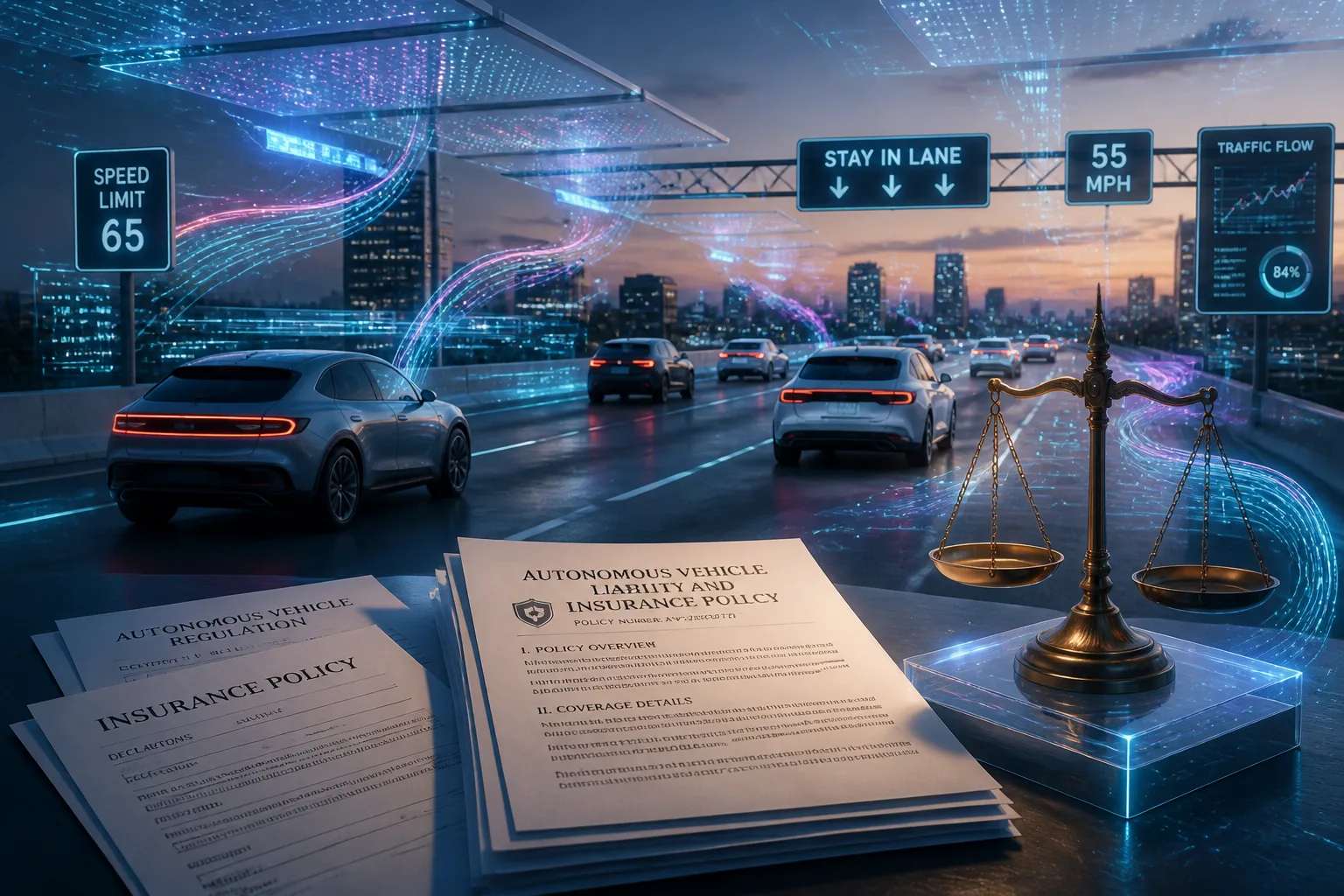
The rise of autonomous vehicle technology is prompting a re‑examination of existing liability laws and insurance practices in the United States. As self‑driving cars transition from experimental prototypes to commercial products, the legal framework that determines responsibility for accidents and property damage must evolve.
Current regulations are based on the assumption that a human driver is in control of a vehicle. When a collision occurs, the driver’s insurance policy typically covers bodily injury and property damage. However, as vehicles become increasingly automated, the point of control shifts from the driver to the vehicle’s software and sensors.
The industry’s response has already begun. The insurance sector is anticipating a rise in commercial and product liability claims as higher levels of automation—specifically SAE Levels 3 and 4—are introduced. At these levels, the vehicle can handle most driving tasks, but the driver may still be required to intervene in certain situations. This hybrid control model complicates the assignment of fault.
According to the U.S. Department of Transportation, liability for incidents involving autonomous vehicles is a developing area of law. The current framework does not clearly delineate whether the manufacturer, the software developer, or the vehicle owner should be held responsible when an autonomous system fails. As a result, insurers are preparing for a potential shift from traditional personal auto policies to more complex commercial and product liability lines.
The shift is expected to have a measurable impact on the insurance market. Personal automobile insurance, which has historically been the largest segment of auto coverage, may see a reduction in its share of the overall market. Conversely, commercial and product liability insurance—covering manufacturers and technology providers—could experience growth as the number of autonomous vehicles on the road increases.
Regulators are also taking notice. Several states have begun to draft legislation that addresses the unique risks posed by autonomous vehicles. These laws aim to clarify the responsibilities of manufacturers and owners, and to establish a framework for insurance coverage that reflects the new technology’s risk profile.
In addition to legal changes, insurers are exploring new underwriting models. Some companies are developing usage‑based or pay‑per‑mile policies that align premiums with actual driving behavior. These models are already available for low‑mileage drivers and may become more common for autonomous vehicles, where traditional metrics such as miles driven may no longer be the most relevant risk indicators.
The transition to autonomous vehicles also raises questions about data privacy and cybersecurity. If a vehicle’s sensors or software are compromised, the resulting accident could implicate the manufacturer or the software provider. Insurers will need to assess the security posture of autonomous systems as part of their risk evaluation.
Overall, the insurance industry is at a crossroads. The shift from human‑controlled to autonomous vehicles is forcing a reevaluation of liability, coverage, and risk management. As the technology matures and regulatory frameworks are established, insurers will need to adapt their products and underwriting practices to meet the new realities of the automotive landscape.
The evolving insurance landscape underscores the importance of clear legal guidelines and robust risk assessment tools. Stakeholders—including manufacturers, regulators, insurers, and consumers—must collaborate to ensure that liability is appropriately assigned and that coverage adequately protects all parties involved in the emerging era of self‑driving cars.