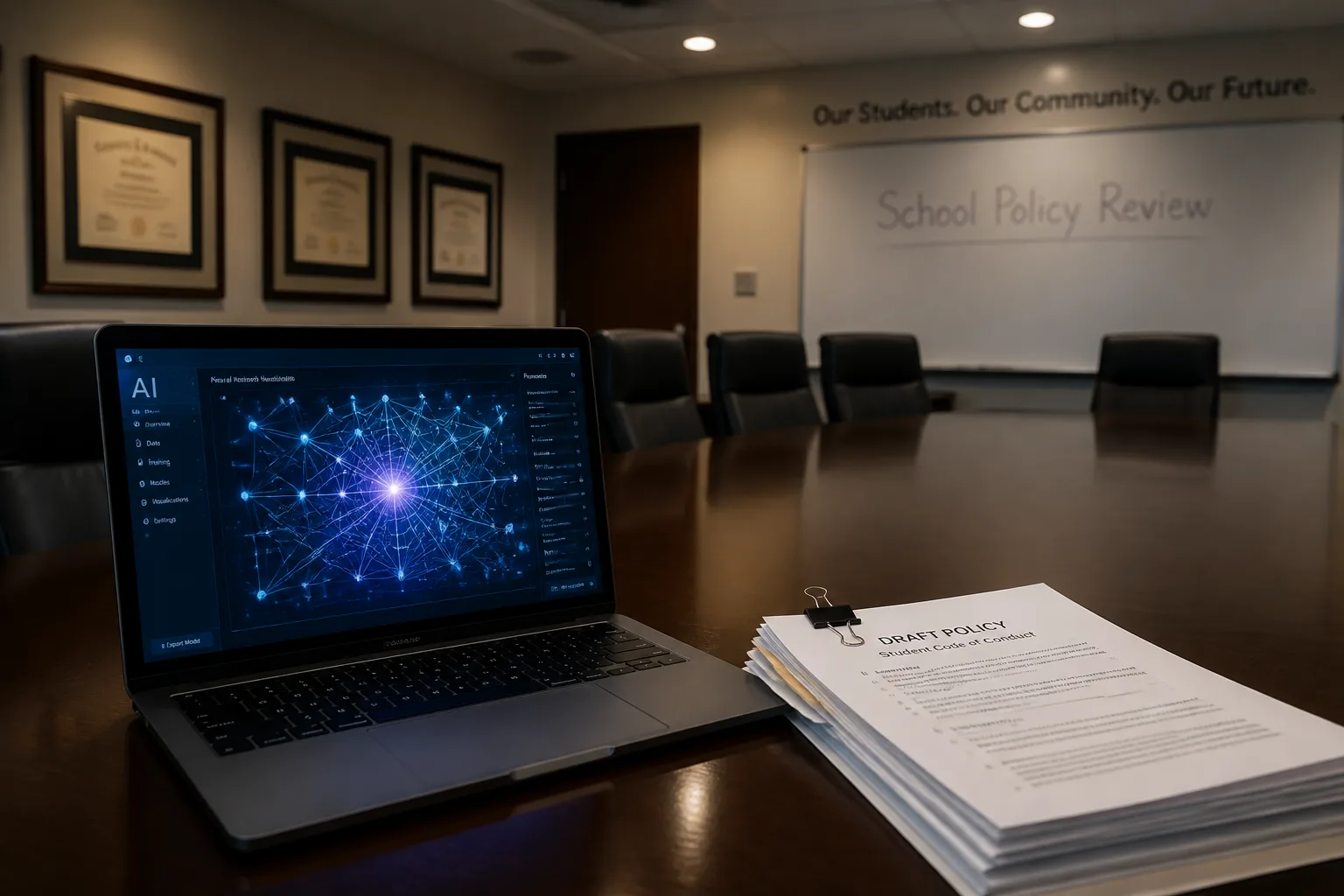
Wake County Drafts AI Policy for Students and Staff Amid Growing Concerns
Wake County, North Carolina – In a bold move that could reshape classroom tech, the district’s largest school system – with more than 161,000 students and 203 schools – is drafting a policy to govern how artificial intelligence (AI) is used by students, teachers, and staff.
During a Wednesday session at the district’s Cary headquarters, officials discussed a draft policy still in its early stages. The meeting was a first step toward setting clear expectations and tackling hot topics like AI detection, responsible use, and age‑appropriate guidelines.
Key areas the draft will cover include:
AI detection – tools and procedures for identifying AI‑generated content. Educational support for families – resources to help parents understand and monitor AI use. Responsible use – guidelines for how teachers, staff, and students should interact with AI systems. Age‑appropriate guidelines – rules that vary by grade level to ensure safe exposure. * Oversight – mechanisms for monitoring compliance and addressing misuse.
A district board member confirmed that the draft already contains specific definitions of responsible use for both staff and students.
Parents have voiced a strong desire for structure around AI. Stacey Coffman, a Wake Forest parent, said, “They have to do something with AI. They have to find a way to integrate it into the classrooms in a way that’s safe.” She added that students need exposure to AI to remain competitive in the future workforce and that private software should protect sensitive student data.
Experts echo the need for ongoing education as AI evolves. Laura Tierney, founder and CEO of The Social Institute, explained that “It’s really about ongoing learning, so students can navigate AI to do something versus leaning on a human for advice.” Tierney also stressed the importance of collaboration between families and educators, suggesting that schools provide simple talking points so parents can reinforce policies at home.
The district’s timeline for finalizing and implementing the policy remains uncertain and may be influenced by state legislation. House Bill 301, currently under consideration, would require the North Carolina Department of Public Instruction to develop a statewide AI policy by the end of the year. Local districts would then be required to adopt that policy—or develop their own—by July 2027.
In the meantime, Wake County has already taken steps to manage AI use in schools. The district has disabled ChatGPT for students and is encouraging the use of Google’s Gemini platform, which is designed to provide AI assistance while limiting data exposure.
Wake County officials emphasized that the policy draft is a starting point and that they will seek input from educators, parents, and technology experts before final approval. The district aims to have the draft policy approved and in place by August, with a view to aligning with any statewide requirements that may be enacted.
As AI tools become more integrated into everyday learning, Wake County’s effort reflects a broader trend across the state and the country to balance innovation with safety and accountability.
The district’s next steps will involve public comment, revisions based on stakeholder feedback, and coordination with the North Carolina Department of Public Instruction. The outcome will set a precedent for how the largest school system in the state manages AI in education.