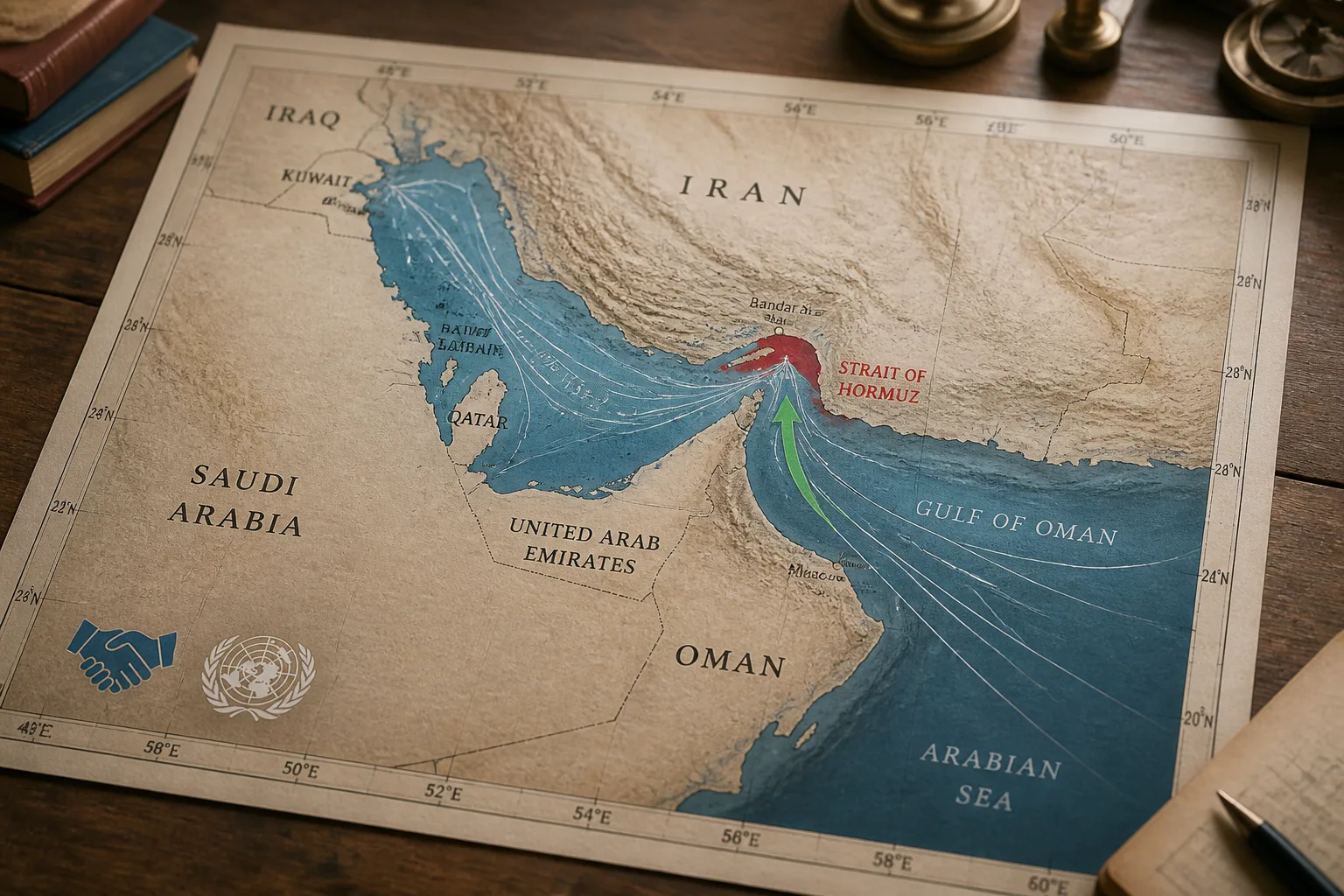
Qatar PM, US Vice-President Highlight Progress in US-Iran Talks Amid Ongoing Strait of Hormuz Tensions
When the world watched the Strait of Hormuz teeter on the brink, a quiet breakthrough emerged on June 14. The United Arab Emirates’ Prime Minister, Mohammed bin Abdulrahman bin Jassim Al Thani, hailed a memorandum of understanding (MoU) that lifted the U.S. naval blockade of Iranian ports and called for the waterway to be cleared of mines and reopened to shipping.
The MoU—mediated by Pakistan and Qatar—doesn’t settle the long‑standing dispute, but it creates a 60‑day window for talks on nuclear limits, disposal of enriched uranium, sanctions relief, and the release of frozen Iranian assets. It follows three months of flare‑ups that began on February 28, when a joint Israeli‑U.S. strike on Iranian military sites prompted the U.S. to block the Strait in April, citing security concerns. Iran, in turn, restricted navigation and threatened to close the waterway.
In a press statement, the Qatari leader noted that, although the U.S. and Iran still disagree on many points, both sides are “insisting on finding a solution.” He touched on the nuclear file, security issues such as the Strait, and criticized Iran’s recent actions toward regional neighbours, calling for cooperation based on mutual trust. He also condemned Israel’s military operations in Lebanon, describing the killing of civilians under a cease‑fire as unacceptable and urging an end to occupation and respect for Lebanon’s sovereignty. The prime minister singled out Israeli Prime Minister Benjamin Netanyahu as a primary source of regional tension.
U.S. Vice‑President J.D. Vance, speaking at a conference in Switzerland’s Bürgenstock resort on June 21, announced that Iran had agreed to invite international inspectors and that talks with the International Atomic Energy Agency (IAEA) would begin that day. Vance outlined three mechanisms aimed at stabilising the region: keeping the Strait of Hormuz open, preventing the exchange of fire, and demining the waterway. He said the U.S. and Iran had made “good progress” and that the first round of negotiations would start that week.
Iranian officials, however, have expressed uncertainty about the status of the Strait. In an interview, an Iranian source said that, despite the lifting of the naval blockade, the Strait remains effectively closed and that no formal negotiations have yet taken place regarding the nuclear file or talks with IAEA Director General Rafael Grossi. The foreign ministry spokesperson confirmed that Tehran will continue cooperation with the IAEA under existing procedures, but has not yet confirmed a formal agreement on inspections.
The current situation leaves the Strait of Hormuz in a liminal state: the U.S. blockade has been lifted, but the waterway has not been fully reopened, and formal nuclear negotiations are still pending. The next steps will involve the U.S. and Iran convening in Bürgenstock to discuss the mechanisms outlined by Vice‑President Vance and to determine whether the 60‑day window will lead to a lasting settlement. The outcome will have significant implications for regional security, global energy markets, and the future of U.S.‑Iran diplomatic relations.