South Dakota GOP Governor Primary: Debate Decline, Party Rift, and Upcoming Runoff
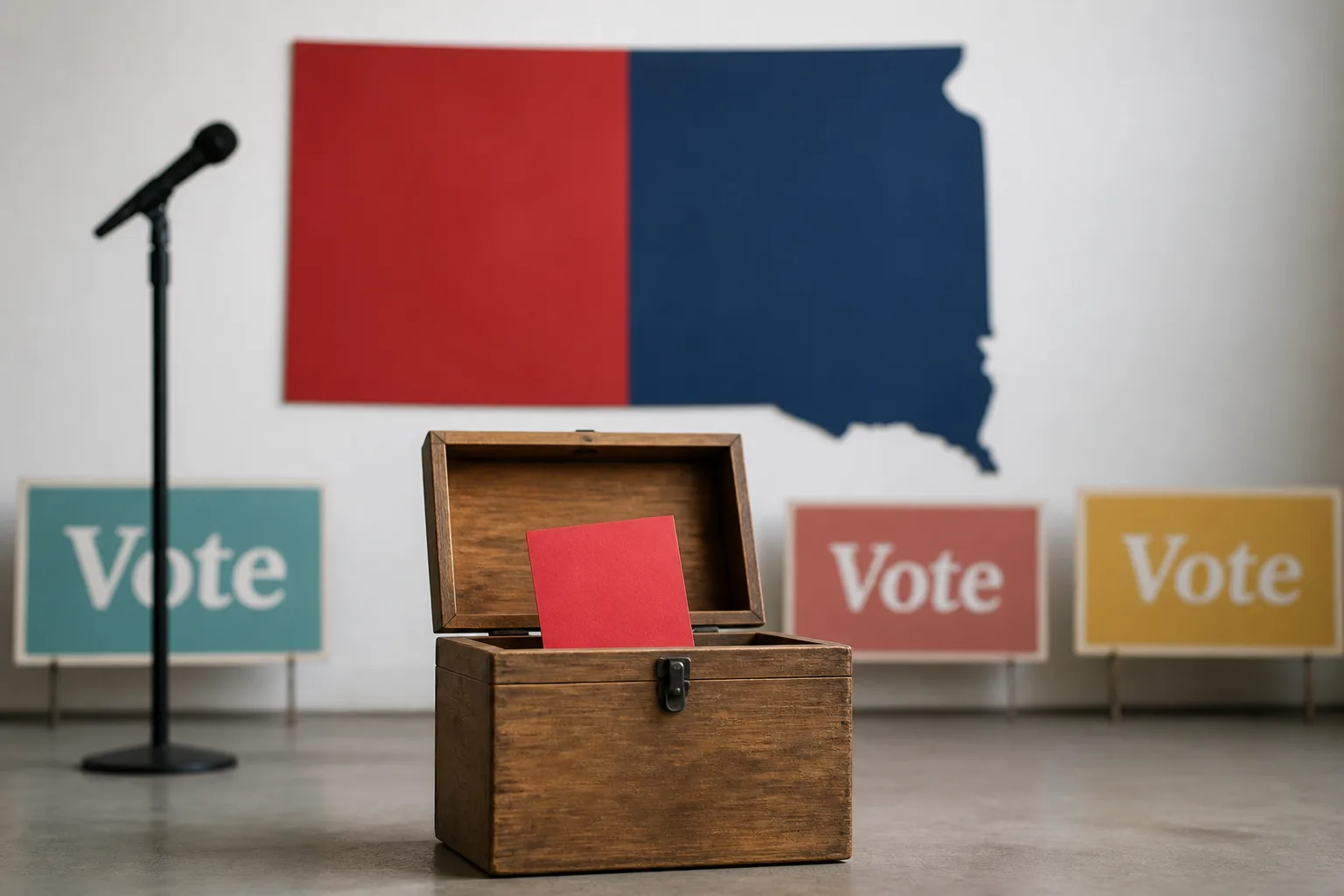
On June 2, 2026, South Dakota voters went to the polls for the first round of the Republican gubernatorial primary. The election, which saw 171,559 ballots cast out of 497,037 registered voters—a turnout of 34.52%—did not produce a candidate who surpassed the 35% threshold required to win outright. The top two finishers, incumbent Governor Larry Rhoden and Aberdeen businessman Toby Doeden, will face each other in a runoff on July 28.
Rhoden, who ascended to the governorship in 2025 after former Governor Kristi Noem resigned to become U.S. Secretary of Homeland Security, has announced that he will not participate in any debates with Doeden. The decision was reported by several local outlets, including KELOLAND and Dakota Broadcasting, which noted that Rhoden declined a one‑on‑one debate invitation from the state’s media group.
Doeden, who finished first in the primary, has called for a debate. In an interview with The Dakota Scout, he said, "If Larry Rhoden no longer wishes to participate in the electoral process, he should suspend his campaign so that those of us who are serious about doing the work of the people can move forward with uniting the party ahead of November." Doeden’s statement reflects a broader frustration within the Republican Party, as he and other candidates have previously participated in three debates before the primary.
The debate is not required by the South Dakota constitution, and both candidates have the right to decline. Nevertheless, Doeden’s insistence on a debate underscores a growing rift within the party. He has aligned his campaign with former President Donald Trump and has pledged to eliminate property taxes, a stance that has attracted significant attention.
The primary also highlighted tensions in other races. In the U.S. Senate contest, incumbent Republican Senator Mike Rounds is seeking a third term. He faces Democratic former state trooper Julian Beaudion and independent military officer Brian Bengs, who ran as a Democrat in 2022 but is now an independent. Rounds received 75.8% of the vote in the primary, while Beaudion ran unopposed for the Democratic nomination.
The mayoral race in Sioux Falls, South Dakota’s largest city, has also become highly politicized. The runoff, which pits Republican former legislator Christine Erickson against Democratic lawmaker Jamie Smith, was originally nonpartisan. However, Doeden publicly criticized endorsements from Republican state representatives Greg Jamison and Joe Batcheller, who had endorsed Smith. He labeled them "proven losers and petty politicians" and described Smith as a "radical‑left wing legislator," while praising Erickson for her "common sense."
These developments illustrate a broader trend of intra‑party conflict and the blurring of traditional nonpartisan contests. The South Dakota Secretary of State’s office reported the primary results, and the state’s election officials confirmed that no candidate achieved the 35% threshold, triggering the July 28 runoff.
The upcoming runoff will determine South Dakota’s next governor, a position that has remained in Republican hands since 1974. The state’s political landscape is also being shaped by the Senate race, where Rounds faces long‑shot challengers, and by local elections that are increasingly influenced by party politics.
As the state moves toward the runoff, voters will have to decide whether the debate will be a decisive factor in the campaign and whether the party’s internal divisions will affect the outcome. The debate’s absence, the endorsement controversies, and the broader national political climate all contribute to a complex and uncertain electoral environment.
The July 28 runoff will be the next critical moment for South Dakota voters. The state’s political leaders and the electorate will watch closely to see whether the Republican Party can reconcile its internal divisions and whether the incumbent governor can secure a full term amid a contentious campaign.
The election cycle continues to unfold, with the November 3, 2026, general election set to decide the state’s governor, U.S. Senate seat, and other statewide offices. For now, the focus remains on the upcoming runoff and the broader implications of the debate controversy and party tensions.