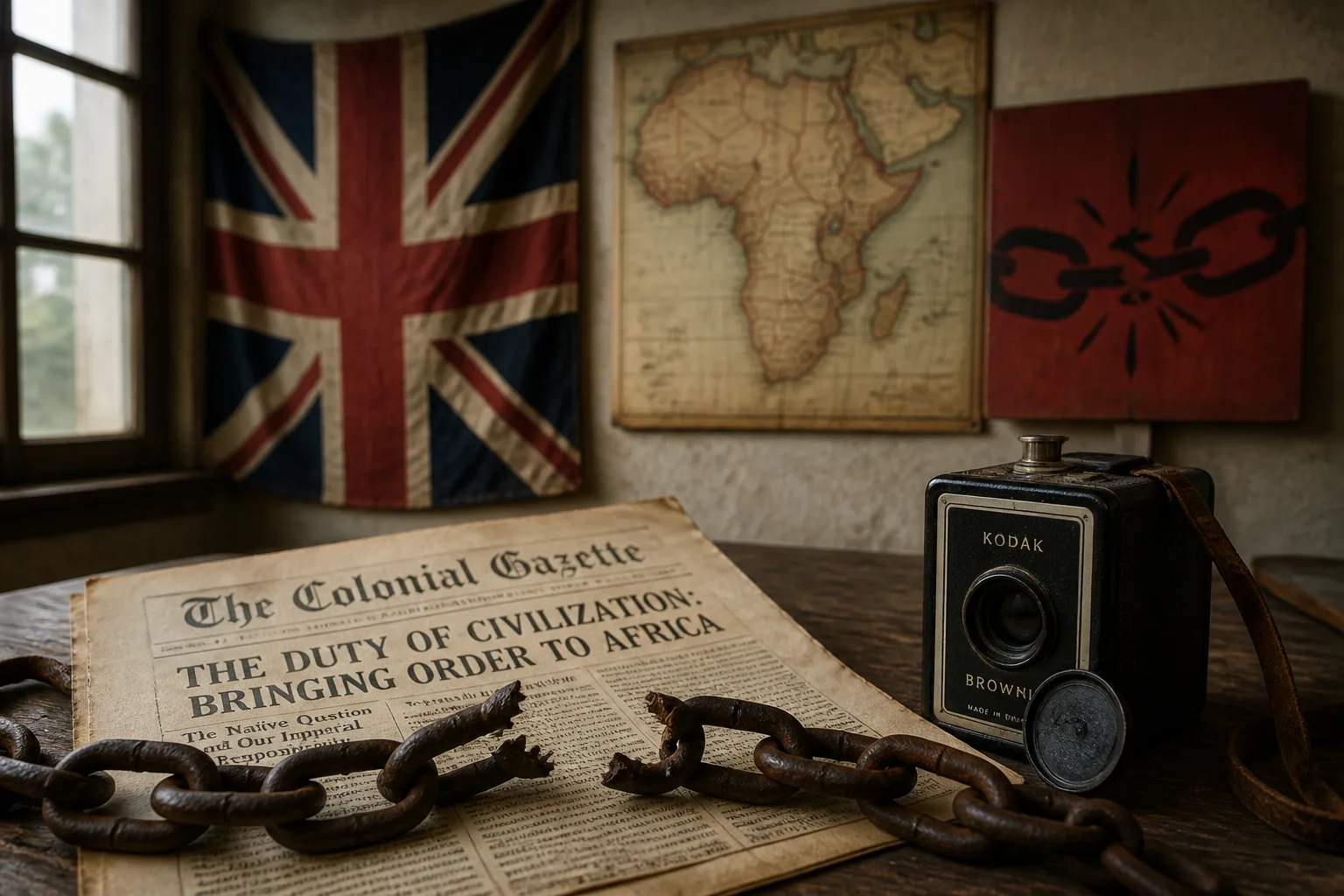
Edmund Dene Morels Campaign Against Leopolds Congo Exposed Colonial Violence and Shaped Early Humanitarian Activism
When a young clerk in Liverpool flipped through ledger sheets, he would set off a global campaign that rattled a king. In 1903 Edmund Dene Morel, then a modest employee at the Liverpool shipping firm Elder Dempster, uncovered a disturbing pattern in the company’s trade records that would bring King Leopold II’s Congo Free State under worldwide scrutiny.
Born in Paris in 1873, Morel moved to Britain after his father’s death. He joined Elder Dempster in 1891 and, four years later, was posted to the firm’s new shipping route between Antwerp and West Africa. Fluent in both English and French, he was in the perfect position to sift through the company’s ledgers. What he found was chilling: massive shipments of rubber and ivory flowed from the Congo to Belgium, while almost nothing of value returned to Africa—except firearms and ammunition. The numbers suggested a system of extraction rather than exchange, and Morel began gathering testimony from missionaries, traders and officials. He concluded that the violence reported from the interior was not an accident but a structural component of the Congo’s economy.
In 1903 Morel launched the West African Mail, a newspaper that would expose the Congo’s conditions and the broader implications of colonial trade. The following year he founded the British Congo Reform Association (CRA), a movement aimed at ending Leopold’s personal rule. The association quickly attracted high‑profile supporters, including Liverpool businessman John Holt and Anglo‑Irish diplomat Roger Casement. Casement’s 1904 report for the British government documented widespread brutality in the Congo’s rubber districts, and his later execution for treason after the 1916 Easter Rising underscored the personal risks involved in exposing colonial abuses.
The CRA’s survival depended on wealthy donors. Its largest single contributor was William Cadbury, a British cocoa manufacturer. Cadbury paid Morel £50 per quarter as editor of the West African Mail—more than a third of Morel’s income at the time—and requested that the arrangement remain private. He also financed the education of Morel’s eldest son and encouraged him to stand for parliament, promising further support.
At the same time, Cadbury Brothers faced criticism for purchasing cocoa from plantations on the Portuguese islands of São Tomé and Príncipe. These plantations relied on coerced African labour recruited from Angola under a contract system that critics described as a form of slavery. Journalist Henry Nevinson exposed the issue in 1905‑06, arguing that British chocolate manufacturers, including Cadbury, bore responsibility for sustaining the system. Some humanitarian organisations called for a boycott of cocoa produced under coercive labour. Morel declined to endorse such a boycott. He defended Cadbury’s cautious approach, arguing that a sudden withdrawal would worsen conditions for workers, and he worked to limit public criticism of the firm while the Congo campaign was ongoing.
Morel’s legacy is complex. After the Congo campaign wound down, he remained politically active, becoming a prominent critic of British foreign policy during the First World War and serving as a member of Parliament for Dundee from 1922 until his death in 1924. He is commemorated on the Humanitarian Wall at the Wilberforce Institute in Hull, alongside figures such as Nelson Mandela and Martin Luther King. In 2013 a Labour MP proposed an early day motion to honour Morel’s dedication to the Congo Reform Association, a motion signed by 17 MPs.
Morel’s career illustrates how humanitarian campaigns can involve compromise and selective focus. He was able to denounce extreme violence in the Congo while defending allies whose commercial interests were tied to coercive labour systems elsewhere. His story reminds readers that humanitarian activism has never been morally pure, and that understanding its impact requires attention not only to what reformers opposed but also to what they chose not to confront.
Today the legacy of Leopold’s rule continues to shape the Democratic Republic of the Congo, and the historical debate over the extent of atrocities and the effectiveness of early campaigns persists. Morel’s work, however, remains a landmark in the history of humanitarian advocacy, demonstrating the power of investigative journalism and organized public pressure to challenge colonial exploitation.