Ukrainian Drones Disrupt Power in Sevastopol, Fuel Shortages Prompt Russian Parliament Action
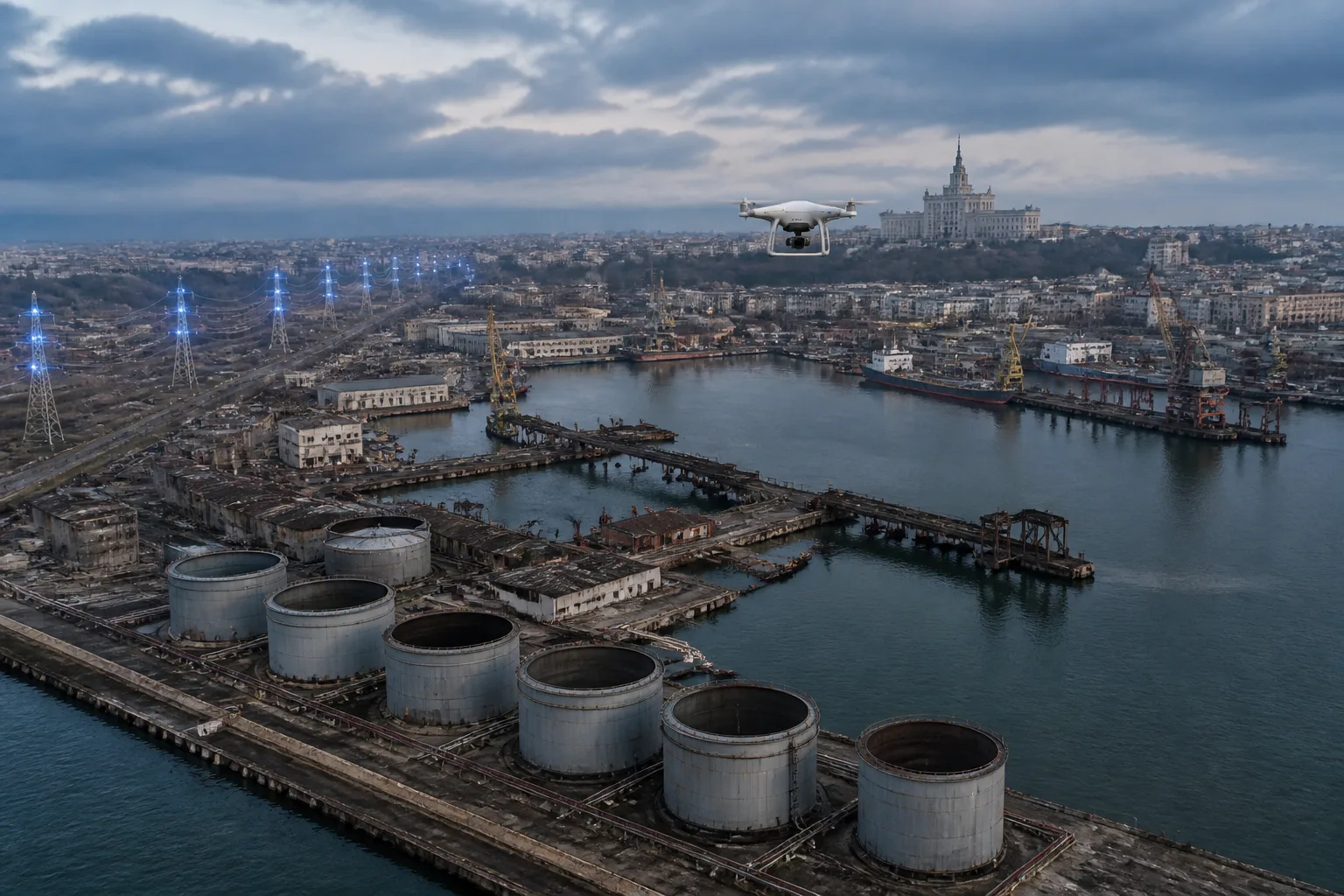
On Wednesday, June 24 2026, Ukrainian drones struck the main power substation in Sevastopol, the largest city on the Russian‑held Crimean Peninsula, knocking out electricity for much of the day. The attack was part of a broader campaign that also targeted facilities in central and southern Russia, underscoring the reach of Kyiv’s long‑range drone operations.
The Russian‑installed governor of Sevastopol, Mikhail Razvozhayev, posted on the Telegram messaging app that the city’s public transport and cafés would close early and that street lights would be dimmed to protect residents during overnight attacks. He added that trolleybuses would not run and urged parents to keep children at home. Razvozhayev said work was underway to restore supplies, noting that Kyiv was “trying to deprive us of our normal living conditions and sow panic.”
Ukrainian drone forces commander Robert Brovdi confirmed that the drones hit the main substation of the Sevastopol power plant, which supplies electricity to the city and surrounding areas. The strike caused widespread outages, but officials reported that power was gradually being restored.
In the central Russian region of Nizhny Novgorod, Governor Gleb Nikitin said falling debris from Ukrainian drones damaged an industrial facility and killed two people. The facility, located near the city’s NORSI oil refinery, was not critically damaged, he added. NORSI is Russia’s fourth‑largest refinery and has been a frequent target of Ukrainian strikes.
Authorities in Russia’s Orenburg region, more than 1,000 km southeast of Moscow, reported that drones were downed over an industrial facility. The region borders Kazakhstan and hosts a gas‑processing plant and an oil refinery, but it was not clear whether any damage occurred.
The Russian Ministry of Defense said its air‑defence systems shot down 323 drones overnight in regions across the country, a figure that includes the attacks on Sevastopol, Nizhny Novgorod and Orenburg.
Fuel shortages have become acute in Crimea and other parts of Russia as a result of the drone campaign. In response, Russian lawmakers approved amendments to the Tax Code on Wednesday that allow lower‑quality fuel to be used in gasoline production and delay certain equipment modernisation at refineries. The changes are intended to stabilise the domestic fuel market amid growing shortages.
Both sides claim they do not target civilians, but casualties have occurred. According to Russia’s TASS agency citing local emergency services, three people were killed in the Russian‑held Ukrainian city of Horlivka when the entrance of an apartment building collapsed after an overnight drone attack. In Russia’s border Belgorod region, a man was killed and a woman injured in a drone attack, while in the eastern Ukrainian city of Balakliia, Russian shelling killed one person on Wednesday, local authorities said.
Ukraine’s strategy of targeting Russian energy facilities with long‑range drones is aimed at sapping a key source of Russia’s war funds and demonstrating that the conflict is not a distant war. The campaign has forced Russia to take legislative and operational measures to mitigate fuel shortages and protect critical infrastructure.
Reuters could not independently verify the details of the strikes, but the pattern of attacks and the Russian government’s responses are consistent with the broader context of the ongoing Ukraine‑Russia conflict.
The drone strikes on Sevastopol and other Russian regions illustrate the continuing escalation of the war and the strategic importance of energy infrastructure in the conflict.