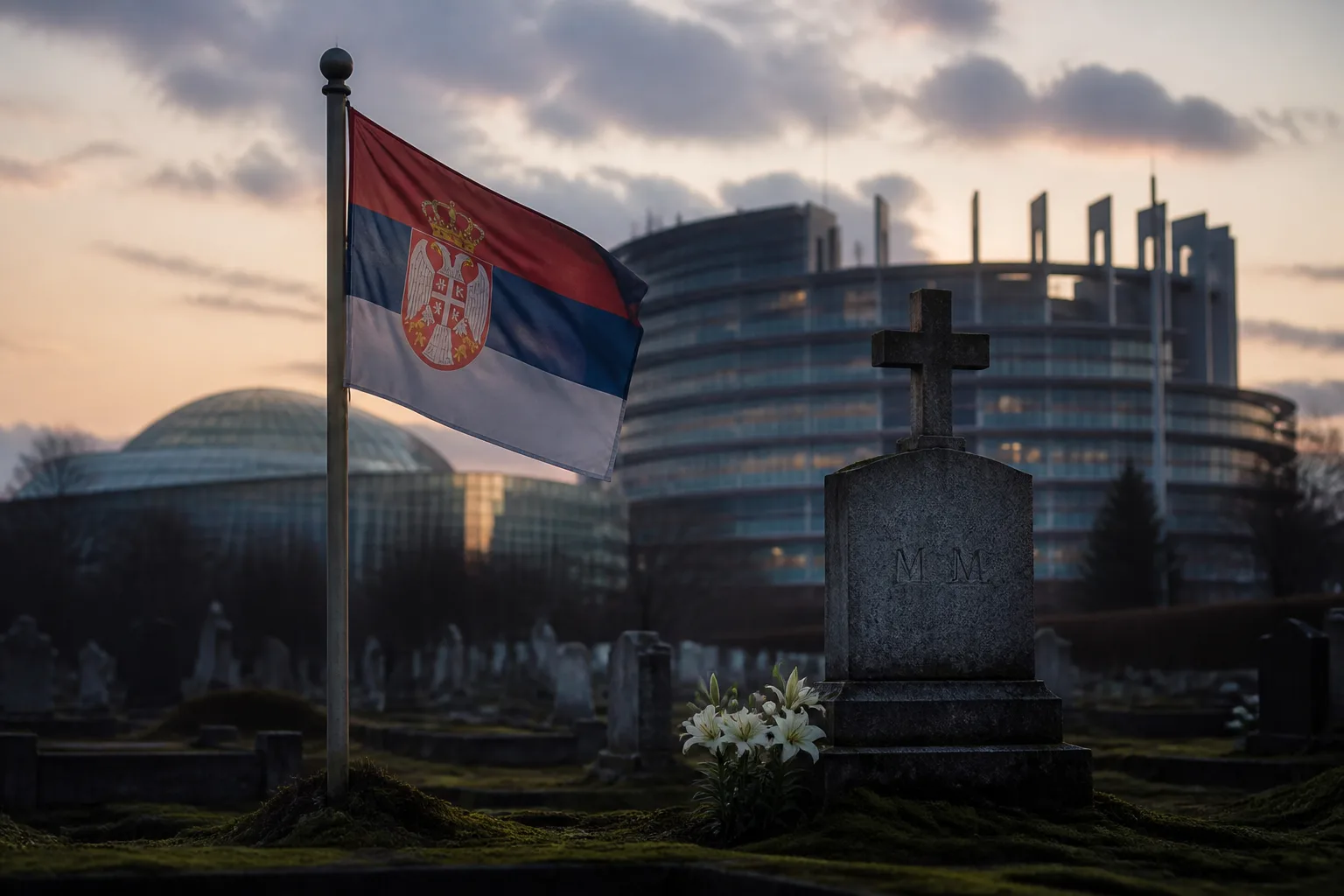
Serbian funeral for convicted war criminal Ratko Mladic draws thousands, sparks EU backlash
When the wind in Belgrade carried the scent of flag‑tossing and the solemn hum of soldiers, a crowd of more than 10,000 people crowded into a small church on the outskirts of the capital. They were there not for a regular service but to lay to rest Ratko Mladić, the former Bosnian Serb general whose name still echoes through the halls of history and the corridors of the International Criminal Tribunal for the former Yugoslavia (ICTY).
Mladić died in a Dutch prison on 27 August 2026 at age 84, after a life that had been spent fighting in the Bosnian war and later standing trial for genocide, crimes against humanity and war crimes. Eight days later, a government aircraft, emblazoned with Serbian flags, brought his coffin back to Belgrade. Uniformed soldiers carried it, the casket topped with his military cap and a sword, and a display of medals lay beside it. The ceremony, led by Serbian Orthodox Patriarch Porfirije, was not an official state funeral, yet it mirrored one in every detail.
The funeral turned into a flashpoint. The procession moved the coffin to the cemetery, where a three‑volley rifle salute punctuated the air. Among those who stood beside the casket were members of the Serbian government, including President Aleksandar Vučić’s son Danilo, several ministers, and Russia’s ambassador to Serbia. The presence of the Russian envoy was a reminder of the lingering geopolitical tug‑of‑war that still shapes Serbia’s domestic politics.
In the weeks before his death, Mladić had been in ill health, suffering a series of strokes. He had been arrested in Serbia in 2011 after a 16‑year fugitive period and extradited to The Hague, where he was sentenced to life imprisonment. His 2017 conviction—unpacking the horrors of the 1995 Srebrenica massacre, in which more than 8,000 Bosniak men and boys were killed, and the 1,460‑day siege of Sarajevo that left over 10,000 civilians dead—remains a stark reminder of the Balkan wars’ legacy.
The funeral’s timing did not escape notice. A few days earlier, the Serbian government announced it would dissolve parliament and call a snap election for October. Prime Minister Đuro Macut said the move was aimed at easing societal tensions. The election, set for either 18 or 25 October, would give President Vučić a chance to run for prime minister, as he is barred from a third presidential term. Some observers noted the overlap of the funeral and the election announcement, but an assistant professor at the University of Belgrade, Marko Vujić, said the two events were not coordinated.
The event sent shockwaves beyond Serbia’s borders. Enlargement Commissioner Marta Kos cancelled a planned visit to Belgrade, declaring that the return of Mladić’s remains “reminds Europe of the darkest pages in our recent history.” An EU spokesperson echoed the sentiment, warning that “any glorification of war criminals, genocide denial and revisionism contradict the most fundamental European values.”
Serbia’s relationship with the EU has been strained for years. While it holds candidate status since 2014, accession talks have stalled over concerns about rule of law, media freedom and ties to Russia. The glorification of Mladić, a figure responsible for the worst massacre in Europe since World War II, is seen by EU officials as incompatible with the values required for membership.
The funeral also exposed deep fissures within Serbian society. While thousands attended in solemn homage, others staged protests, arguing that the ceremony celebrated a man who orchestrated ethnic cleansing and genocide. Tensions flared further when football fans in Belgrade displayed a large image of Mladić and chanted his name during a match, sparking outrage among those who view his legacy as a stain on national history.
In short, the funeral highlighted the tightrope Serbia walks: balancing nationalist sentiment and the demands of European integration. The EU’s backlash signals that the international community will not tolerate the public celebration of individuals convicted of war crimes. At present, Serbia’s government has not announced further steps beyond dissolving parliament. The upcoming election will be a critical test of the country’s political direction and its willingness to confront its past.