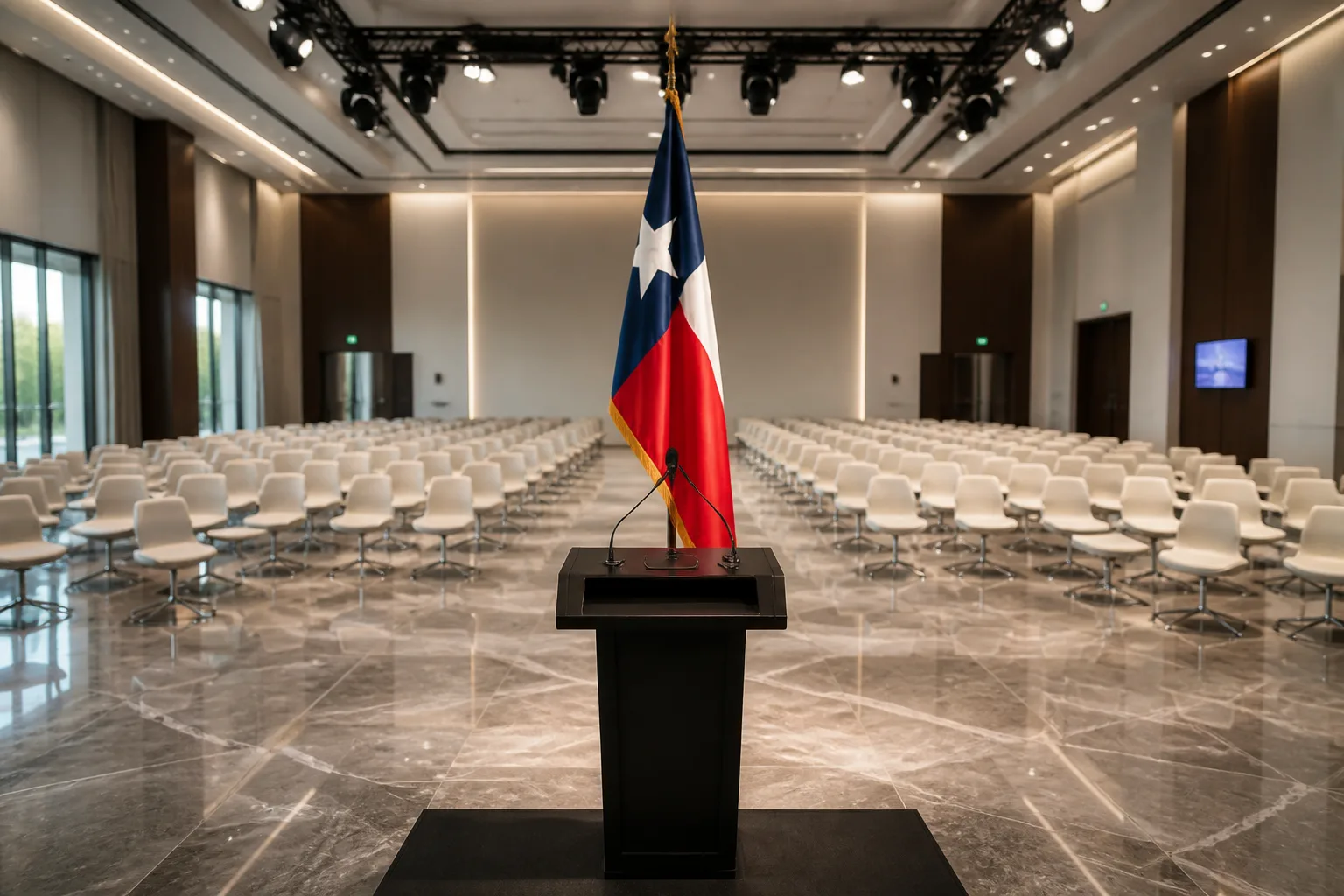
Trump-Led 2026 GOP Midterm Convention in Dallas Faces Attendance Woes and Candidate Pushback
In a bold move that could reshape the GOP’s midterm strategy, the Republican National Committee announced a two‑night convention in Dallas, Texas, for September 9–10, 2026—marking the first time the party will host a national convention during a midterm election year.
President Donald Trump is slated to headline both evenings, joined by Vice‑President J.D. Vance, Treasury Secretary Scott Bessent, Attorney General Todd Blanche, Health Secretary Robert F. Kennedy Jr., and Trump’s son Donald Trump Jr. The event, billed as a “primetime showcase,” is designed to energize Republican voters and boost turnout in the November midterms.
Organizers expect roughly 100 members of Congress to attend and have distributed more than 20,000 tickets, according to a party source. The American Airlines Center, the venue, can hold about 20,000 spectators, so the convention is poised to run at full capacity.
The agenda centers on domestic policy themes—tax cuts, healthcare affordability, border security, trade, and manufacturing. Speakers will highlight families benefiting from tax‑cut policies, efforts to lower prescription drug costs, and a tribute to right‑wing activist Charlie Kirk. A segment will also honor the 25th anniversary of the September 11 attacks with families of first responders.
However, the convention’s success is far from guaranteed. A Politico survey of more than 70 Republican candidates and party officials found that 45 either do not plan to attend Dallas or remain undecided. Some candidates cited prior commitments, while others balked at the $25,000 cost of attendance.
Unlike a traditional presidential nominating convention, delegates will not vote on a platform or nominate a presidential candidate. Instead, the gathering is intended to showcase candidates to voters and donors, according to the party source.
The decision to center the convention around Trump has drawn criticism. A Reuters/Ipsos poll released last week reported Trump’s approval rating at 33%, the lowest in his political career. In contrast, 46% of Democrats described themselves as “very enthusiastic” about the midterms, compared with 31% of Republicans.
Some Republican candidates are distancing themselves from Trump. In Texas, state representative Carlos De La Cruz removed a line from his website that read “ready to be President Trump’s wingman in Congress” and replaced it with “PROVEN CONSERVATIVE.” In Kentucky, Ralph Alvarado switched his slogan to “INDEPENDENT LEADERSHIP.” Nevada’s Martin O’Donnell, a composer known for the Halo video‑game series, removed a photo of his Trump endorsement. South Texas candidate Eric Flores changed his platform statement from “SUPPORT PRESIDENT TRUMP’S AGENDA” to “LOWER THE COST OF LIVING.” In Alaska, Nick Begich simplified his message to “We have delivered for Alaska.”
Republican officials argue that the convention will energize the party’s base. “We have Republican candidates across the country who want the president in their districts,” the source said. “The president has campaigned for him in his district twice.” The source also rejected reports that candidates are distancing themselves from Trump.
Political analysts warn that the convention could backfire. Tara Setmayer, former Republican communications director, said that building a convention around a president with a low approval rating is “political suicide.” She noted that Trump’s popularity has declined on issues such as the economy and immigration.
The convention’s schedule also includes a segment aimed at the party’s “Maha” wing, focusing on corporate influence in chronic disease treatment. No portion of the program addresses foreign policy or the Iran war.
The event will feature appearances by everyday Americans, including workers and families who have benefited from Republican policies. The party’s official schedule lists a tribute to the slain activist Charlie Kirk and a segment honoring first‑responder families.
The convention’s impact on the November midterms remains unclear. Some observers believe it may increase turnout among the party’s most loyal voters, but it is unlikely to sway independent voters.
The Dallas convention follows a historical precedent: the Democratic Party held a midterm convention in Memphis in 1978, where Ted Kennedy informally announced opposition to President Carter. The Democratic party has not held a midterm convention since.
As the midterm election approaches, the Republican Party faces the challenge of balancing Trump’s influence with the need to appeal to a broader electorate. The Dallas convention will be a key moment in that effort, but its effectiveness will depend on turnout, candidate participation, and the broader political climate.
The convention is scheduled to begin on September 9, 2026, with Trump delivering the opening keynote. The second night will feature closing remarks by Trump and speeches by other senior party officials.
The outcome of the convention will be closely watched by both parties as they prepare for the November elections.