U.S. and Saudi Arabia Sign Nuclear Deal, Trump Adds Israel Recognition Condition
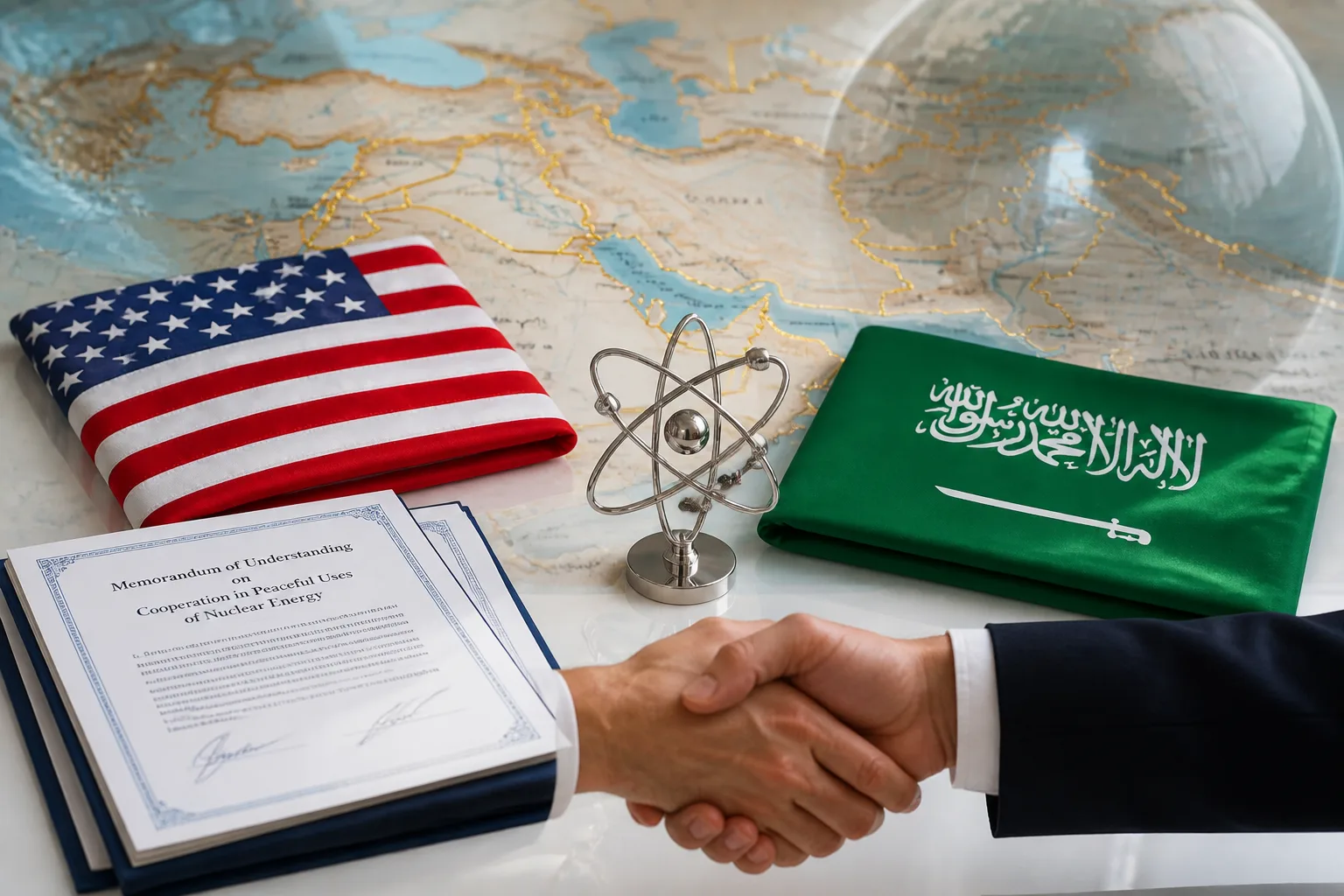
When the U.S. and Saudi Arabia inked a nuclear pact on July 22, 2026, the world watched a historic first unfold. In a ceremony in Washington, D.C., Secretary of Energy Chris Wright and Saudi Minister of Energy Abdulaziz bin Salman Al Saud signed a Section 123 Agreement that would, for the first time, allow the Kingdom to build civilian nuclear reactors and enrich uranium.
Under U.S. law, the deal must be forwarded to Congress and approved within 90 days, or it will automatically take effect if lawmakers stay silent. The agreement marks a stark departure from the 2009 U.S.–UAE pact, which required the United Arab Emirates to forgo enrichment and submit to International Atomic Energy Agency inspections. Saudi’s new deal contains none of those safeguards, opening the door to enrichment for civilian use—a move that critics warn could create a proliferation risk.
Saudi Arabia has long seen nuclear power as a cornerstone of its Vision 2030 economic diversification plan. By replacing oil‑fired plants with reactors, the Kingdom hopes to free up more crude for export and bolster its energy security. Yet the Crown Prince’s public statements hint at a deeper motive: if Iran ever lands a weapon, Saudi Arabia may consider a nuclear deterrent of its own. Enrichment technology can be repurposed for weapons, so the agreement could be a stepping stone toward that capability.
In the days after the signing, former President Donald Trump took to social media and added a twist that has everyone talking: Saudi Arabia must recognize Israel as a condition for the nuclear deal. The demand dovetails with the Abraham Accords, which normalized ties between Israel and several Arab states. Historically, Saudi Arabia has tied recognition to the establishment of a Palestinian state, so the new condition raises questions about whether the Kingdom will comply and whether the deal will survive.
Reactions have been swift and divided. Some experts warn that allowing Saudi enrichment could trigger an arms race in the Middle East, prompting Iran to accelerate its own program. Others argue that the United States is providing a “guiding hand” to keep other powers—China, Russia, or even non‑state actors—out of the region’s nuclear playbook. The Department of Energy has stressed that the agreement is intended to support a peaceful nuclear program.
The deal’s fate now hinges on Congress. With the current session scheduled to adjourn on December 18, 2026, lawmakers face a 90‑day deadline. If they do not act, the agreement will automatically take effect; if they disapprove, the deal will be nullified. The political calculus is complicated by the Trump‑issued recognition condition and by the broader U.S. strategy to deepen ties with a key Gulf ally.
Saudi Arabia has been a cornerstone of U.S. interests in the Gulf, a major buyer of U.S. defense equipment, and a strategic partner on counter‑terrorism and regional stability. This nuclear agreement could cement that relationship further, but it also stirs significant security and non‑proliferation concerns.
In short, the July 2026 U.S.–Saudi nuclear agreement gives the Kingdom the green light to build reactors and enrich uranium—an unprecedented shift from past U.S. agreements. Its continuation depends on congressional approval and on whether Saudi Arabia will meet Trump’s new diplomatic requirement to recognize Israel. The next few months will decide whether this deal becomes a milestone or a flashpoint.