AI Factories: The New Backbone of Machine Learning
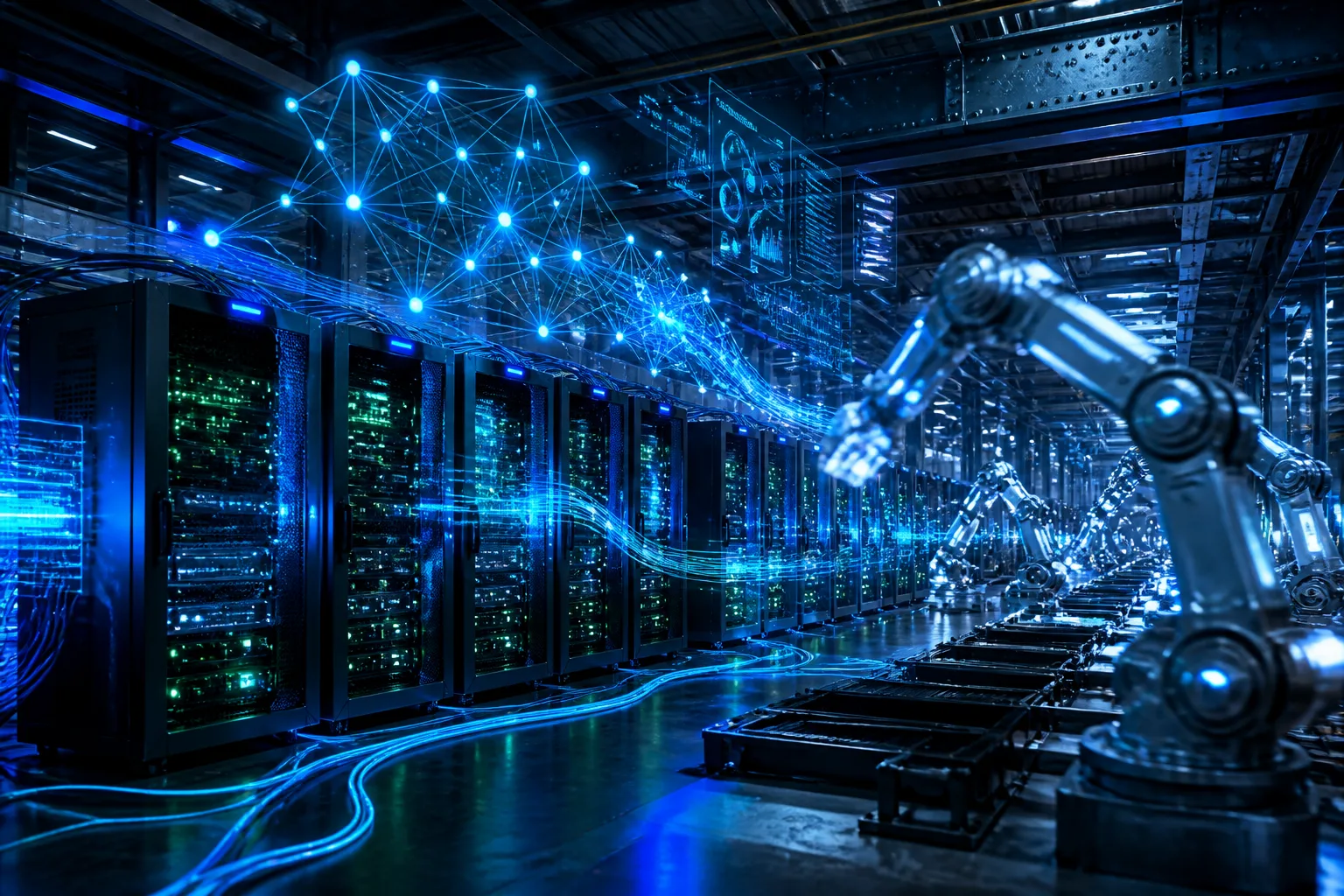
Picture a factory, but instead of assembling cars, it’s churning out machine‑learning models that power everything from autonomous vehicles to real‑time language translation. That’s what an AI factory is—a purpose‑built facility that turns raw data into high‑value predictions, decisions, and insights at scale.
Unlike traditional data centers that juggle a wide range of enterprise applications, AI factories are engineered for the relentless parallel compute, lightning‑fast data movement, and constant utilization that training and inference workloads demand. Over the past two years, the industry has shifted its focus from GPUs and model size to the entire infrastructure that delivers those models efficiently. Power, cooling, networking, storage, and software must all work in concert; otherwise, even the most powerful accelerators sit idle.
So what sets an AI factory apart from a conventional data center? A typical data center is built for mixed workloads, prioritizing uptime, flexibility, and cost control. Its success is measured by reliability and the ability to host diverse applications. An AI factory, by contrast, exists to produce intelligence at scale. Its metrics are utilization, throughput, performance, and efficiency. The design is optimized for parallel compute, fast data movement, and tightly integrated systems. That means higher rack densities and more demanding cooling solutions—often liquid cooling—to manage the heat generated by dense GPU arrays.
Power density and thermal management have become the headline topics. Air cooling still works for some deployments, but as rack densities rise, it becomes less viable. Liquid cooling removes heat more efficiently, enabling compact, high‑performance designs. Consequently, vendors are positioning AI deployments as integrated systems rather than standalone servers. ASUS, for example, offers both air‑ and liquid‑cooled AI infrastructure designs, illustrating how facility constraints and long‑term efficiency goals now shape deployment choices.
The core components of an AI factory mirror those of any data center, but they operate at far greater speed and coordination:
Compute – The engine that trains, fine‑tunes, and runs inference. But compute alone isn’t enough; the surrounding infrastructure must keep accelerators continuously fed with data. Networking – No longer a background utility, it’s the fabric that lets clusters of GPUs and servers behave as a single system. Bottlenecks in data movement quickly throttle throughput and leave expensive compute capacity idle. Storage – Must deliver data fast enough to support continuous AI workloads. In an AI factory, storage performance directly affects how effectively compute resources are used. Software and operations – Provide visibility into performance, utilization, thermal conditions, and potential bottlenecks. Without this layer, operators can’t optimize costs, maintain uptime, or scale efficiently.
The shift toward AI factories signals where the market is heading next. The first wave of the AI boom was dominated by model size and training performance. The next wave focuses on inference efficiency, deployment speed, and running AI infrastructure sustainably and profitably at scale. That shift is driving attention to rack density, power availability, liquid cooling, and system‑level integration. It also explains why vendors increasingly emphasize validated architectures and management platforms rather than selling servers as isolated products.
There’s no universal blueprint for an AI factory. Every deployment involves trade‑offs between performance and cost, density and efficiency, speed and operational complexity. The hard part is no longer buying hardware; it’s designing systems that can deliver AI value repeatedly, efficiently, and at scale.
In short, AI infrastructure has moved from a technical footnote to the production engine behind intelligence. It will play a central role in how AI is deployed, scaled, and monetized in the coming years.