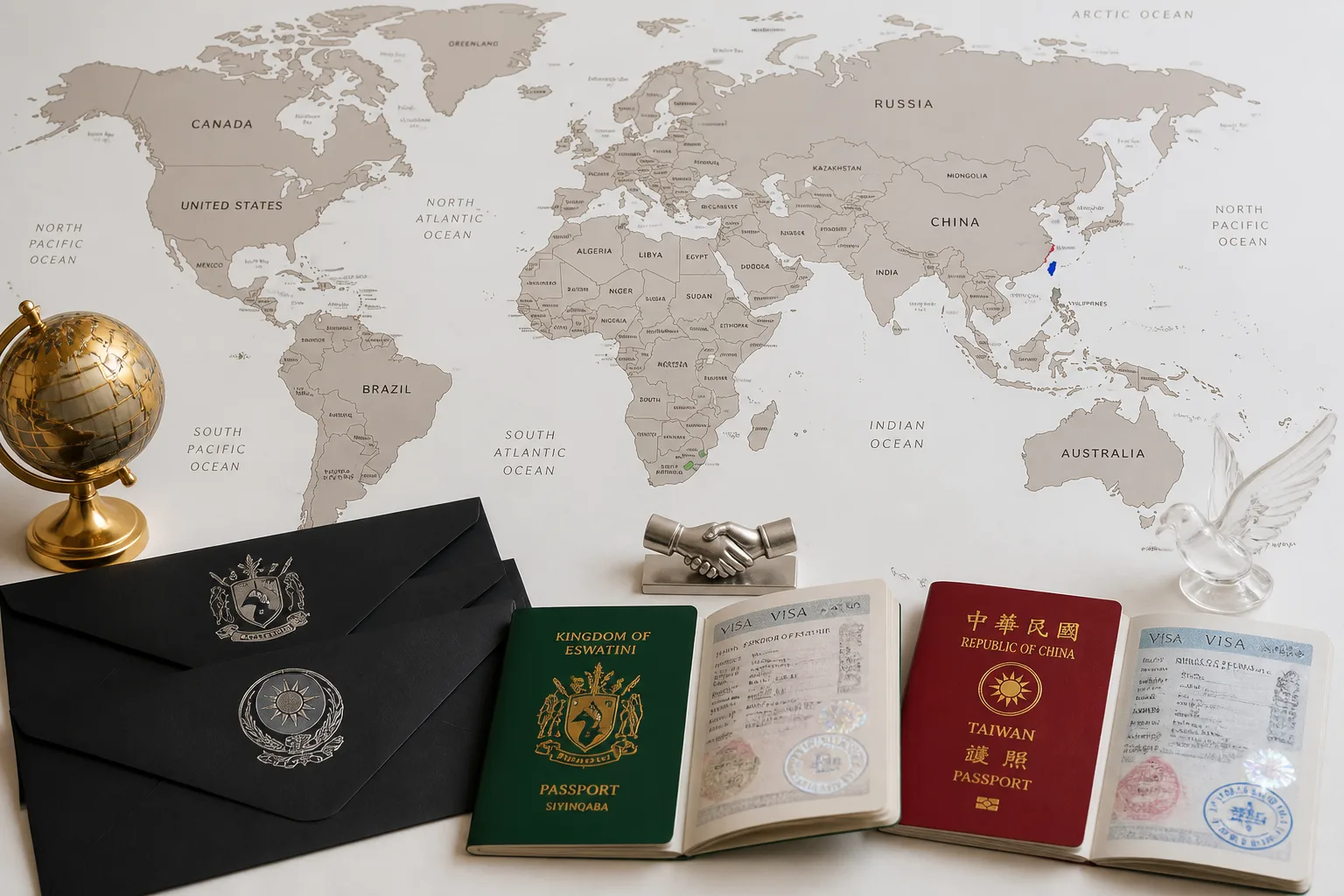
Eswatini Prime Minister Russell Dlamini Concludes Second Visit to Taiwan, Reaffirms Diplomatic Ties
On Saturday, August 8 2026, Taipei’s Foreign Ministry announced that Eswatini’s Prime Minister Russell Mmiso Dlamini had wrapped up a trip to the island nation. It was the second time the newly‑appointed leader – who took office on November 7 2023 – has set foot in Taiwan.
In a press release, the ministry said Dlamini repeatedly reaffirmed the solid diplomatic relationship between Taiwan and Eswatini and stressed that the African kingdom places tremendous importance on its long‑standing friendship with the Republic of China. He also promised that Eswatini would actively seek new cooperation opportunities.
Eswatini is one of only twelve entities that maintain official diplomatic ties with Taiwan, including 11 United Nations member states and the Holy See. The relationship dates back to 1968, when Eswatini – then known as Swaziland – recognized the Republic of China over the People’s Republic of China.
During the visit, Dlamini attended the Ketagalan Forum: 2026 Indo‑Pacific Security Dialogue on August 4. The forum, hosted by the Ministry of Foreign Affairs and the Taiwan Institute of Economic Research, is a biennial gathering of political leaders and experts that focuses on security issues in the Indo‑Pacific region. Dlamini delivered a keynote speech on behalf of Eswatini’s king, Mswati III.
The prime minister also met with President Lai Ching‑te, who has been in office since May 20 2024. According to the foreign ministry, the meeting was part of the broader agenda of the forum and reinforced the two leaders’ commitment to maintaining and expanding bilateral ties.
After the formal meetings, Dlamini was hosted at a banquet by Foreign Minister Lin Chia‑lung. The banquet was a customary part of the diplomatic itinerary and provided an opportunity for informal discussions between the two governments.
The visit comes amid a broader context of Taiwan’s efforts to strengthen its international presence. With the PRC’s increasing pressure on countries that recognize the ROC, Taiwan has sought to deepen relationships with its remaining allies. Eswatini’s continued support is therefore significant for Taipei.
From a diplomatic perspective, the visit underscores the importance of small states in Taiwan’s foreign policy. Eswatini’s recognition of Taiwan has been a point of contention with the PRC, which has repeatedly urged countries to switch recognition. The kingdom’s decision to maintain ties reflects its historical and strategic considerations.
The foreign ministry’s statement also highlighted that Eswatini will look for new avenues of cooperation, which could include trade, technology, and cultural exchanges. While specific projects were not detailed, the statement signals a willingness to explore areas that could benefit both governments.
In summary, Prime Minister Dlamini’s trip to Taiwan reaffirmed the long‑standing diplomatic relationship between the two countries, involved participation in a major regional security forum, and included meetings with Taiwan’s president and foreign minister. The visit is a continuation of Eswatini’s policy of maintaining formal ties with the Republic of China and a signal of its intent to pursue further cooperation.
The next steps for the relationship remain to be announced. The foreign ministry has not yet released details on any new agreements or joint initiatives that may arise from the visit.