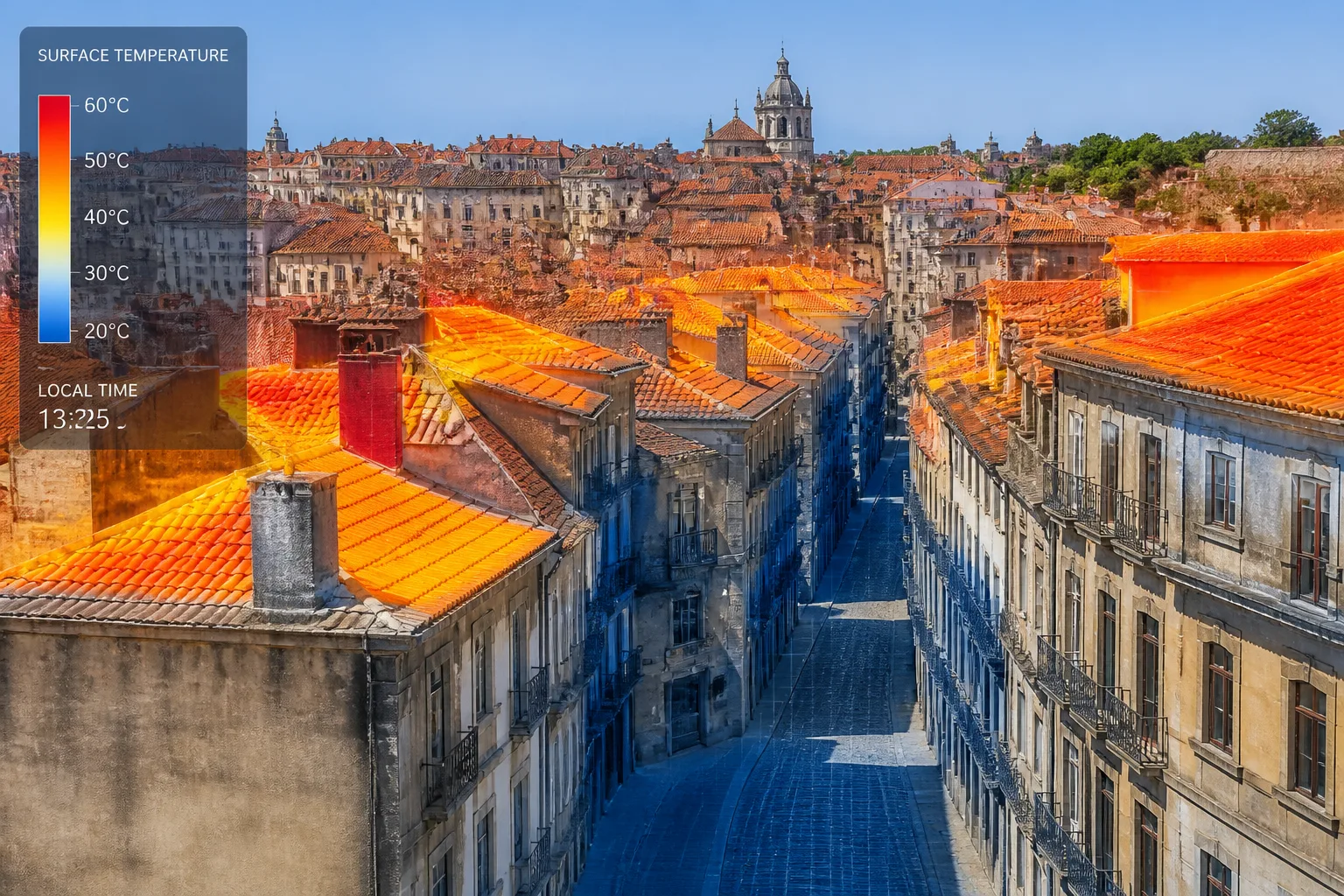
Western Europe Sets New June-July Temperature Record Amid 2026 Heat Wave
Western Europe has set a new record for the average temperature of the June‑July period, with the Copernicus Climate Change Service reporting a mean of 21.62 °C (70.92 °F). The figure surpasses the previous record set in 2022, according to data released Monday. The record was driven by a heat wave that began in May and has persisted through July, bringing extreme temperatures, widespread drought, and a surge of wildfires across the region.
The heat wave has also produced new national temperature records in several Western European countries. In addition, climate scientists estimate that the summer has already caused thousands of projected heat‑related deaths. The Copernicus data show that the persistent high‑pressure systems over the region trapped heat, amplifying the drought. As soils dry out, they lose their ability to provide natural cooling, allowing heat to build more readily. “This is a clear example of how climate change is intensifying heat extremes, with heat and drought increasingly reinforcing one another,” said Samantha Burgess, strategic lead for climate at the European Centre for Medium‑Range Weather Forecasts.
Globally, 2026 is the third hottest year on record so far, behind 2024 and 2025, according to climate statistics. However, scientists say that the combination of accelerated human‑caused global warming and a supersized El Niño could give 2026 a 35 % chance of becoming the hottest year on record, a sharp rise from the 7 % probability estimated earlier in the year. The El Niño event, which is developing in the equatorial Pacific, has already contributed to record‑high sea surface temperatures.
Last month, July, the average sea surface temperature across the extra‑polar oceans reached 20.96 °C (69.73 °F), the highest ever recorded for that month. The figure eclipses the 2023 record of 20.89 °C. Meanwhile, the global average surface‑air temperature for July was 16.90 °C (62.42 °F), making it the joint second warmest July on record, tied with July 2024.
The record sea surface temperature of 20.96 °C in the extra‑polar oceans is significant because warmer surface waters can alter marine ecosystems, affect fisheries, and influence atmospheric circulation patterns. Copernicus scientists note that such high temperatures can increase the likelihood of marine heatwaves, which have already been linked to coral bleaching and fish mortality in other parts of the world.
The Copernicus Climate Change Service, part of the European Union’s Copernicus Programme and implemented by the European Centre for Medium‑Range Weather Forecasts, monitors climate trends and provides data that inform policy and adaptation measures. Its real‑time monitoring allows governments to issue heat‑wave warnings, adjust water‑management plans, and coordinate emergency responses. Its data are also used by researchers to refine climate models and assess the effectiveness of mitigation strategies.
The record‑breaking June‑July average for Western Europe underscores the growing frequency and severity of heat extremes on the continent. Climate experts note that Europe is the fastest‑warming continent, with temperatures rising faster than the global average. The heat wave has already strained water supplies, increased wildfire risk, and challenged public health systems.
While the data confirm that 2026 is already among the hottest years, the final outcome will depend on the evolution of the El Niño event and the trajectory of global emissions. If 2026 does become the hottest year on record, it would reinforce the urgency of reducing greenhouse‑gas emissions and could influence international climate negotiations, including the next United Nations Climate Change Conference (COP).
In summary, Western Europe’s new June‑July temperature record, the record‑high July sea surface temperature, and the global temperature trend all point to a summer that has pushed the continent and the planet to new extremes. The Copernicus Climate Change Service will continue to track the situation as the year progresses.