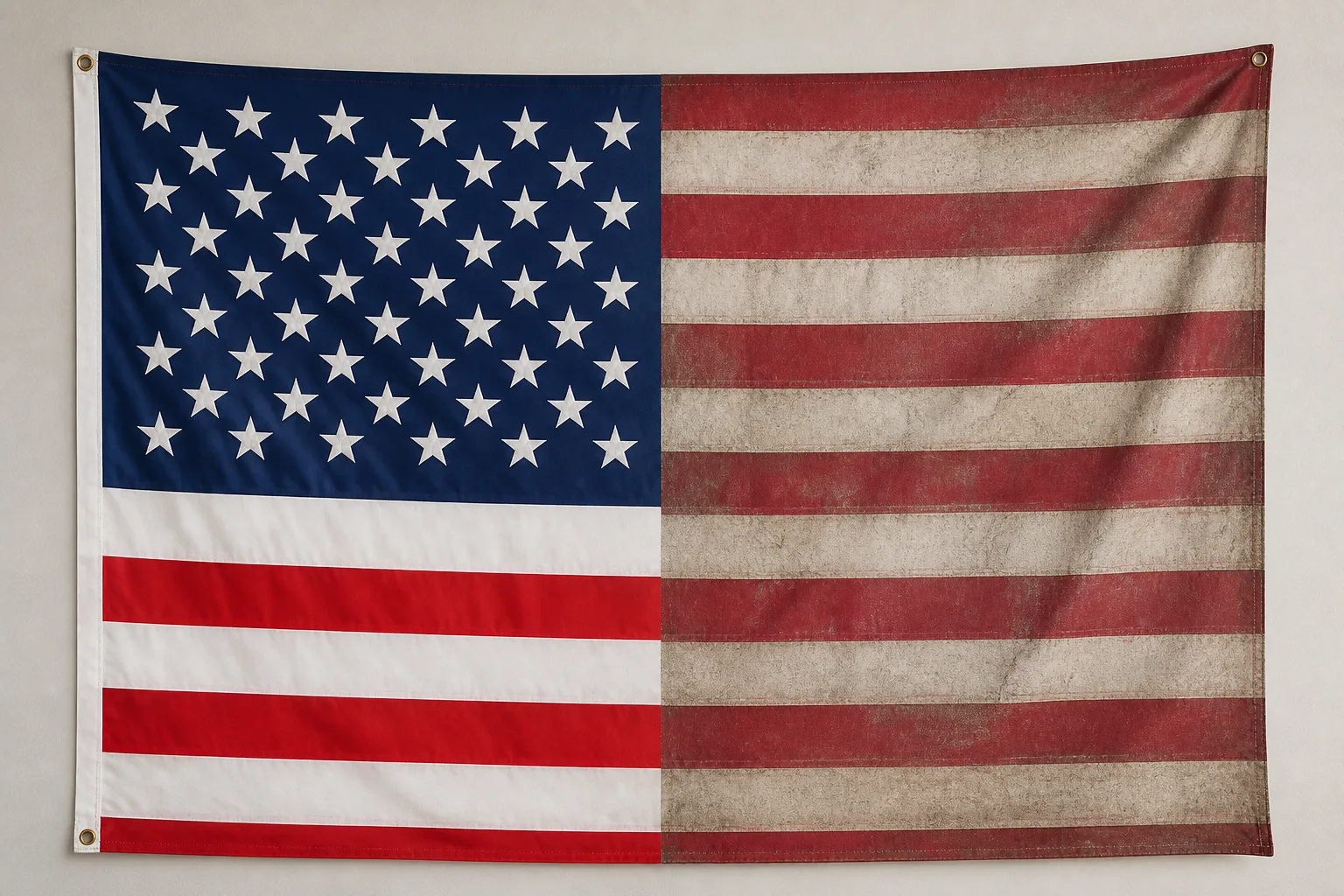
2026: Americas 250th Anniversary Sparks Division and Debate
On July 4, 2026, the United States will mark a quarter‑century of independence, a milestone that has sparked fierce partisan clashes and heated cultural debate. Two competing national programs are shaping the day: the Trump‑aligned Freedom 250, launched by President Donald J. Trump in December 2025, and the bipartisan America 250, which Congress had set up more than a decade ago. Freedom 250 has eclipsed its counterpart in the public eye, drawing criticism that its high‑profile events favor spectacle over thoughtful reflection.
Independence Hall in Philadelphia, the very room where the Declaration of Independence was adopted on July 4, 1776, remains the epicenter of the celebrations. A World Heritage Site that once hosted the Second Continental Congress and the Constitutional Convention, the Hall’s assembly room is still described by park rangers as “the place where treasonous men broke from the most powerful empire since ancient Rome.” Visitors flood the site, and some—like Kim Wilson of Raleigh, North Carolina—remark that the experience reminds them of the courage of the Founding Fathers.
Trump’s Freedom 250 has included a UFC‑style cage match on the White House South Lawn, a 16‑day Great American State Fair on the National Mall, a planned July 4 fireworks display, and an IndyCar Grand Prix that will run on the Mall in August. The administration also ordered graffiti removal from statues and the construction of a new arch that would dwarf Paris’s Arc de Triomphe. Yet a $14.7 million renovation of the Lincoln Memorial reflecting pool—awarded to a vendor with ties to the president—ended in an algae bloom that turned the water bright green and caused the “American flag blue” coating to peel.
The program has drawn sharp criticism from scholars and the public. Historian David Blight, speaking from a hotel across Independence Hall, said, “I don’t feel celebratory at all. I don’t know how to explain [Trump’s] vanity projects any better than anybody else.” Jill Lepore of Harvard University added that “to be doing something is somehow to seem as if you’re supporting Trump to some people.” A Reuters/Ipsos poll released in June found that 38 % of respondents—40 % of Democrats and 26 % of Republicans—do not believe the United States will exist as a single country 250 years from now, and nearly two‑thirds agree that democracy is in danger.
By contrast, America 250 was designed to be inclusive. Its modest events include a time capsule with contributions from all 50 states, a student essay contest, and a July 4 Block Party concert featuring Queen Latifah, Chris Stapleton and the Smashing Pumpkins. The program was sidelined in favor of Freedom 250, a shift many see as a political statement.
Beyond the national programs, cultural institutions across the country are engaging with the anniversary in more subdued ways. The Museum of the American Revolution’s “The Declaration’s Journey” exhibition juxtaposes Jefferson’s wooden chair with a Birmingham jail bench, illustrating how Jefferson’s words have inspired civil‑rights leaders. Montgomery, Alabama, hosts the Freedom Monument Sculpture Park and a memorial at the Legacy Museum dedicated to lynching victims. The Smithsonian National Air and Space Museum remains a hub of historical narrative, while a federal court filing alleges that the president ordered the removal of exhibits from 37 National Park Service sites.
The National Mall itself hosts a mix of events. The “Rededicate 250” faith‑based jubilee included a stage designed to look like a government building but with a church backdrop and a 30‑foot cross. Speakers delivered an evangelical Christian message, and no representatives from historic Black denominations were present.
Despite the partisan flare, some Americans see the anniversary as an opportunity for reflection. Dimitrios Dimoulas, a Brazilian immigrant who became a U.S. citizen in 1976, told visitors that “no matter who you are and what you are, you’ve got to listen and learn.” He believes the current malaise is temporary.
In short, the 250th anniversary of American independence is unfolding as a contest between spectacle and reflection, between a Trump‑driven narrative and a bipartisan effort to honor the nation’s complex history. The outcome of this cultural debate will shape how Americans remember their founding and how they envision their future.