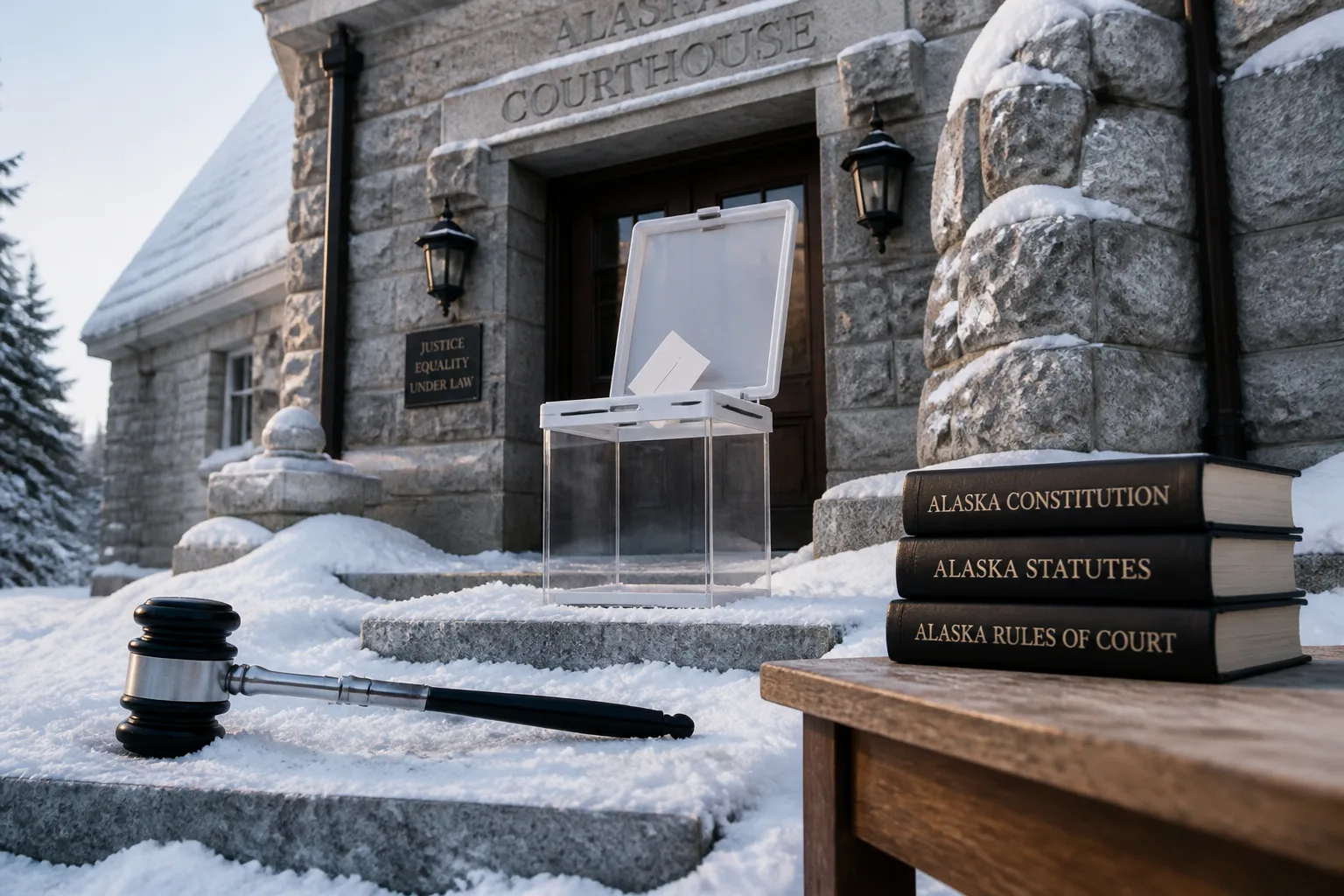
Alaska Supreme Court Orders Dan J. Sullivan to Remain on Senate Ballot
On Monday afternoon, the Alaska Supreme Court issued a concise 100‑word order that has sent ripples through the state’s political landscape: Dan J. Sullivan, a retired teacher from Petersburg, must stay on the ballot for Alaska’s U.S. Senate seat. The directive arrived roughly three hours after the justices heard oral arguments, and Chief Justice Susan Carney said a longer opinion will follow.
The ruling comes after the Division of Elections decided to strip Sullivan from the ballot, citing the danger of voter confusion. The agency pointed out that Sullivan’s name and Republican affiliation mirror those of the incumbent Senator Dan Sullivan. In its decision, the division claimed that the challenger’s filing was an intentional attempt to mislead voters.
During the hearing, the justices repeatedly noted that the division could have taken a milder approach—such as adding a middle initial—to differentiate the two candidates. Chief Justice Carney called the removal the "most extreme remedy possible" and asked the private attorney representing the division, Christopher Murray, why a less drastic solution wasn’t pursued. Murray defended the division’s move, arguing that the challenger had only chosen the Republican Party at the time of filing and had used "Dan S. Sullivan" in a ballot‑identification email, suggesting a deliberate strategy to match the incumbent.
Justice Aimee Oravec countered that the division was entitled to notice of the potential confusion and could have mitigated it. She emphasized that distinguishing the candidates on the ballot would have sufficed, without excluding the challenger entirely.
The case has captured national attention. The incumbent and his Republican allies view Sullivan as a possible threat that could siphon votes in a tight race, potentially influencing control of the U.S. Senate. Fourteen other states filed a friend‑of‑the‑court brief supporting the state’s decision to remove the challenger.
A Superior Court judge had already ruled Friday that the Division of Elections’ removal of Sullivan was incorrect, prompting the agency’s appeal to the Supreme Court.
If the court’s order stands, the Division of Elections must decide how Sullivan will appear on the ballot. The agency has argued that middle initials alone would be confusing and has proposed labeling the challenger as "Sullivan, Daniel James Jr. (Non‑partisan)" while listing the incumbent as "Sullivan, Dan (Registered Republican) Incumbent." Sullivan’s attorney, Jeffrey Robinson, insists the division has no authority to alter the challenger’s party affiliation.
The Division of Elections has stated that it must begin preparing ballots by Tuesday at noon. The court’s order does not yet resolve the formatting of names or party designations, only that Sullivan’s name must be present.
This ruling is a rare instance of a state supreme court intervening in a ballot‑placement dispute. As the August primary approaches, the outcome will be closely watched, with Alaska’s Senate race poised to become one of the most competitive contests in the country.
In short, Dan J. Sullivan is legally required to appear on the ballot, but how his name and party affiliation will be displayed remains to be determined by the Division of Elections.