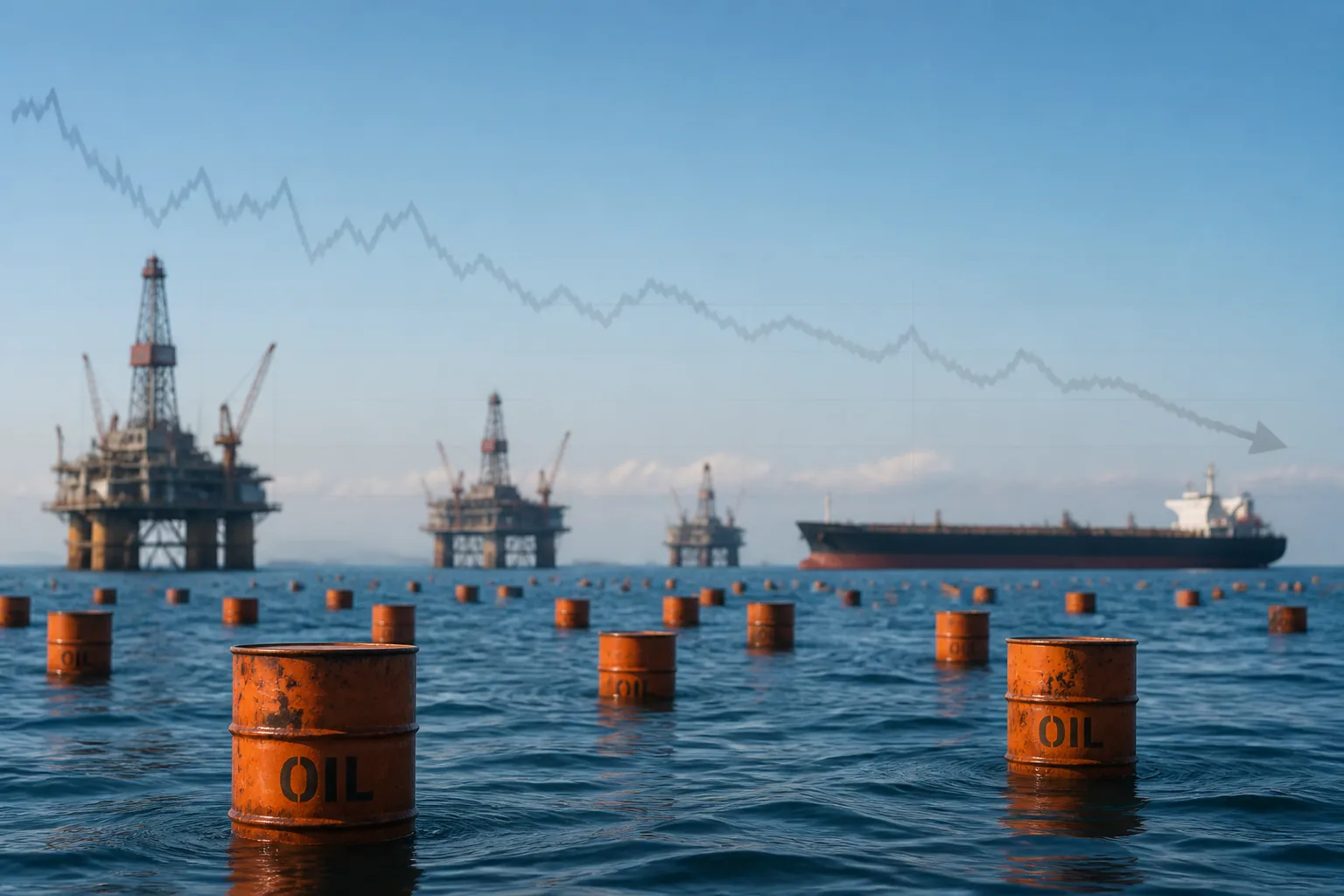
Oil Prices Plunge as US-Iran Peace Deal Floods Market with Supply
When the world’s oil prices suddenly slid from a record high to the low‑70s, investors stared at a scene that felt like a calm after a storm. The drop came a day after Washington and Tehran signed a memorandum of understanding that ends hostilities and reopens the Strait of Hormuz, the artery that has choked the global market for months. Brent crude futures, which had reached an all‑time high less than three months ago, are now trading near $70 a barrel—an instant wipe‑out of the wartime gains that defined 2026.
The conflict began on 28 February 2026 after a joint US‑Israeli strike on Iranian facilities closed the Strait of Hormuz and forced Gulf producers to slash output. Global inventories fell to dangerously low levels, and senior executives warned that the market was on the brink of a supply crunch. The war’s sudden escalation left traders scrambling to hedge against a tightening pipeline, while governments scrambled to secure alternative routes. This uncertainty rippled through supply chains, pushing energy analysts to revise forecasts.
The ceasefire, announced on 14 June, ushered in a 60‑day memorandum of understanding that lets commercial vessels pass the strait free of charge. Within hours, shipping lanes reopened, and a torrent of more than 60 million barrels—frozen in place when the war erupted—began to flow into the market. Saudi Arabia and the United Arab Emirates quickly returned to export levels close to pre‑war figures, aided by U.S. naval escort and pipelines that bypass the strait entirely for Gulf producers and refiners.
Iran’s oil, long stymied by heavy U.S. sanctions, reentered the global market after the Treasury issued a waiver on 22 June that allows Iranian crude to be sold through 21 August. The 60‑day window lets U.S. buyers purchase the oil in dollar terms without the threat of secondary sanctions, making it an attractive alternative to Russian crude whose own waiver expired on 17 June. The sudden influx of Iranian barrels also adds another layer to the oversupply puzzle for market participants.
The surge in supply has outpaced demand, sending physical market prices plummeting. Analysts at Morgan Stanley and Goldman Sachs warned this week that a glut could loom in 2027. Kitt Haines, head of oil at Energy Aspects, described the current mood as “overwhelmingly bearish.” The physical oil market is now showing weakness more extreme than any time since the COVID‑19 demand collapse, a rare and unsettling sign for investors. This slump forces producers to rethink output strategies and pushes policymakers to reconsider supply‑side measures.
For the global economy, the shift from a supply‑constrained world to one of excess inventory eases fears of an oil‑led inflation spike that had gripped markets after the largest disruption on record. OPEC members now face a dilemma: curb production to support prices or compete for market share in a lower‑price environment. The U.S. decision to lift sanctions on Iranian oil is part of a strategy to normalize trade, providing an option to Russian crude and boosting liquidity in the market.
Reopening the Strait of Hormuz restores a critical maritime corridor that carries about 25 % of global seaborne oil trade and 20 % of liquefied natural gas. With the waterway back in operation, European and Asian buyers can rely on more predictable supply routes, further easing the pressure that once pushed prices higher. The renewed flow of barrels also means that tanker fleets can reduce ballast runs, lowering operating costs and making the shipping sector more efficient for shippers worldwide and investors.
While the war’s future remains uncertain and production lines are still offline, the current market dynamics point toward lower oil prices. As the 60‑day window closes, traders and policymakers will watch closely for a final settlement that could either cement the equilibrium or throw the market back into volatility. For now, the U.S.‑Iran peace deal has unleashed a wave of supply that has flipped the oil market from a tight, high‑price environment into one of excess inventory and falling prices.