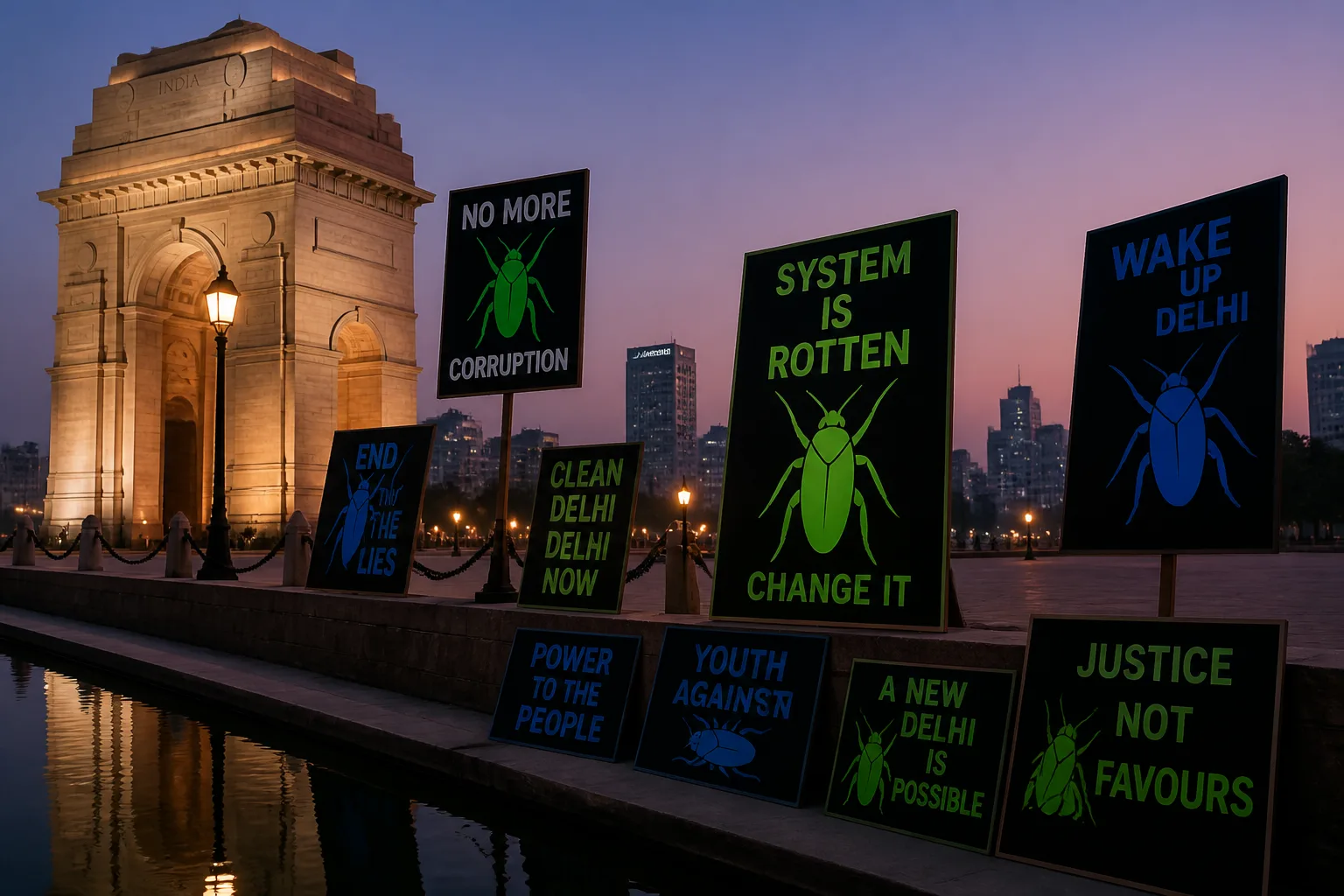
Youth Protest in Delhi: The Rise of the Cockroach Janata Party
Under the shadow of Delhi’s ancient Jantar Mantar, a new political force took root. In early June, a ragtag band of students and recent graduates set up camp beneath the trees, masks of cockroaches glinting in the afternoon sun. They held placards that mirrored satirical internet memes and marched with copies of the Indian Constitution in hand, demanding swift action against unemployment and alleged fraud in medical‑college entrance exams.
The movement behind the protest is the Cockroach Janata Party (CJP), a youth‑led, satirical campaign that sprang to life on 16 May 2026. Its founder, Abhijeet Dipke—a former communications strategist for the Aam Aadmi Party—launched the CJP in response to remarks made by Chief Justice Surya Kant on 15 May 2026, who referred to some unemployed youth as “cockroaches” and “parasites of society.” The party’s name is a tongue‑in‑cheek nod to the ruling Bharatiya Janata Party (BJP), and its early online content poked fun at official posters, government slogans and AI‑generated images.
Within days of its debut, the CJP’s Instagram account amassed more than 350 000 sign‑ups. A few weeks later, the follower count surged past 20 million, eclipsing the BJP’s official page by early June. The digital boom translated into real‑world action: Dipke returned to India at the end of May and organized seven rallies across six states and territories before heading back to Delhi, where supporters decided to occupy Jantar Mantar.
The June 6 protest marked the CJP’s first large‑scale public demonstration. According to police reports, Delhi Police and paramilitary forces were deployed across key locations in the capital as the movement began its occupation. Demonstrators called for the resignation of Union Education Minister Dharmendra Pradhan, citing controversies surrounding the 2026 National Eligibility cum Entrance Test (NEET) exam paper leak.
Observers noted the spontaneous nature of the movement. Psychiatrist Rajendra Prasad, who attended the first rally, remarked that the participants “came by themselves” and that the decentralized structure was a key feature. He questioned whether the movement could survive without a clearly identified leadership. Former Delhi University professor Nandita Narain, president of the Federation of Central Universities Teachers Associations (Fedcuta), noted that she had not seen student mobilisation on this scale for several years and that the young people were “expressing real anger” and “beginning to overcome their fear.”
Political scientist Mehina Fatima, a researcher at Delhi University, expressed uncertainty about the CJP’s ideological foundation. When asked where the party would stand in five years, Dipke answered that the party’s ideology is built on secularism, social justice and the constitution, drawing inspiration from Ambedkar, Gandhi and Nehru. The party’s manifesto, listed on its website, includes a pledge that no Chief Justice shall be granted a Rajya Sabha seat as a post‑retirement reward.
The CJP remains an unregistered political movement. Its decisions are made through online discussions that participants can join or leave freely. While this flexibility appeals to young people who distrust traditional parties, it also limits the movement’s ability to present a unified voice.
The protest highlighted the deep frustration among India’s educated youth. Recent reports show youth unemployment has risen to nearly 85 percent, and the NEET exam controversy has added to public discontent. The CJP’s rapid rise from a satirical Instagram page to a street protest underscores the power of social media to mobilise large numbers of young people around shared grievances.
As of mid‑June, the CJP’s future remains uncertain. While the movement has captured the anger of a significant portion of the youth, its lack of formal structure and unclear long‑term goals mean its political impact is still unfolding. The protest at Jantar Mantar ended peacefully, with police maintaining order and no major incidents reported. The movement’s next steps will likely involve continued demonstrations and attempts to translate online support into concrete policy demands.